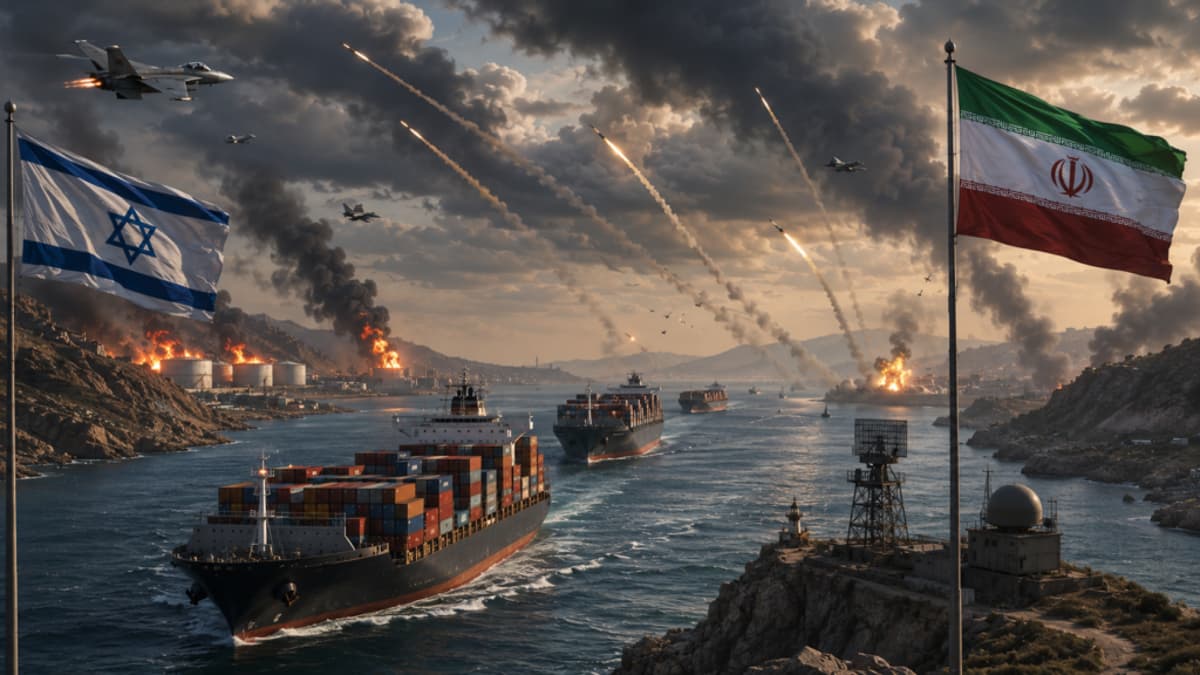
Israel and Iran Exchange Heavy Strikes as Houthis Seal Red Sea Shipping
Key Takeaways
- •Ceasefire since April 8 shattered after Hezbollah rocket and Iranian missile exchange
- •Israel struck Iranian cities, hitting petrochemical complex in Mahshahr
- •Houthi missile targeted Tel Aviv; declared Red Sea maritime embargo
- •Shipping firms consider rerouting around Cape of Good Hope, raising costs
- •U.S. embassies in Israel ordered lockdown and shelter‑in‑place
Pulse Analysis
The breakdown of the April ceasefire marks a dangerous shift from a fragile diplomatic balance to open hostilities among Israel, Iran and their proxies. Hezbollah’s rocket attack and Israel’s retaliation against a Beirut command center provoked Iran’s IRGC to launch Operation Nasr, a salvo of ballistic missiles aimed at strategic Israeli installations. Israel’s layered air‑defense network intercepted many of the projectiles, but the exchange underscored the volatility of the Middle East’s security architecture and raised concerns about a broader regional conflagration that could draw in NATO allies and other powers.
Beyond the immediate military clash, the Houthi declaration of a Red Sea maritime embargo threatens to choke two of the world’s most critical chokepoints: the Bab el‑Mandeb and the Strait of Hormuz. Shipping firms are already modeling detours around the Cape of Good Hope, a route that adds weeks to transit times and inflates freight rates. Insurance premiums for vessels transiting the Red Sea are expected to surge, while oil markets may see price spikes as supply routes tighten. The dual‑chokepoint scenario could force a re‑pricing of global energy contracts and accelerate discussions on alternative supply‑chain strategies.
The United States’ decision to bunker its embassy staff in Jerusalem reflects the heightened risk environment for diplomatic and commercial actors alike. A lockdown of consular services disrupts visa processing and hampers business travel, while the State Department’s shelter‑in‑place directive signals anticipation of further missile activity. Policymakers in Washington and European capitals are likely to intensify back‑channel diplomacy to restore a baseline of stability, but markets will remain jittery until clear de‑escalation steps are visible. Investors should monitor energy price movements, insurance cost trends, and any diplomatic breakthroughs as key indicators of the conflict’s trajectory.
Israel and Iran exchange heavy strikes as Houthis seal Red Sea shipping
Comments
Want to join the conversation?