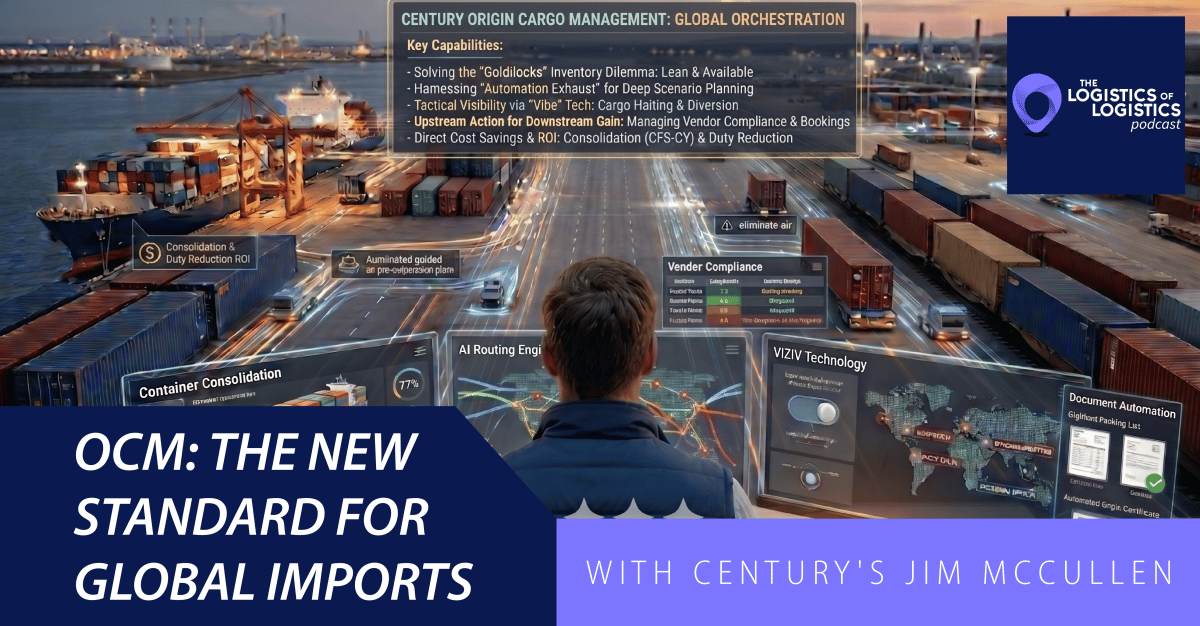
OCM: The New Standard for Global Imports with Century’s Jim McCullen
Key Takeaways
- •OCM acts as global middleman, aligning vendors and carriers before factory exit
- •VIZIV’s “automation exhaust” feeds AI for scenario planning and decision‑making
- •Vibe technology lets importers instantly halt or reroute cargo during disruptions
- •Consolidating shipments into full containers cuts “shipping air” costs dramatically
- •Single source of truth transforms logistics teams from reactive to proactive consultants
Pulse Analysis
Global supply chains have long struggled with a visibility gap that opens at the factory gate. Traditional import processes often wait until goods are in transit to address compliance, routing, or inventory mismatches, creating costly delays and excess stock. Origin Cargo Management (OCM) flips this model by embedding data capture and coordination at the point of purchase order issuance, giving shippers a real‑time view of every container before it leaves the supplier’s premises. This upstream focus not only streamlines vendor onboarding but also enables early risk mitigation, a critical advantage as trade policies and port capacities fluctuate.
At the heart of OCM is Century’s proprietary VIZIV platform, an AI‑powered engine that transforms raw logistics data into actionable insight. The so‑called “automation exhaust” continuously harvests routing recommendations, carrier performance metrics, and compliance flags, feeding them into scenario‑planning tools that forecast disruptions before they materialize. Complementary Vibe technology adds a tactical layer, allowing import managers to flip a digital switch that halts, reroutes, or reprioritizes cargo in seconds—eliminating the manual chaos that typically follows tariff changes or port incidents. Together, these capabilities turn a historically reactive function into a proactive, data‑driven command center.
The business impact is tangible. By consolidating fragmented shipments into full‑container loads and tapping duty‑reduction programs, Century reports up to 20% reductions in landed cost, while leaner inventory buffers address the “Goldilocks” dilemma of over‑ versus under‑stocking. Moreover, a single source of truth empowers logistics teams to act as strategic advisors rather than execution clerks, fostering stronger supplier relationships and faster time‑to‑market. As global trade becomes increasingly digitized, platforms like OCM set a new standard for import efficiency, positioning forward‑thinking enterprises to capture cost savings and resilience gains that competitors may struggle to match.
OCM: The New Standard for Global Imports with Century’s Jim McCullen
Comments
Want to join the conversation?