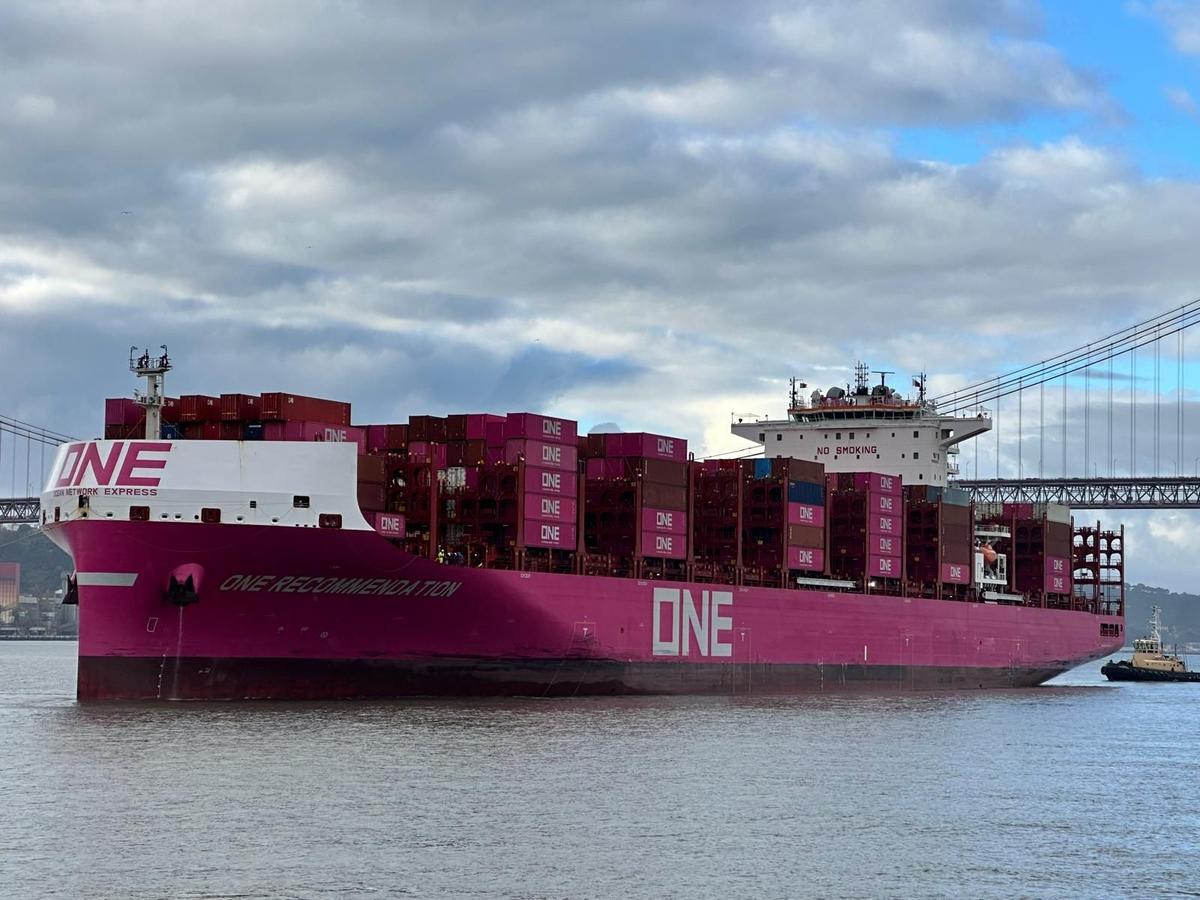
ONE Updates Emergency Fuel Surcharge Across Global Trade Lanes
Key Takeaways
- •EFS set at $120/TEU dry, $160/TEU reefers on long-haul headhaul
- •Backhaul surcharge halves to $60 dry and $80 reefers per TEU
- •Short sea lanes uniformly charged $60 dry, $80 reefers per TEU
- •Charges effective May 1 2026, pending regulatory approval across all trades
Pulse Analysis
Ocean Network Express (ONE) announced a fresh Emergency Fuel Surcharge (EFS) that will run across its entire network starting May 1 2026. The rates—$120 per TEU for dry containers and $160 for reefers on long‑haul headhaul, with half‑price backhaul levels—mirror the volatility in bunker fuel markets after a year of price spikes and geopolitical uncertainty. By applying a uniform surcharge to both FMC‑regulated and non‑FMC lanes, ONE seeks to recoup fuel cost exposure while preserving price transparency for global customers.
The new surcharge translates into an incremental cost of $60‑$80 per TEU on most return trips, a figure that shippers will likely pass through to end‑users or absorb in freight contracts. For refrigerated cargo, the higher $160 headhaul and $80 backhaul rates could tighten margins on temperature‑controlled supply chains, especially in North‑American imports of perishables. Regulators in the United States and Canada will review the proposal under FMC rules, but the uniform structure simplifies compliance and reduces the risk of disputes over lane‑specific pricing.
ONE cautioned that the EFS will remain in force until market conditions improve, signaling that future adjustments are possible as bunker prices stabilize or rise again. Industry analysts view the move as a benchmark for other carriers, who may adopt similar tiered surcharges to protect earnings amid tightening profit margins. For logistics planners, the announcement underscores the need to incorporate fuel‑cost volatility into budgeting models and to explore alternative routes or modal shifts where feasible. Ultimately, transparent surcharges help maintain service reliability while sharing risk between carriers and shippers.
ONE updates emergency fuel surcharge across global trade lanes
Comments
Want to join the conversation?