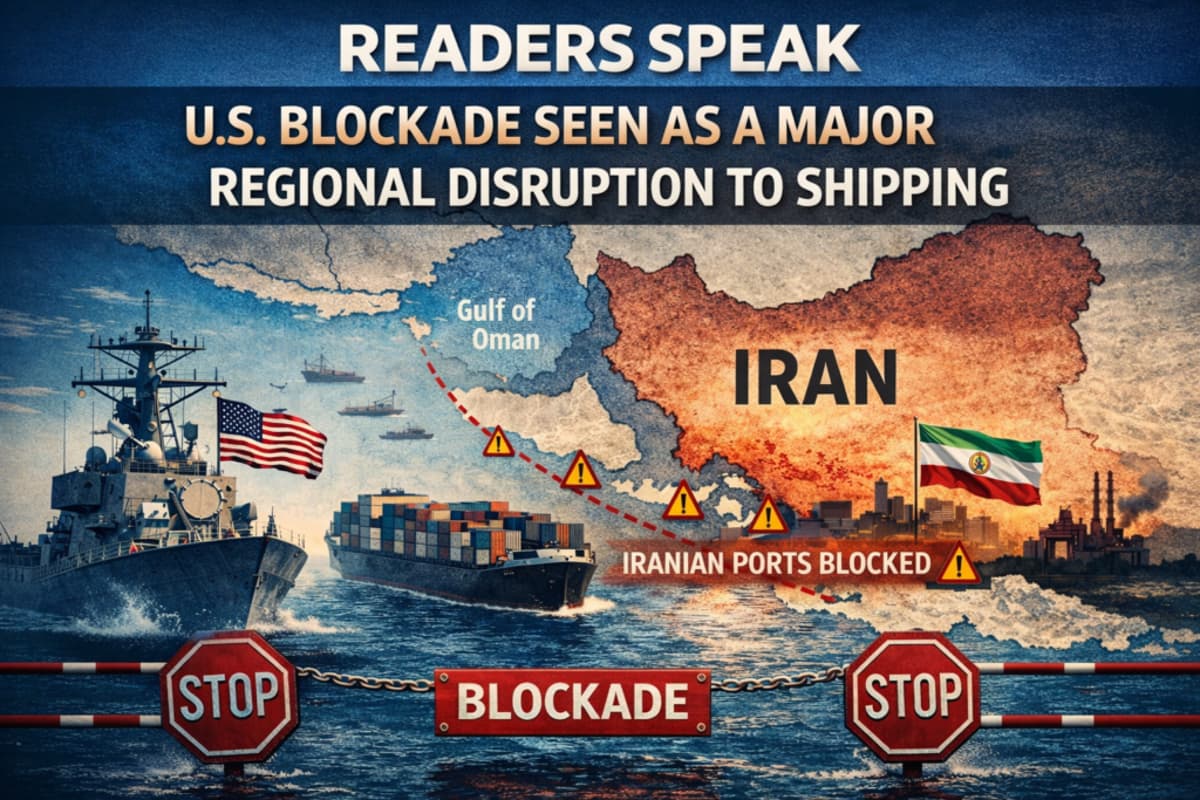
Readers Speak: U.S. Blockade Seen as Regional Shipping Disruption
Key Takeaways
- •Readers predict major regional disruption in Gulf shipping
- •Global container trade impact expected to stay limited
- •Uncertainty persists; risk premiums may rise
- •Vessels avoiding Iranian ports, altering routes
- •Insurance and logistics costs could increase regionally
Pulse Analysis
The United States’ decision to enforce a naval blockade around Iranian ports marks a rare, direct intervention in a key maritime corridor. While the Strait of Hormuz remains open for non‑Iranian traffic, the restriction on vessels linked to Iranian terminals has already forced carriers to reconsider itineraries, leading to a noticeable dip in port calls and cargo volumes tied to Iran. This operational shift underscores the strategic importance of the Gulf, where even a localized action can reverberate through regional supply chains, affecting everything from container availability to port congestion.
A recent Readers Speak poll captures the industry’s pulse: the majority of respondents anticipate a significant regional impact, citing constrained trade flows and rerouted vessels as immediate consequences. By contrast, a smaller segment expects the global container market to absorb the shock with minimal disruption, given that only a modest share of worldwide container capacity transits the Iranian corridor. Nonetheless, the poll highlights lingering uncertainty, with many participants warning that elevated risk premiums and insurance costs could linger even if the broader network remains stable.
For shippers and logistics providers, the blockade translates into higher operational complexity. Routing decisions now factor in potential delays, increased fuel consumption, and the need for alternative ports, while insurers reassess exposure to geopolitical risk, often passing higher premiums to carriers. The situation also serves as a bellwether for future geopolitical actions; a targeted blockade can quickly evolve into a catalyst for regional volatility. Companies that proactively diversify routes, secure flexible contracts, and monitor risk metrics will be better positioned to navigate the evolving landscape.
Readers Speak: U.S. blockade seen as regional shipping disruption
Comments
Want to join the conversation?