SCADA Database Growing Too Fast and Slowing the System
Key Takeaways
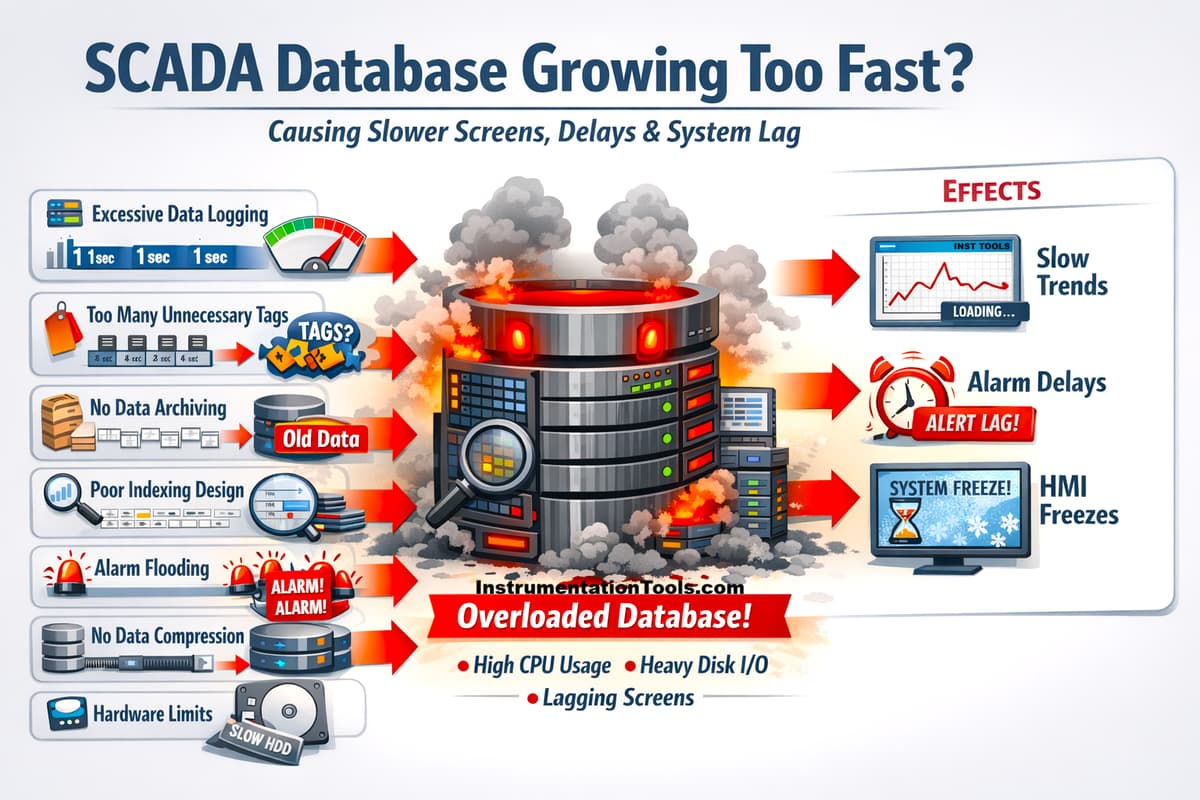
- •Over‑sampling logs redundant data each second, inflating storage
- •Unnecessary tags from debugging add thousands of low‑value records
- •Lack of archiving keeps all history in primary database forever
- •Missing indexes force full table scans, slowing queries dramatically
Pulse Analysis
SCADA databases grow at a relentless pace because many plants treat every sensor like a high‑frequency data source. Logging every tag every second, even when values remain static, creates a massive volume of redundant rows that strain disk I/O and inflate storage costs. In parallel, engineers often leave debugging tags, intermediate calculations, and diagnostic bits active long after commissioning, adding low‑value data that clutters historical tables. The cumulative effect is a bloated database that slows screen refreshes, hampers trend analysis, and reduces operator responsiveness.
Mitigating this growth starts with disciplined data acquisition. Implementing dead‑band or change‑of‑value logging ensures only meaningful variations are recorded, while grouping tags by criticality reduces unnecessary sampling rates. A robust archiving strategy—moving older records to a historian or compressed cold‑storage after a defined retention period—keeps the primary database lean. Proper indexing on timestamps, tag identifiers, and event types transforms query performance from full‑table scans to rapid lookups, dramatically cutting response times for trend displays and alarm reviews.
Hardware upgrades complement software best practices. Replacing legacy HDDs with SSDs or NVMe storage cuts latency, while scaling RAM and CPU resources accommodates peak write loads. Distributed or cloud‑based SCADA architectures can offload historical data to scalable databases, preserving real‑time performance on the edge server. Together, optimized logging, systematic archiving, and modern infrastructure deliver faster operator interfaces, lower maintenance costs, and a more resilient automation environment, safeguarding plant uptime in an increasingly data‑driven industry.
SCADA Database Growing Too Fast and Slowing the System
Comments
Want to join the conversation?