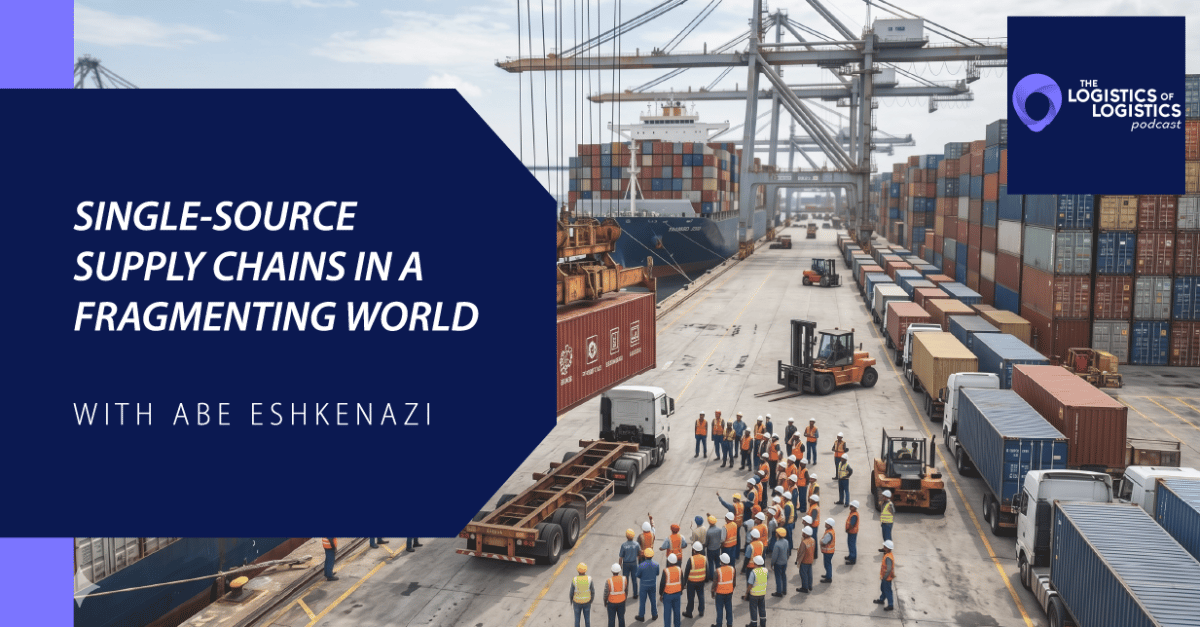
Single-Source Supply Chains in a Fragmenting World with Abe Eshkenazi
Key Takeaways
- •Visibility now core; firms track origin, impact, labor conditions.
- •Single-source creates choke points; Taiwan chips, China pharma illustrate risk.
- •Talent gap limits digital tools; skilled analysts essential for AI adoption.
- •Companies shift from just‑in‑time to just‑in‑case, adding buffers.
- •Regionalization drives nearshoring, raising costs but boosting security.
Pulse Analysis
Supply chain leaders are confronting a new reality where cost efficiency alone no longer guarantees competitiveness. The pandemic, trade wars, and climate‑related events have exposed the fragility of single‑source models, prompting executives to prioritize end‑to‑end visibility. Modern tools—blockchain, AI‑driven analytics, and IoT sensors—enable firms to trace product origins, assess environmental footprints, and verify labor standards, satisfying both consumer demand and tightening regulations. However, technology is only as effective as the professionals who can interpret and act on the data, creating a talent imperative that many organizations are still addressing.
The strategic response is a pivot from pure "just‑in‑time" logistics to a hybrid "just‑in‑case" approach. Companies are building safety stock, diversifying supplier bases, and embedding tariff‑adjustable clauses into contracts to cushion against sudden shocks. This risk‑adjusted mindset also fuels regionalization; nearshoring and multi‑modal routing reduce dependence on distant choke points such as Taiwan’s semiconductor hubs or China’s pharmaceutical ingredient supply chains. While these adjustments raise operating costs, they enhance supply chain security, shorten lead times, and support sustainability goals by cutting carbon‑intensive freight.
Beyond operational tweaks, the shift demands cultural change. Cross‑functional collaboration among the Chief Supply Chain Officer, CFO, and Chief Sustainability Officer is becoming essential to balance financial performance with resilience and ESG objectives. ASCM’s new docuseries, "The Chain: How the World Works," amplifies this narrative, educating both industry insiders and the public on the hidden infrastructure that underpins everyday products. By spotlighting the human and technological dimensions of modern supply chains, the series reinforces the message that visibility, talent, and strategic flexibility are the new currencies of competitive advantage.
Single-Source Supply Chains in a Fragmenting World with Abe Eshkenazi
Comments
Want to join the conversation?