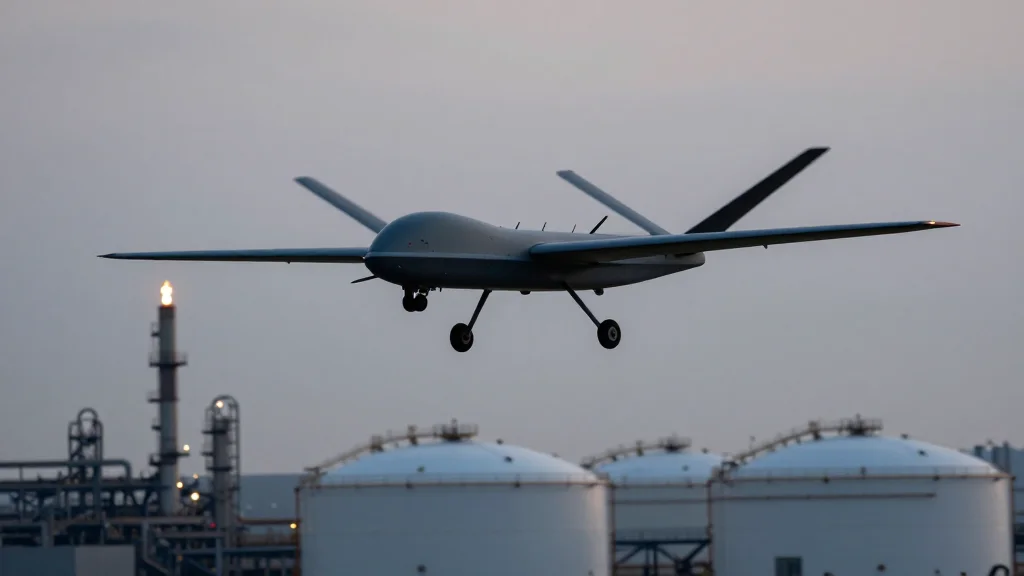
The Future of Drone Tech: Long-Range Strikes
Key Takeaways
- •Ukraine's drones now reach 1,800 km, targeting western Russia
- •Energy infrastructure hits could cut 1.5‑2.5 million barrels per day
- •Permafrost oil fields may need years to recover if shut down
- •Foreign funding fuels rapid Ukrainian drone production and deployment
- •Continued strikes could cripple Russia's western oil export capacity
Pulse Analysis
Ukraine’s drone programme has leapt from short‑range loiterers to platforms capable of striking targets up to 1,800 km (about 1,000 miles) deep into Russian territory. The leap is driven by a surge of Western and Middle‑Eastern financing that has allowed dozens of Ukrainian startups to scale production, integrate heavier warheads and embed basic autonomous guidance. Unlike earlier models that required only a few semiconductor upgrades, the new systems demand larger airframes, more fuel and sophisticated navigation, turning them into quasi‑missile weapons that can be launched from anywhere in the country.
The operational effect is already visible on Russia’s energy backbone. Analysts estimate that sustained attacks on pipelines, pumping stations and refineries could shave 1.5‑2.5 million barrels of oil‑equivalent per day from the combined transport and export flow that previously topped 4 million barrels. Damage to permafrost‑based fields is especially costly; once a well’s thermal balance is disrupted, repairs can take years, echoing the two‑decade recovery after the Soviet collapse. With western ports intermittently offline, Russia’s ability to meet European demand and fund its defense budget is under serious strain.
From a market perspective, the erosion of Russian oil exports adds upward pressure on global crude prices, while accelerating the shift toward alternative suppliers and renewable investments. Energy traders are closely watching the summer timeline, when Ukrainian operators expect daily strikes to peak, potentially forcing Moscow to reroute shipments eastward or rely on dwindling stockpiles. For policymakers, the development underscores the strategic value of unmanned systems in shaping geopolitical leverage, prompting other nations to reassess their own drone capabilities and the resilience of critical infrastructure.
The Future of Drone Tech: Long-Range Strikes
Comments
Want to join the conversation?