Key Takeaways
- •U.S. rifles dominate seized arms in Mexican cartel conflicts
- •Cartels ship weapon parts, assemble after crossing border
- •Barter trades swap drugs for firearms, obscuring money trails
- •Legal designations yield prosecutions but enforcement remains patchy
Pulse Analysis
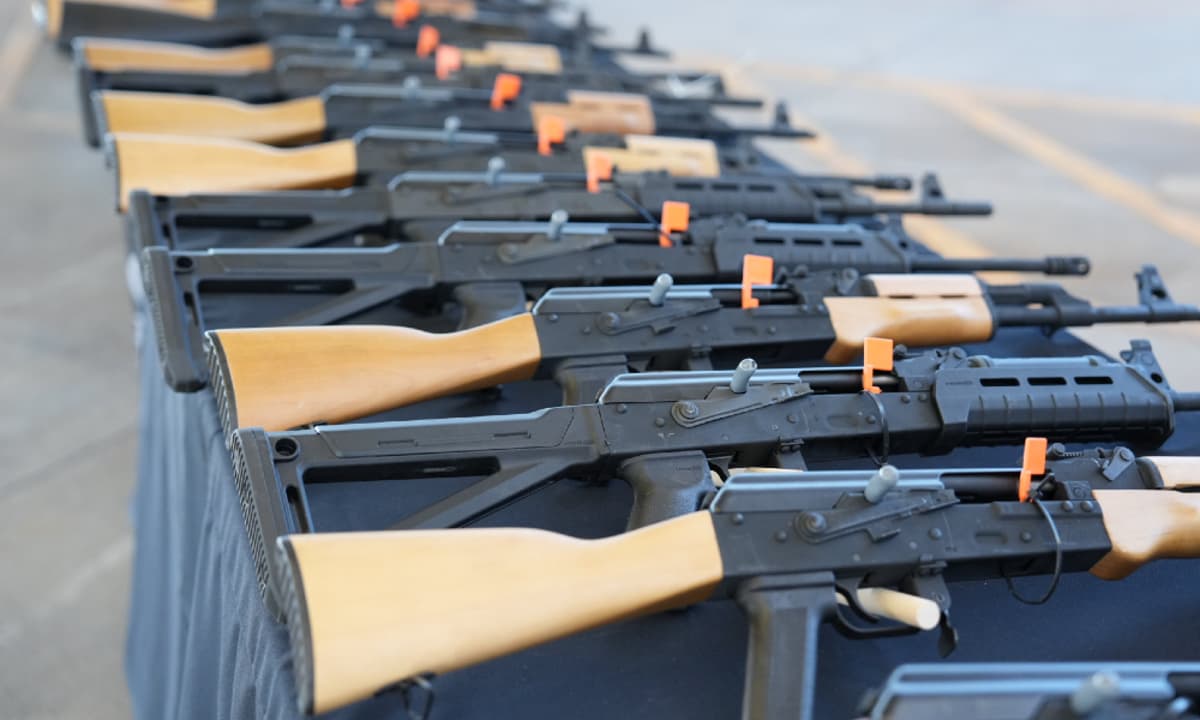
The United States unintentionally fuels Mexico’s drug‑war violence by serving as the primary source of high‑powered firearms that cartels rely on to dominate territory. Open‑source tracing and law‑enforcement seizures repeatedly link recovered rifles, assault weapons, and .50‑caliber systems to U.S. manufacturers and gray‑market dealers. This influx reshapes cartel hierarchies, giving groups like CJNG and the Sinaloa Cartel a decisive edge over under‑armed police and National Guard units, and forcing Mexican authorities to depend heavily on military support.
Cartel logistics have evolved to sidestep traditional interdiction. Instead of smuggling complete weapons, traffickers move components across the border, where they are quickly assembled in clandestine workshops. An even more insidious trend is the direct barter of narcotics for arms, which eliminates cash trails and ties weapon procurement to the very violence it sustains. U.S. border enforcement remains skewed toward northbound drug and migrant flows, leaving southbound arms shipments under‑detected. This adaptive supply chain underscores the need for intelligence‑driven, supply‑side interventions rather than solely focusing on downstream disruption.
Policy responses are beginning to catch up. Foreign terrorist organization (FTO) designations empower prosecutors to charge suppliers and intermediaries under material‑support statutes, and early indictments—such as the recent Arizona dealer case—demonstrate the approach’s potential. However, legal complexities and uneven enforcement limit impact. A coordinated U.S.–Mexico strategy that expands tracing capabilities, tightens export controls, and disrupts the parts‑assembly network could significantly curtail the arms pipeline. Aligning political will with actionable tools would not only weaken cartel firepower but also reinforce broader regional security objectives.
Time to Damn the Iron River
Comments
Want to join the conversation?