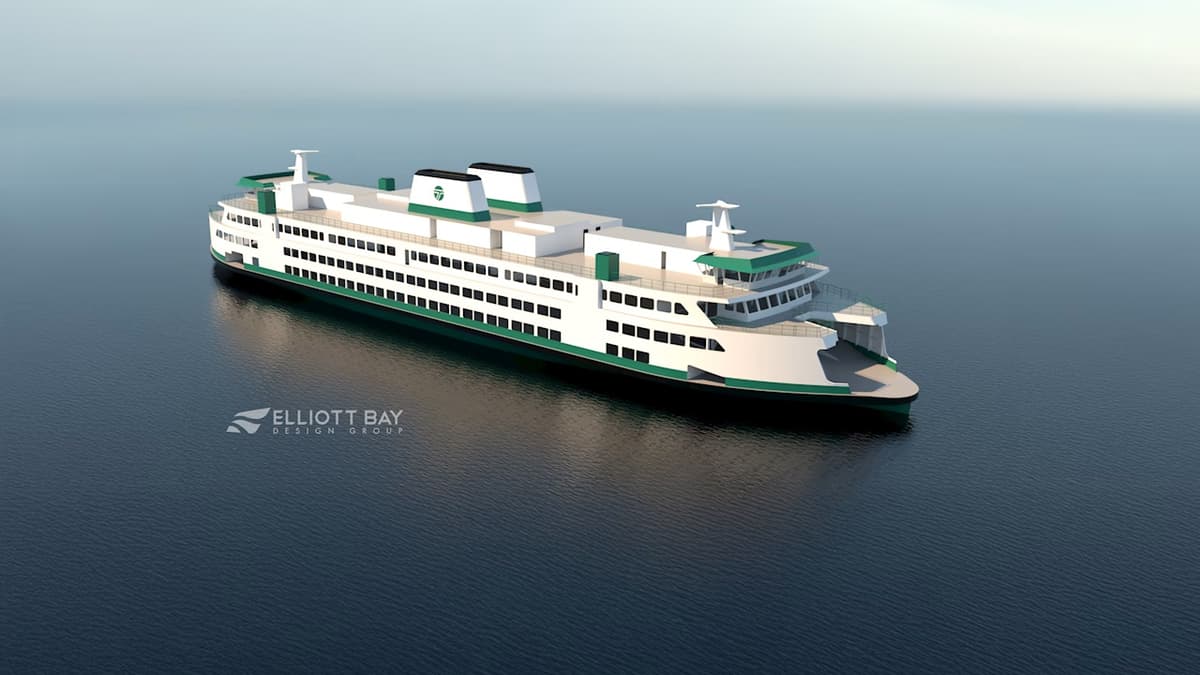
ABB Picks Corvus Energy Battery Systems for New US Ferries
•February 24, 2026
0
Why It Matters
The project demonstrates commercial viability of large‑scale battery propulsion in US passenger ferries, accelerating the nation’s maritime decarbonisation agenda.
Key Takeaways
- •ABB partners with Corvus Energy for US ferry battery systems
- •Two 1,500‑passenger ferries to launch 2030‑31
- •Hybrid design enables zero‑emission operation with shore charging
- •Part of $4 billion, 16‑ship replacement program
- •Largest US maritime electrification investment to date
Pulse Analysis
The selection of Corvus Energy’s Dolphin NxtGen storage modules by ABB Marine & Ports marks a watershed moment for American maritime electrification. While the United States has lagged behind Europe and Asia in adopting zero‑emission vessels, Washington State’s Ferry Electrification Plan is now delivering tangible hardware commitments. ABB’s role as the single‑source propulsion integrator gives it control over the powertrain architecture, allowing seamless integration of battery packs with diesel generators. This partnership also underscores the growing confidence of shipyards, such as Eastern Shipbuilding, to handle large‑scale hybrid projects that meet stringent environmental standards.
The two 1,500‑passenger vessels slated for delivery in 2030‑31 will carry up to 160 vehicles and feature a dual‑mode propulsion system. In battery‑only mode, the ferries can operate emission‑free provided shore‑side chargers supply the required power, dramatically reducing local air pollutants and noise. When charging infrastructure is unavailable, the onboard diesel generators supply auxiliary power, ensuring schedule reliability. Corvus’s NxtGen chemistry delivers high energy density and rapid discharge rates, enabling quick turn‑arounds at terminals and supporting the tight operational cadence of Washington’s busy ferry network.
The contract is the largest capital outlay for US maritime decarbonisation, signaling to investors that large‑scale battery adoption is commercially viable. With a potential fleet of up to 16 new vessels valued near $4 billion, shipbuilders and component suppliers stand to benefit from repeat orders and economies of scale. Moreover, the project provides a template for other coastal operators seeking to meet tightening emissions regulations. As federal policy oscillates, state‑driven initiatives like Washington’s may become the primary engine driving the transition toward fully electric commercial shipping in North America.
ABB picks Corvus Energy battery systems for new US ferries
0
Comments
Want to join the conversation?
Loading comments...