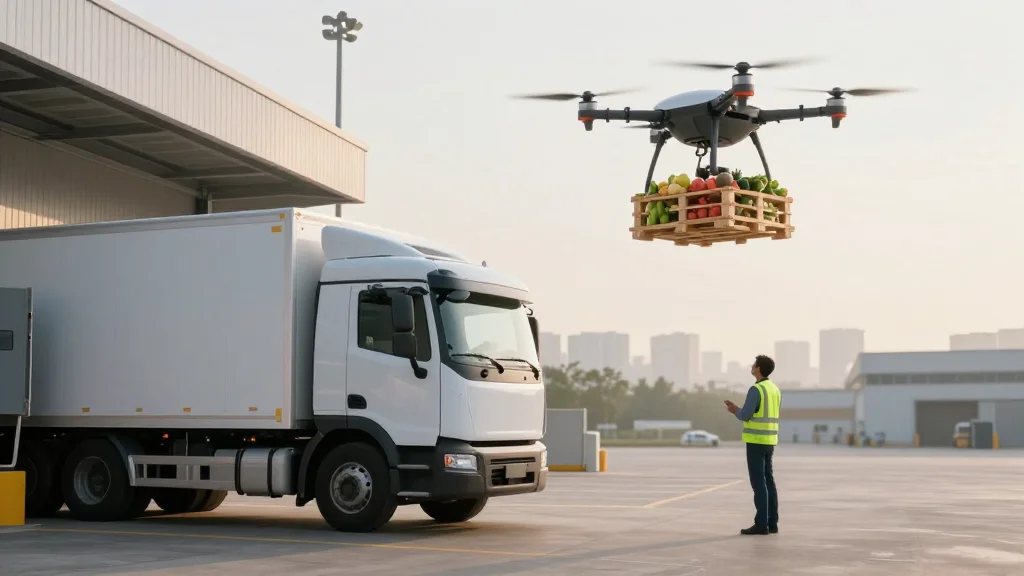
Accenture Report: U.S. Businesses Face Shortage of 1.1 Million Supply Chain Workers by 2035
Companies Mentioned
Why It Matters
The talent deficit threatens the U.S. reshoring agenda and could stall supply‑chain resilience, while technology‑enabled role redesign offers a path to maintain growth and competitiveness.
Key Takeaways
- •1.34 million new supply‑chain jobs needed by 2035, 1.1 million gap
- •Labor market adds only 221 k qualified workers, a 3.2% increase
- •AI, IoT, drones could flip gap into 360 k surplus
- •Role redesign and upskilling essential to capture technology benefits
- •Inspectors see 47% tasks automatable, 36% AI‑augmented
Pulse Analysis
The Accenture report underscores a looming talent crunch in America’s supply‑chain ecosystem. Over the next decade, firms will demand 1.34 million additional workers to support reshoring, accelerated delivery expectations, and AI‑driven commerce, yet the Bureau of Labor Statistics projects a modest 221,000 increase in qualified talent. This mismatch translates into a 1.1 million‑person shortfall that could cripple efforts to localize production and meet tighter regulatory standards. Understanding the scale of this gap is critical for CEOs and chief supply‑chain officers who must balance growth ambitions with realistic labor constraints.
Technology emerges as the primary lever to offset the deficit. Accenture’s scenario modeling shows that if 75% of the workforce adopts agentic AI, autonomous vehicles, drones and exoskeletons, while half leverages IoT and sensor networks, the net effect could be a surplus of roughly 360,000 positions. Agentic AI alone can automate 30% of tasks and augment another 51%, reshaping roles across production planning, purchasing and logistics. However, the impact is uneven: inspectors and testers retain a high degree of hands‑on work, with only 47% of tasks automatable, demanding targeted upskilling in IoT literacy and AI‑output review.
For businesses, the takeaway is clear: technology deployment must be paired with strategic workforce redesign. Companies should invest in training programs that equip employees to oversee AI‑generated insights, manage exceptions, and perform higher‑order judgment calls. Executives who align technology roadmaps with talent development will not only mitigate the projected shortfall but also build a more resilient, agile supply chain capable of navigating frequent disruptions. In an industry where speed and reliability are paramount, the firms that master this human‑machine synergy will secure a decisive competitive edge.
Accenture report: U.S. businesses face shortage of 1.1 million supply chain workers by 2035
Comments
Want to join the conversation?
Loading comments...