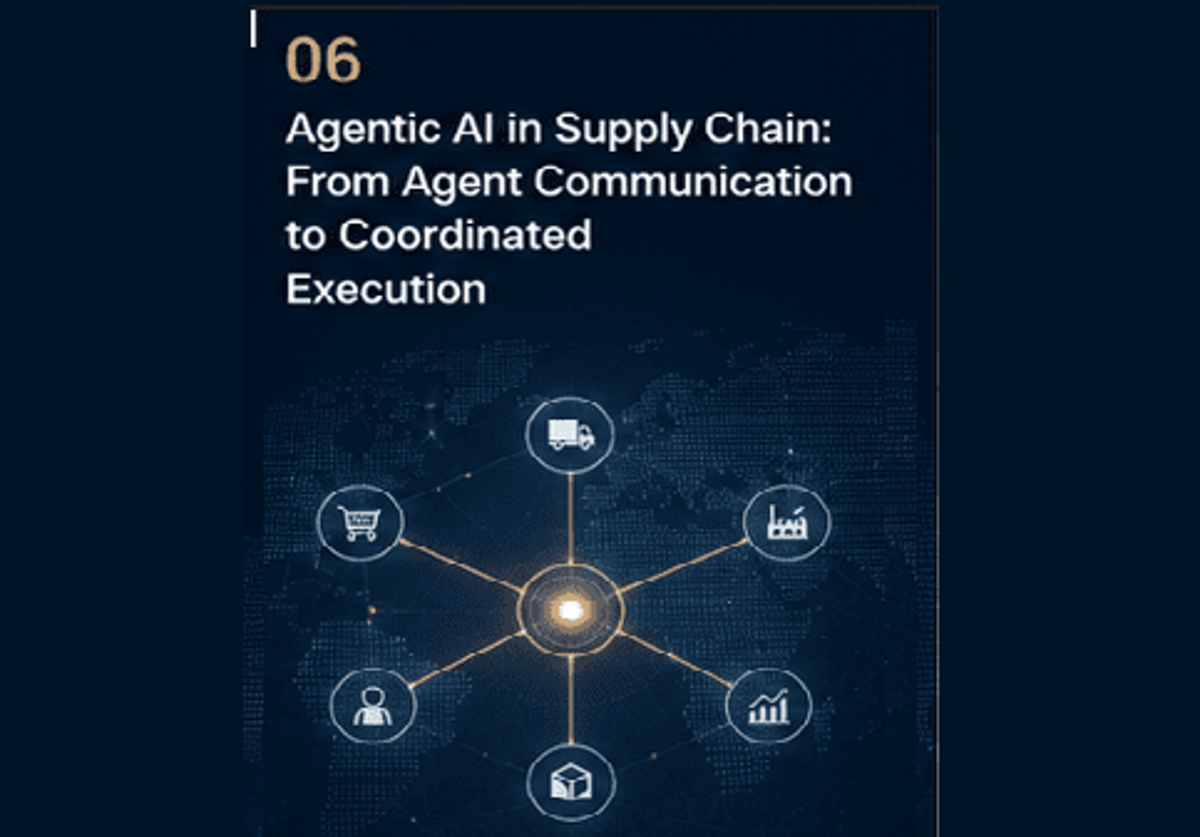
Agentic AI in Supply Chain: From Agent Communication to Coordinated Execution
Why It Matters
Coordinated AI execution can cut latency and reduce conflicting decisions, directly improving service levels and working‑capital efficiency. Vendors that deliver true orchestration will reshape the supply‑chain technology market.
Key Takeaways
- •Agentic AI enables cross‑function coordination, not just isolated alerts
- •Shared context via knowledge graphs prevents conflicting autonomous recommendations
- •Governance layers ensure human oversight and trust in autonomous actions
- •Vendors with orchestration platforms gain strategic advantage in supply chain software
- •Buyers must evaluate agents on coordinated execution, not demo hype
Pulse Analysis
Supply chains have long functioned as de‑facto multi‑agent systems, but human teams and disparate software create latency and contradictory choices. Agentic AI introduces autonomous agents that monitor conditions, evaluate options, and communicate, yet the real breakthrough lies in turning those messages into coordinated execution. When a shipment delay is flagged, a transportation agent can instantly inform inventory, procurement and customer‑service agents, allowing the network to assess stock‑out risk, source alternatives, and adjust promises before customers are impacted. This shift from reactive alerts to proactive orchestration can dramatically improve service reliability and reduce excess inventory.
The linchpin of effective agentic AI is a shared, enterprise‑wide context. Knowledge graphs and retrieval‑augmented generation (RAG) models provide a unified representation of master data, business rules, supplier histories and facility constraints. Without this common view, agents risk generating conflicting recommendations—expediting freight while simultaneously reallocating inventory—leading to chaos rather than efficiency. Governance frameworks further ensure that autonomous actions stay within predefined thresholds, with human approval required for high‑impact decisions. This blend of shared context and controlled autonomy builds the trust necessary for organizations to adopt AI‑driven execution.
Market dynamics will favor vendors that couple deep domain intelligence with robust orchestration layers. Traditional supply‑chain suites organized by function will struggle unless they can expose APIs and data models that enable cross‑functional agents to act in concert. Buyers should therefore scrutinize solutions for their ability to maintain a unified data model, enforce governance, and deliver end‑to‑end workflow automation—not just impressive demo chats. Companies that master coordinated AI execution stand to gain faster response times, lower costs, and a competitive edge in an increasingly volatile global supply environment.
Agentic AI in Supply Chain: From Agent Communication to Coordinated Execution
Comments
Want to join the conversation?
Loading comments...