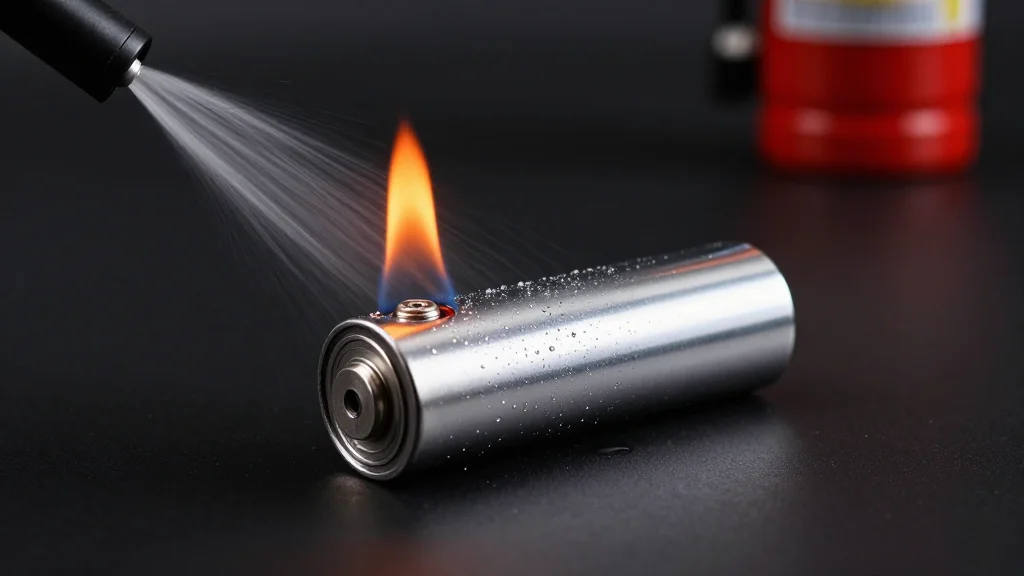
Alsym and Juniper Deploy 500 MWh of Sodium‑Ion Battery Storage in California

Why It Matters
The Alsym‑Juniper partnership tackles two persistent challenges in grid‑scale storage: fire safety and supply‑chain vulnerability. By deploying sodium‑ion batteries that meet UL9540A fire‑testing standards, the project offers utilities a proven, non‑flammable alternative to lithium‑ion chemistries, potentially reducing insurance costs and easing community opposition. Moreover, the focus on domestically sourced sodium and iron reduces reliance on imported lithium and cobalt, strengthening U.S. energy‑security and opening new manufacturing opportunities. If the rollout delivers on its performance promises, sodium‑ion could become the default chemistry for high‑temperature regions, prompting a re‑allocation of capital across the battery ecosystem. This shift would affect miners, cell manufacturers, and project developers, accelerating a broader transition toward safer, more resilient energy‑storage supply chains.
Key Takeaways
- •Alsym Energy and Juniper Energy will install 500 MWh of sodium‑ion BESS in California and nearby states.
- •Cells will carry UL9540A certification, the U.S. standard for fire‑propagation testing.
- •Sodium‑ion chemistry operates up to 50 °C, outperforming LFP in extreme heat.
- •The project reduces dependence on imported lithium and cobalt, diversifying the supply chain.
- •First 100 MWh expected online in the San Joaquin Valley by Q4 2026.
Pulse Analysis
Alsym’s sodium‑ion rollout arrives at a moment when utilities are under pressure to de‑risk their storage assets. The Moss Landing fire underscored the financial and reputational costs of thermal runaway, prompting regulators to tighten safety standards. By securing UL9540A certification at the cell level, Alsym not only differentiates its product but also sets a new compliance bar that could become mandatory for future large‑scale projects. This regulatory edge may force competitors to accelerate their own safety certifications or risk losing market share.
From a supply‑chain perspective, sodium‑ion offers a strategic hedge against the geopolitical volatility that has plagued lithium and cobalt markets. Sodium is abundant and domestically sourced, while iron is already a staple of the U.S. steel industry. Scaling domestic production could lower material costs and shorten lead times, translating into faster project timelines and lower capital expenditures. However, the technology is still nascent; manufacturers must prove long‑term cycle life and cost parity with LFP to win broader adoption.
Looking forward, the success of the Alsym‑Juniper deployment could catalyze a cascade of similar projects, especially in sun‑rich, high‑temperature regions like the Southwest and the Gulf Coast. If performance data validates the claimed temperature resilience and safety, investors may redirect capital from traditional lithium‑ion projects toward sodium‑ion, reshaping the competitive landscape. The next inflection point will be the emergence of a robust domestic cell‑manufacturing ecosystem capable of meeting the projected 1 GWh pipeline by 2028, a development that could solidify the United States’ leadership in next‑generation energy storage.
Alsym and Juniper Deploy 500 MWh of Sodium‑Ion Battery Storage in California
Comments
Want to join the conversation?
Loading comments...