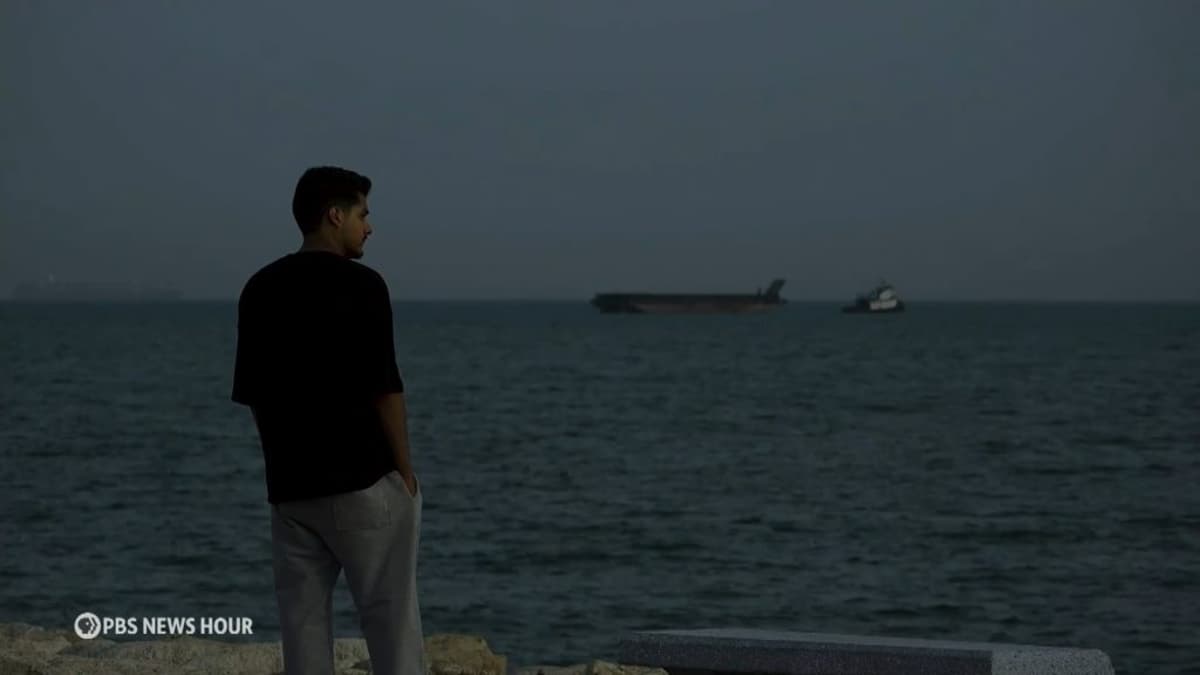
An Up-Close Look at the Strait of Hormuz From Both Land and Water
Why It Matters
The dual blockades threaten a vital oil transit route, inflating energy prices and raising the risk of a broader naval confrontation that could destabilize global markets.
Key Takeaways
- •≈1,500 commercial vessels stranded, holding over 20,000 seafarers
- •U.S. jets destroyed two IRGC speedboats near Larak Island
- •Iranian and U.S. naval blockades have halted traffic through the strait
- •Strait’s narrowest point 24 mi wide, average depth 165 ft limits passage
- •Hormuz Island residents mourn three IRGC martyrs, reject negotiations
Pulse Analysis
The Strait of Hormuz, a 24‑mile‑wide chokepoint that carries roughly a fifth of the world’s petroleum, has become a live battlefield. Over the past three months Iran’s self‑imposed blockade and a reciprocal U.S. naval restriction have left about 1,500 commercial vessels—more than 20,000 crew members—anchored in the Persian Gulf. Recent footage from PBS NewsHour shows Iranian‑flagged tankers stuck alongside U.S. warships, while Pentagon officials confirmed that fighter jets shot down two IRGC speedboats near Larak Island. The congestion underscores how quickly geopolitical friction can translate into tangible shipping delays.
The shipping jam immediately pressures oil prices, as any interruption in Hormuz flow reverberates through global markets. Traders add a risk premium to crude futures whenever vessels are denied transit, and insurers raise war‑risk premiums for carriers navigating the Gulf. Even short‑term delays can push freight rates higher, feeding into gasoline prices for consumers worldwide. Moreover, the dual blockades raise the specter of a broader naval clash, which would threaten not only energy supplies but also the security of the entire Red Sea‑to‑Europe trade corridor.
On the ground, residents of Hormuz Island mourn three IRGC members killed in the latest skirmish, reflecting Iran’s narrative of defending sovereign waters. Their defiant stance—rejecting any negotiation until families receive the bodies—highlights the human cost behind the strategic calculus. For policymakers, maintaining open transit while avoiding escalation demands calibrated diplomacy, possibly through UN‑mediated de‑confliction mechanisms. The longer the strait remains congested, the greater the incentive for alternative routes or strategic stockpiling, underscoring why a swift resolution is vital for both regional stability and global energy security.
An up-close look at the Strait of Hormuz from both land and water
Comments
Want to join the conversation?
Loading comments...