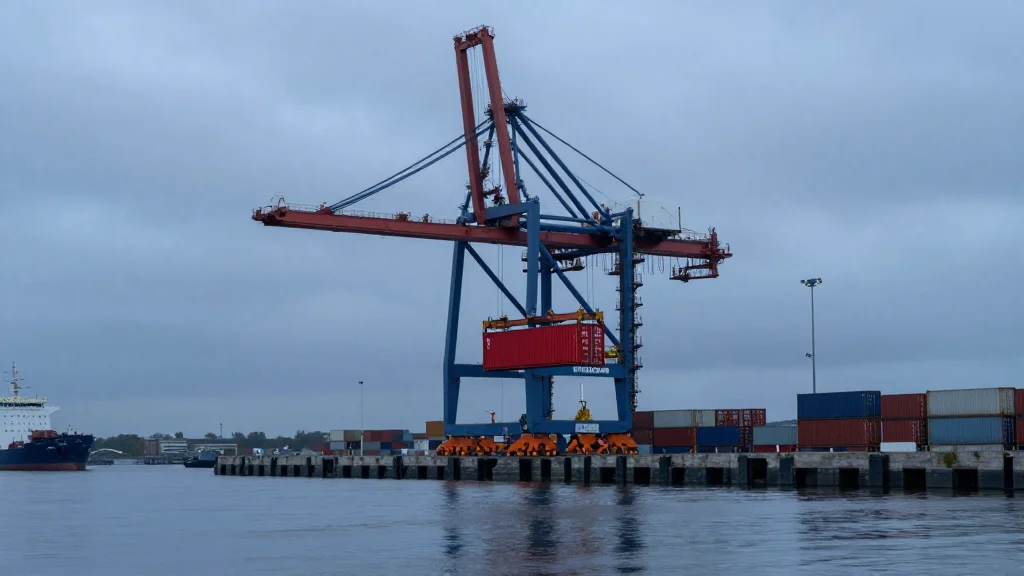
Antwerp-Bruges Q1 Container Volumes Dip on Poor Weather, Labor Unrest
Why It Matters
The slowdown highlights how weather and labor disruptions can quickly erode volume at major hubs, affecting shipping schedules and regional trade flows. Maintaining throughput despite the dip underscores Antwerp‑Bruges’ strategic importance in European logistics.
Key Takeaways
- •Q1 TEU volume fell 2.6% to 3.4 million at Antwerp‑Bruges.
- •Bad weather and a four‑day strike caused 100,000 TEU loss.
- •Throughput tonnage dropped 5.5% to 36.3 million metric tons.
- •Some ships rerouted, giving rivals like Rotterdam temporary advantage.
- •Port’s resilience shown by still outpacing Rotterdam in TEUs.
Pulse Analysis
Antwerp‑Bruges remains a cornerstone of European container traffic, ranking second only to Rotterdam in total TEU movements. In the first quarter of 2026 the port processed 3.4 million TEUs, a modest decline from the same period last year but still enough to outpace its Dutch rival. This resilience reflects the port’s deep hinterland connections, extensive rail links, and ongoing investments in automation that keep it attractive to global carriers even when external shocks arise.
The Q1 dip was driven primarily by two converging factors: an unusually stormy weather pattern that limited crane operations and a four‑day labor strike that halted terminal activities. Together they cost the port an estimated 100,000 TEUs, equivalent to about 1.1 million tons of cargo, prompting several vessels to reroute to nearby terminals. Such disruptions ripple through supply chains, inflating freight rates, delaying deliveries, and forcing shippers to reassess routing strategies. For carriers, the loss of capacity at Antwerp‑Bruges translates into higher berth competition at alternative ports, potentially squeezing margins and increasing operational complexity.
Looking ahead, the port’s management is focusing on bolstering workforce stability and enhancing weather‑resilient infrastructure, such as upgraded drainage systems and more robust crane designs. Industry analysts expect a rebound in volumes as global trade stabilizes and the European logistics network adapts to climate‑related risks. For businesses that rely on timely European imports, Antwerp‑Bruges’ ability to quickly recover from disruptions will be a key determinant of supply‑chain reliability, reinforcing its role as a vital gateway for transatlantic and Asian trade routes.
Antwerp-Bruges Q1 container volumes dip on poor weather, labor unrest
Comments
Want to join the conversation?
Loading comments...