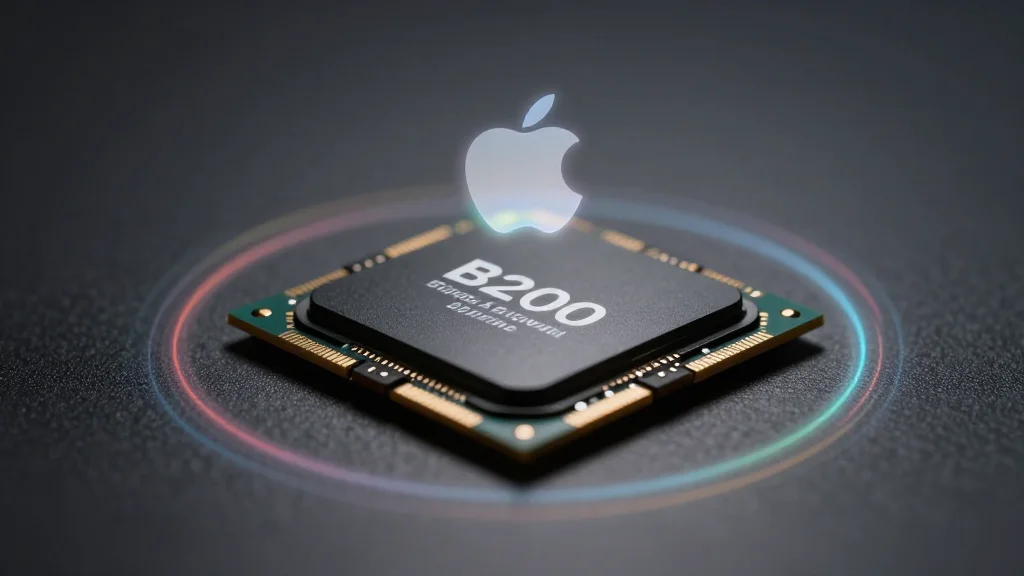
Apple Pays $1 B to Google and Taps Nvidia Chips to Revive Siri

Companies Mentioned
Why It Matters
The Apple‑Google‑Nvidia alliance redefines the company’s supply‑chain calculus, showing that even a tech titan can’t always rely on in‑house components for cutting‑edge AI. By committing $1 billion annually to Google and integrating Nvidia’s Blackwell silicon, Apple is injecting significant revenue into two of its fiercest competitors, potentially altering market dynamics in the AI‑chip arena. For the broader supply chain, the deal illustrates how AI workloads are driving new cross‑industry collaborations. Data‑center chip demand, already soaring due to generative AI, now has a high‑visibility consumer anchor, which could accelerate production ramps, influence pricing, and spur further investment in confidential‑compute technologies. The move also raises questions about data privacy and regulatory scrutiny, as Apple’s promise of on‑device processing gives way to cloud‑based inference.
Key Takeaways
- •Apple will pay Google roughly $1 billion per year for a custom Gemini LLM.
- •Siri’s complex queries will run on Nvidia’s Blackwell B200 data‑center chips.
- •The partnership is set to debut with iOS 27 in September 2026.
- •Apple settled a $250 million class‑action lawsuit over delayed Siri features.
- •Nvidia gains a high‑profile consumer‑tech customer, boosting Blackwell demand.
Pulse Analysis
Apple’s decision to outsource the heavy lifting of its AI assistant marks a watershed moment in the company’s supply‑chain philosophy. For two decades, Apple’s brand narrative hinged on vertical integration—designing its own silicon, writing its own software, and operating its own data centers. The Siri debacle exposed the limits of that model: even with massive internal R&D, Apple could not match the scale and speed of the latest LLMs. By paying $1 billion a year to Google, Apple acknowledges that the economics of AI development now favor specialized cloud providers that can amortize massive training costs across multiple customers.
Nvidia’s involvement deepens the story. The Blackwell B200 chip, built on a 5‑nm process and featuring hardware‑based confidential compute, is tailored for secure, high‑throughput AI inference. Its adoption by Apple not only validates Nvidia’s push into confidential‑compute silicon but also creates a feedback loop: as Apple scales usage, Nvidia can justify larger production runs, potentially lowering per‑unit costs and accelerating the rollout of similar chips to other OEMs. This could compress the lead time for future AI‑enabled consumer devices across the industry.
Looking ahead, Apple’s partnership may be a prelude to broader AI integration beyond Siri—perhaps powering on‑device translation, image generation, or even augmented‑reality features. However, the reliance on external cloud infrastructure introduces new risk vectors: regulatory scrutiny over data residency, potential supply‑chain bottlenecks if Nvidia’s chip capacity is strained, and the strategic vulnerability of depending on rivals for core functionality. Investors will be watching how Apple balances these trade‑offs while maintaining its premium brand promise.
Apple pays $1 B to Google and taps Nvidia chips to revive Siri
Comments
Want to join the conversation?
Loading comments...