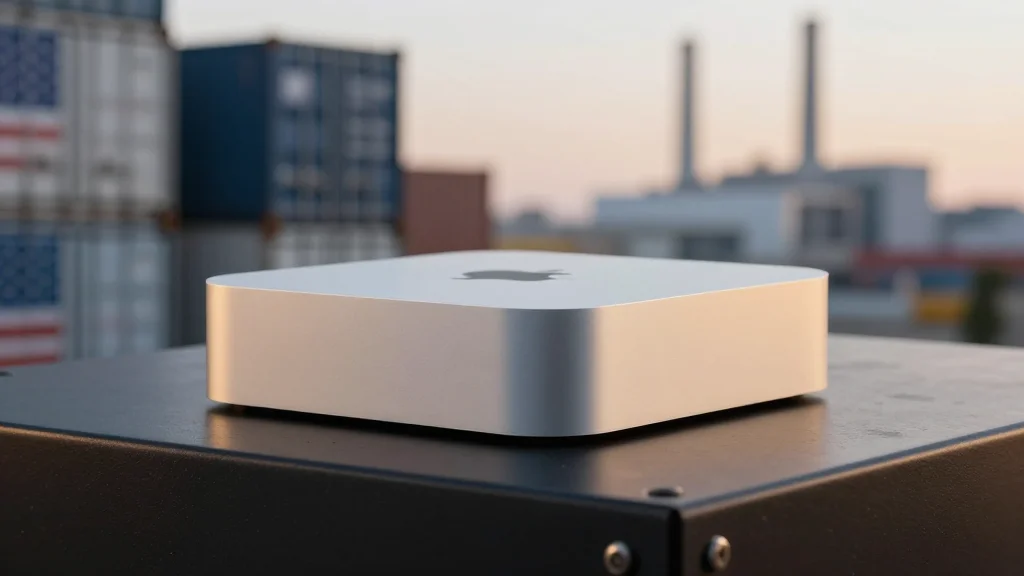
Apple’s Mac Mini Faces Weeks‑long Back‑order as AI Demand Outstrips Supply

Why It Matters
The Mac mini back‑order illustrates how AI demand can quickly outpace hardware supply, forcing even a cash‑rich giant like Apple to adjust pricing and production strategy. For supply‑chain managers, the episode underscores the need for flexible sourcing and the risks of component shortages in high‑performance memory and storage. It also signals that AI‑ready devices will become a new growth engine, reshaping demand forecasts across the PC industry. For investors, the situation offers a dual narrative: short‑term revenue pressure from delayed shipments versus long‑term upside as Apple captures a premium AI‑hardware market. The planned U.S. production shift could improve margins and reduce geopolitical risk, but it also requires capital investment and coordination with domestic suppliers.
Key Takeaways
- •Mac mini price increased from $599 to $799, 512 GB/16 GB RAM now entry‑level
- •Estimated delivery pushed to June 9‑16 2026, weeks‑long back‑order
- •CEO Tim Cook warned the Mac mini and Mac Studio may need several months to rebalance supply and demand
- •Mac revenue rose 6% YoY to $8.4 billion despite constraints
- •Apple plans to shift Mac mini assembly to the U.S. later in 2026 as part of a $600 billion manufacturing commitment
Pulse Analysis
Apple’s Mac mini supply crunch is a textbook case of demand‑driven supply‑chain disruption in the AI era. Historically, Apple’s tight inventory management has insulated it from major stockouts, but the unexpected surge in on‑device AI workloads has exposed a blind spot: the company’s reliance on a limited pool of high‑bandwidth memory and SSD suppliers. By raising the entry price and extending lead times, Apple is effectively monetizing scarcity, a tactic that can protect short‑term margins but risks alienating price‑sensitive developers and small businesses.
The decision to bring production stateside reflects a strategic pivot toward supply‑chain resilience. Domestic assembly can shorten lead times, reduce exposure to geopolitical tariffs, and align with the U.S. government’s push for on‑shoring semiconductor manufacturing. However, the $600 billion figure suggests Apple is committing a substantial portion of its capital budget, which could pressure cash flow if the AI‑driven demand plateau or if competitors launch alternative low‑cost AI desktops.
Looking ahead, the Mac mini’s back‑order may catalyze broader industry shifts. OEMs will likely reassess capacity planning for AI‑optimized devices, and component makers may accelerate capacity expansions for LPDDR5 and NVMe storage. For Apple, the key will be balancing premium pricing with the need to maintain market share against rivals like Dell and Lenovo, which are also courting AI developers. If Apple can successfully scale U.S. production and smooth out the supply curve, it could lock in a lucrative segment of the AI hardware market and set a precedent for future on‑device AI products.
Apple’s Mac mini faces weeks‑long back‑order as AI demand outstrips supply
Comments
Want to join the conversation?
Loading comments...