Arabian Peninsula Faces Urgent Push for Regional Integration to Capture Shifting Supply‑Chain Value

Why It Matters
The Peninsula’s integration drive matters because it sits at the nexus of global energy and trade flows. A more cohesive supply‑chain network could reduce reliance on external manufacturers, retain higher value‑added activities within the region, and enhance resilience against geopolitical shocks that have historically disrupted oil and shipping lanes. By lowering transport costs and creating redundancy, a geo‑industrial corridor would also make the region more attractive to foreign investors seeking stable, proximate production bases. Moreover, the projected $3‑5 trillion reallocation of supply‑chain value underscores a broader shift toward regionalized, risk‑aware sourcing. If the Arabian Peninsula can capture a larger share of this value, it could diversify its economies beyond hydrocarbons, foster job creation in manufacturing and logistics, and strengthen its bargaining position in global trade negotiations.
Key Takeaways
- •Intra‑regional trade currently accounts for only 10‑12 percent of the Peninsula’s total trade.
- •Global supply‑chain realignment could shift $3‑5 trillion of value over the next decade.
- •Daily oil transit through the Strait of Hormuz is roughly 20‑21 million barrels.
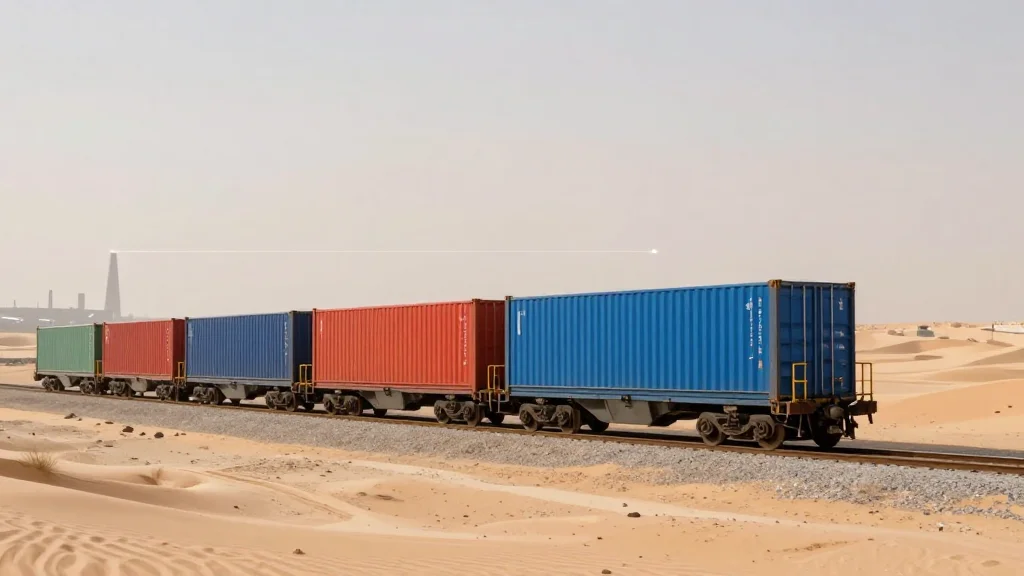
- •A proposed geo‑industrial corridor would link the Red Sea, Arabian Sea and Gulf via rail, pipelines and industrial zones.
- •Targeting petrochemical clusters within 200‑300 km of feedstock could cut transport costs and improve margins.
Pulse Analysis
The editorial’s call for a geo‑industrial corridor reflects a strategic pivot that mirrors similar initiatives in East Asia and Europe, where integrated logistics corridors have unlocked new manufacturing ecosystems. Historically, the Arabian Peninsula has relied on a linear export model—extract, ship, and let downstream processing happen elsewhere. The proposed corridor attempts to break that linearity by creating a feedback loop where feedstock, processing, and distribution coexist within a tightly knit geography.
From a competitive standpoint, the Peninsula faces a timing challenge. Competing blocs such as the EU’s Green Deal and China’s Belt and Road are already cementing supply‑chain nodes that could lock in future trade patterns. The region’s advantage lies in its proximity to both European and Asian markets, but that advantage erodes without the infrastructure to move goods efficiently and reliably. A multi‑node corridor would not only lower costs but also provide the redundancy needed to weather geopolitical tensions that have historically targeted chokepoints like the Strait of Hormuz and the Suez Canal.
Looking ahead, the success of this integration will hinge on governance structures that can align sovereign interests, private capital, and technical expertise. The editorial’s emphasis on precision over breadth suggests that pilot projects—perhaps a single petrochemical hub linked to a rail spur—could serve as proof points. If those pilots demonstrate tangible cost savings and higher conversion margins, they could catalyze broader investment, turning the Peninsula’s abundant capital from a static reserve into a dynamic engine of industrial depth. The region’s ability to act decisively now will determine whether it captures a share of the $3‑5 trillion supply‑chain shift or continues to export raw‑material value at a premium.
Arabian Peninsula Faces Urgent Push for Regional Integration to Capture Shifting Supply‑Chain Value
Comments
Want to join the conversation?
Loading comments...