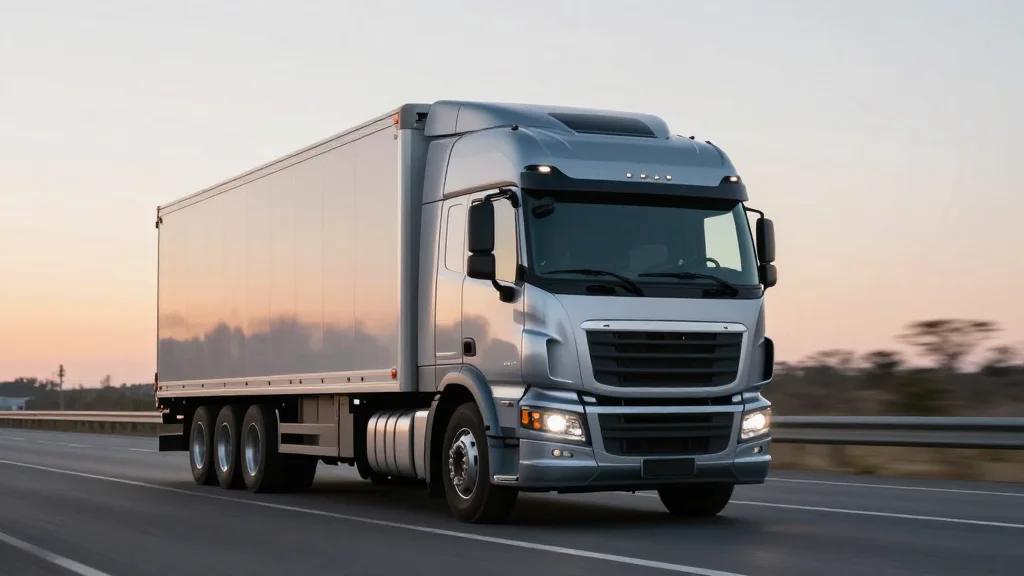
Autonomous Freight Startups Kodiak AI Raises $100M, Humble Launches Electric Hauler

Companies Mentioned
Why It Matters
The infusion of $100 million into Kodiak AI, even at a discounted price, signals that capital markets remain confident in the long‑term profitability of autonomous trucking despite near‑term cash burn. The funding will accelerate technology validation, expand pilot programs, and potentially lower the cost curve for driverless freight, addressing chronic driver shortages and rising labor costs. Humble’s launch of a cabless electric hauler introduces a new design philosophy that could reshape vehicle architecture across the logistics sector. By integrating electrification and autonomy from the chassis up, Humble promises higher payloads, lower operating expenses, and a clear path to meeting corporate sustainability targets. If the managed‑service model gains traction, it could shift asset ownership away from carriers toward technology providers, redefining traditional supply‑chain relationships.
Key Takeaways
- •Kodiak AI raised $100 million at $6.50 per share, a 28% discount to its prior close.
- •Kodiak’s Q1 revenue grew to $1.8 million, but operating loss widened to $37.8 million.
- •Humble unveiled a cabless electric Class 8 hauler capable of 82,000 lb payloads.
- •Both startups target structured logistics hubs first, with plans for public‑highway driverless ops by late 2026.
- •The moves reflect intensified investor and industry focus on autonomous, electric freight solutions.
Pulse Analysis
The concurrent funding round for Kodiak AI and the product launch by Humble illustrate two complementary pathways converging on the same goal: a driverless, electrified freight network. Kodiak’s approach leans on a transitional driver‑as‑a‑service model, allowing carriers to retain asset ownership while gradually shifting operational risk to the technology provider. This model mitigates regulatory uncertainty and eases carrier adoption, but it also prolongs the capital‑intensive phase of owning and maintaining autonomous fleets.
Humble’s strategy, by contrast, eliminates the cab entirely, reducing deadweight and simplifying the autonomy stack. By offering a fully managed service, Humble sidesteps the asset‑ownership dilemma altogether, positioning itself as a logistics‑as‑a‑service platform. This could accelerate adoption in high‑volume, repeatable routes such as port drayage, where carriers are eager to outsource complexity. However, the lack of a human driver raises immediate safety and liability questions that regulators will need to resolve before open‑road deployment.
Market dynamics suggest that the next 12‑18 months will be a litmus test for both models. If Kodiak can validate its safety score and retire safety drivers without incident, it will prove that incremental transition can scale. Meanwhile, Humble’s ability to secure anchor customers and demonstrate reliability in dense, mixed‑traffic environments will determine whether a cabless design can overcome public perception and regulatory hurdles. Investors are likely to watch these pilots closely, as successful outcomes could unlock a new wave of capital into autonomous freight, reshaping the economics of long‑haul logistics and accelerating the shift toward greener supply chains.
Autonomous Freight Startups Kodiak AI Raises $100M, Humble Launches Electric Hauler
Comments
Want to join the conversation?
Loading comments...