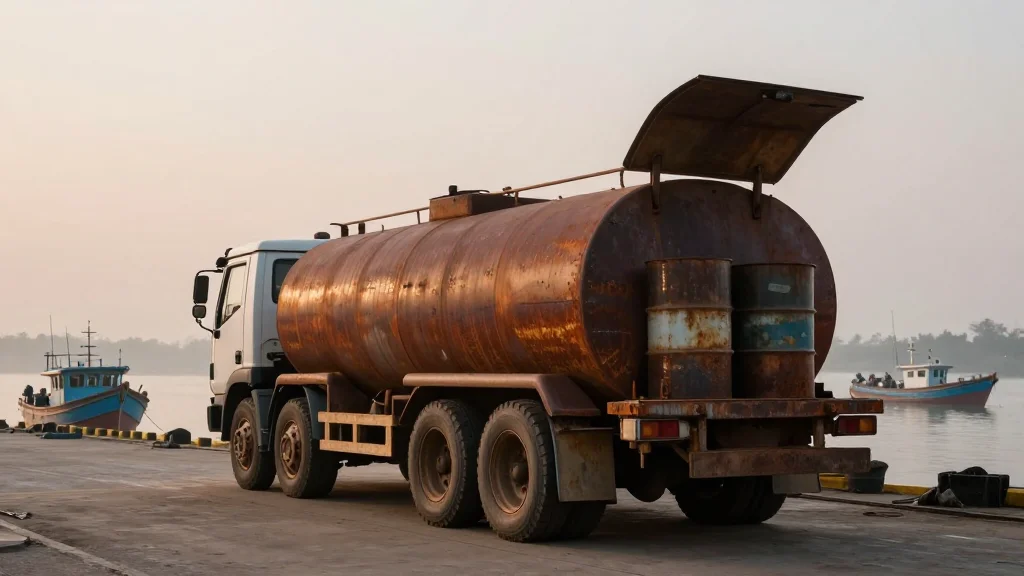
Bangladesh’s Three‑Week Fuel Shortage Strains Transport, Power and Fisheries for 170 Million

Why It Matters
The fuel shortage highlights the fragility of Bangladesh’s energy‑dependent supply chains, from power generation to fisheries and food distribution. With 170 million people affected, any prolonged disruption could exacerbate inflation, reduce export earnings from fish and agricultural products, and undermine the legitimacy of the newly elected BNP government. A sustained buffer stock and stricter anti‑hoarding enforcement could set a precedent for other South Asian economies that rely heavily on imported fuel. Successful mitigation would also demonstrate how policy tools—such as demand‑side rationing and hybrid education—to reduce traffic congestion can be leveraged in future energy crises.
Key Takeaways
- •Three‑week fuel shortage impacts an estimated 170 million Bangladeshis.
- •Over 1,000 trawlers stranded, leaving 100,000+ fishermen idle.
- •BNP government proposes a three‑month fuel reserve and hybrid schooling to cut traffic.
- •Power plants running at reduced capacity; shopping malls stay open until 7 PM.
- •Minister Iqbal Hassan Mahmood Tuku asserts adequate national fuel supplies while targeting illegal hoarders.
Pulse Analysis
Bangladesh’s current fuel crunch is a textbook case of how geopolitical shocks—here, the Iran‑Israel conflict—can cascade through a tightly interlinked supply chain. The country’s reliance on imported diesel for power generation and transport makes it especially vulnerable to global price spikes and shipping disruptions. The BNP’s response blends short‑term demand management (rationing, hybrid schooling) with a longer‑term supply‑side buffer, a dual strategy that mirrors crisis‑management playbooks used in oil‑dependent economies.
Historically, Bangladesh has weathered fuel shortages by tapping strategic reserves and imposing price controls, but the scale of this episode—affecting nearly the entire population—exceeds prior incidents. The government’s insistence that “adequate supplies” exist, despite visible queues, suggests a communication gap that could fuel public unrest. Effective enforcement against hoarding will be critical; without it, any buffer stock could be quickly eroded.
Looking ahead, the crisis may accelerate structural reforms. If hybrid schooling reduces commuter traffic, it could lower baseline fuel demand, freeing up more diesel for power plants and freight. Moreover, the experience may push policymakers to diversify energy sources, such as expanding natural gas or renewable capacity, to insulate the economy from future external shocks. The next few weeks will test whether Bangladesh can translate policy announcements into tangible supply‑chain resilience.
Bangladesh’s Three‑Week Fuel Shortage Strains Transport, Power and Fisheries for 170 Million
Comments
Want to join the conversation?
Loading comments...