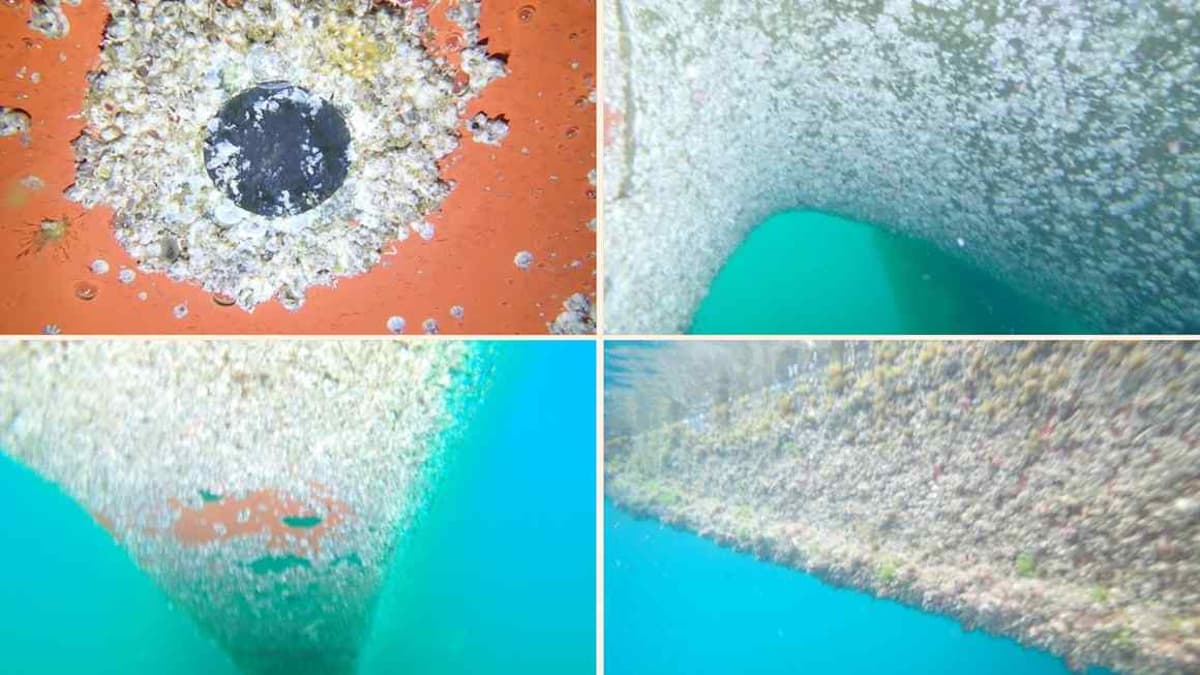
Barnacles and Jellyfish Infest Ships Trapped in the Gulf
Why It Matters
Extended fouling inflates operating costs and threatens supply‑chain reliability, prompting insurers and ports to reassess risk models.
Key Takeaways
- •Barnacle buildup raises fuel use by up to 15%.
- •Jellyfish swarms damage ventilation and safety equipment.
- •Cleaning delays add $200,000 per vessel on average.
- •Port authorities consider bio‑fouling mitigation fees.
- •Insurance premiums may rise for Gulf‑blocked ships.
Pulse Analysis
The sudden surge of barnacles and jellyfish on vessels stranded in the Gulf underscores a rarely discussed side effect of maritime congestion. When ships are forced to idle for weeks, their hulls become prime real estate for marine organisms. This bio‑fouling not only increases drag, leading to higher fuel consumption, but also creates safety hazards as jellyfish can clog cooling systems and obstruct deck operations. Operators now face the dual burden of navigating geopolitical risk while budgeting for emergency de‑contamination, a cost that can erode profit margins on already thin shipping rates.
Beyond immediate operational headaches, the fouling episode raises broader questions about supply‑chain resilience. Prolonged delays in a key chokepoint ripple through global trade, inflating freight rates and prompting shippers to seek alternative routes or modes. Ports along the Gulf are evaluating new protocols, including mandatory hull inspections and bio‑fouling fees, to offset cleanup costs and protect local ecosystems. Insurers, too, are revisiting underwriting criteria, factoring in the likelihood of environmental degradation when assessing coverage for vessels caught in geopolitical standstills.
Looking ahead, the industry may need to adopt proactive measures to mitigate similar scenarios. Anti‑fouling coatings, regular hull cleaning schedules, and real‑time monitoring of marine growth can reduce drag penalties and safety risks. Moreover, collaborative frameworks between governments, shipping lines, and port authorities could streamline clearance processes, minimizing idle time that fuels bio‑fouling. As climate change reshapes marine habitats, the convergence of security, environmental, and economic pressures will likely make bio‑fouling a more prominent concern for global logistics.
Barnacles and jellyfish infest ships trapped in the Gulf
Comments
Want to join the conversation?
Loading comments...