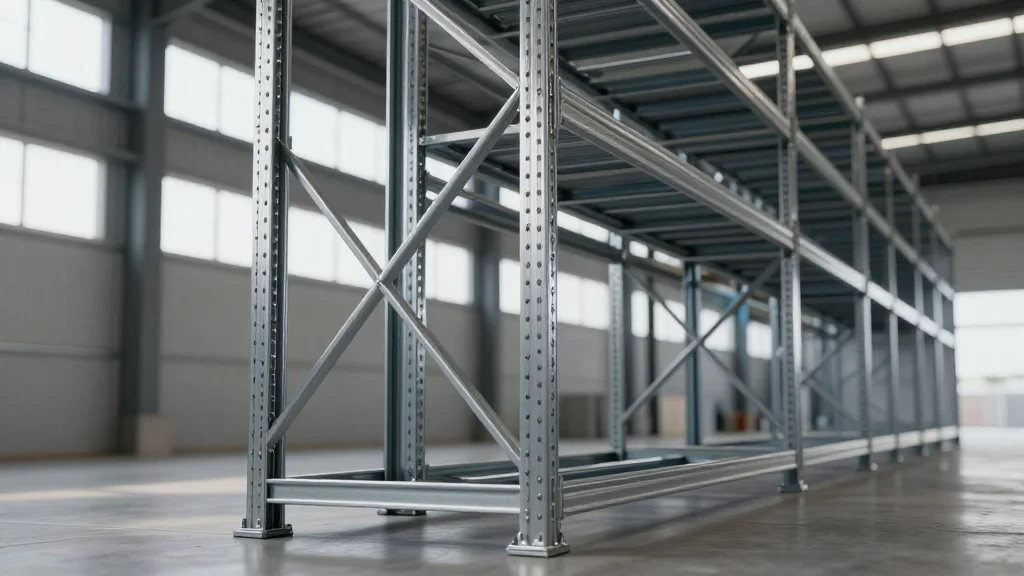
Best Practices: Same Rack, New Demands
Why It Matters
Higher racks unlock valuable vertical cube, reducing real‑estate costs while compliance pressures force smarter engineering and modular designs, directly impacting warehouse economics and scalability.
Key Takeaways
- •E‑commerce drives taller racks, pushing clear heights to 35‑40 ft
- •New IBC and RMI codes demand larger base plates and stronger frames
- •Reconfigurable rack designs reduce future retrofit costs
- •Cube‑mindset maximizes vertical space, using narrow‑aisle and double‑deep layouts
- •Semi‑automation shuttles integrate with traditional racks for incremental throughput gains
Pulse Analysis
The global warehouse racking market is projected to hit $12.4 billion by 2030, up from $9.7 billion in 2024, as e‑commerce fuels a surge in SKU variety and order complexity. Companies are forced to squeeze more inventory into existing footprints, prompting a shift toward taller, denser rack systems. However, the push for 35‑ to 40‑foot clear heights collides with stricter International Building Code (IBC) and Rack Manufacturers Institute (RMI) seismic requirements, compelling manufacturers to adopt larger base plates, heavier‑duty frames, and reinforced concrete slabs to sustain higher point loads.
Engineering teams are increasingly emphasizing flexibility. A reconfigurable rack architecture—designed for worst‑case loads and easy beam relocation—helps businesses avoid costly tear‑downs when product mixes evolve. Simultaneously, a "cube" mindset encourages operators to treat the warehouse as a three‑dimensional volume, leveraging narrow‑aisle, double‑deep, drive‑in, and push‑back rack configurations to maximize vertical storage without expanding the building envelope. These strategies reduce floor space consumption and improve inventory density, delivering measurable cost savings on real‑estate and labor.
Automation is not replacing racks but augmenting them. Semi‑automated shuttle systems and goods‑to‑person solutions can be retrofitted onto existing rack frames, offering a pragmatic entry point for firms hesitant to invest in full‑scale robotics. Proprietary tube‑rack designs, like those from Nucor, meet heightened seismic standards while minimizing additional steel weight, preserving aisle clearance for forklift traffic. As the industry balances higher density demands with compliance and cost pressures, the integration of adaptable rack designs and incremental automation will define the next wave of warehouse efficiency.
Best Practices: Same rack, new demands
Comments
Want to join the conversation?
Loading comments...