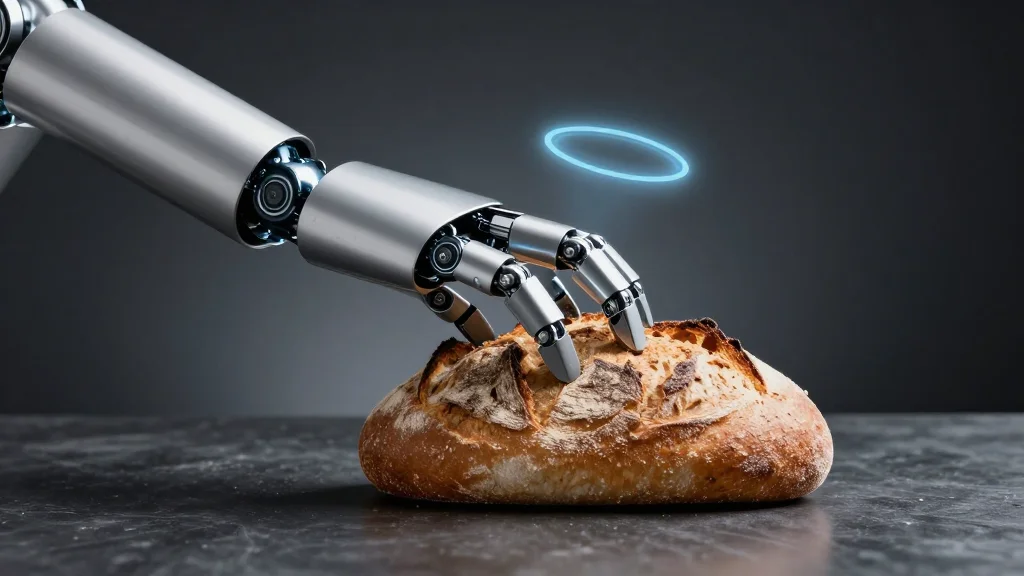
Beyond GenAI: How Agentic AI Is Redefining the Human-Machine Relationship in Food Manufacturing
Why It Matters
Agentic AI promises to revive stagnant productivity and address chronic labor‑retention challenges in U.S. food manufacturing, giving early adopters a competitive edge. Its blend of autonomy and human oversight creates a scalable, trustworthy path to smarter factories.
Key Takeaways
- •Agentic AI acts as autonomous digital co‑worker on shop floor
- •Enhances uptime via real‑time troubleshooting and anomaly detection
- •Human‑in‑the‑loop ensures safety and trust
- •Improves worker retention by reducing repetitive tasks
- •Roadmap: aid → reasoning → proactive diagnostics
Pulse Analysis
The rise of agentic AI marks a shift from static, rule‑based tools to dynamic, self‑learning software that can perceive a factory’s environment and act with minimal supervision. In food manufacturing, where line speed and quality are paramount, these digital agents can continuously monitor equipment, flag deviations before they become defects, and generate actionable insights for operators. By integrating real‑time data streams—from sensors to maintenance logs—agents transform raw information into prescriptive recommendations, effectively turning the shop floor into an intelligent, adaptive ecosystem.
Beyond the technology itself, the human‑in‑the‑loop framework is critical for adoption. Workers retain ultimate decision‑making authority, ensuring that AI‑driven actions align with safety protocols and corporate culture. This collaborative model not only mitigates risk but also enhances employee engagement; operators see AI as a supportive teammate that handles repetitive tasks, freeing them to focus on higher‑value problem solving. As labor shortages tighten, such augmentation can improve job satisfaction and reduce turnover, a key metric for manufacturers battling declining tenure.
Looking ahead, the staged evolution—from autonomous aid to reasoning agents and finally proactive diagnostics—suggests a roadmap for incremental investment. Early‑stage deployments focus on conversational assistants and rule‑based triggers, while near‑future implementations will coordinate multiple sub‑agents to orchestrate complex workflows. The ultimate vision is a predictive layer that anticipates equipment failures, optimizes shift staffing, and continuously refines its own algorithms. Companies that strategically embed these capabilities now will likely capture the productivity gains that have eluded the sector for the past decade.
Beyond GenAI: How Agentic AI Is Redefining the Human-Machine Relationship in Food Manufacturing
Comments
Want to join the conversation?
Loading comments...