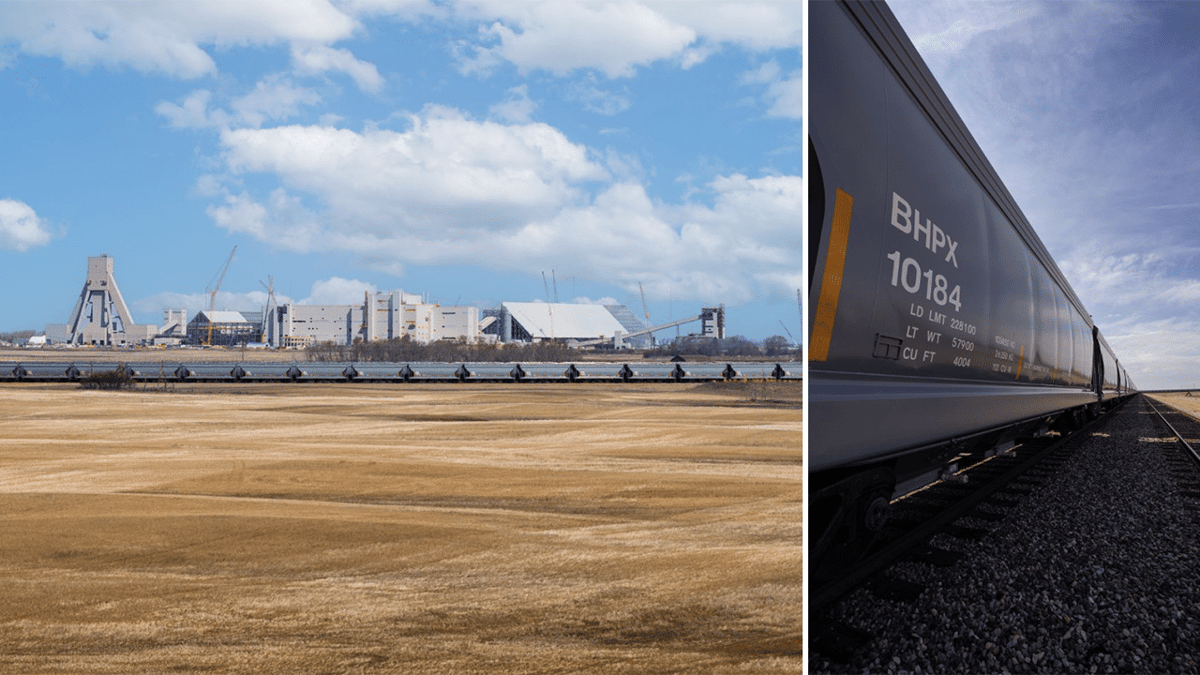
BHP Teaming With CN, CPKC to Move Potash
Companies Mentioned
Why It Matters
Securing dual‑rail logistics gives BHP a resilient export pathway, boosting Canada’s potash export capacity and supporting the broader agricultural fertilizer market.
Key Takeaways
- •BHP secures dual rail access for Jansen potash project.
- •Jansen aims for 8.5 Mt annual potash output by 2027.
- •Four‑year rail contracts cover Stage 1, with extensions for later phases.
- •Vancouver port link positions Canada as key global potash exporter.
Pulse Analysis
The global fertilizer market is tightening as agricultural demand rebounds, and potash remains a cornerstone of crop nutrition. BHP’s entry into the Saskatchewan potash sector signals a strategic diversification beyond its traditional mining portfolio, leveraging its capital strength to capture a share of a market valued at over $30 billion annually. By aligning with both CN and CPKC, BHP mitigates the risk of single‑carrier dependency, a lesson learned from past supply‑chain disruptions in the mining sector. This dual‑rail strategy also positions the Jansen mine to respond swiftly to price spikes or logistical bottlenecks, ensuring consistent delivery to downstream fertilizer producers.
The Jansen project’s scale—8.5 million tonnes per year—places it among the world’s largest potash developments. The $10.5 billion investment reflects confidence in long‑term demand, while the four‑year rail agreements provide a foundation for the initial production phase. The Jansen Access Spur, connecting directly to both CN’s and CPKC’s main lines, reduces transit times to the Westshore Terminals, cutting shipping costs and enhancing competitiveness against South American and Russian exporters. Moreover, the use of BHP‑owned railcars under the CPKC agreement underscores a trend toward asset‑light logistics solutions that preserve operational control.
For Canada, the partnership underscores the country’s ambition to cement its status as a premier potash exporter. The rail contracts generate incremental revenue for CN and CPKC, while the increased throughput at Vancouver’s port infrastructure stimulates ancillary services such as stevedoring and customs processing. In the broader North American context, the move intensifies competition among rail carriers to secure high‑value commodity contracts, potentially driving service innovations and pricing efficiencies. Ultimately, BHP’s rail‑linked Jansen mine could reshape supply dynamics, offering growers worldwide a more reliable source of the essential nutrient potassium.
BHP Teaming With CN, CPKC to Move Potash
Comments
Want to join the conversation?
Loading comments...