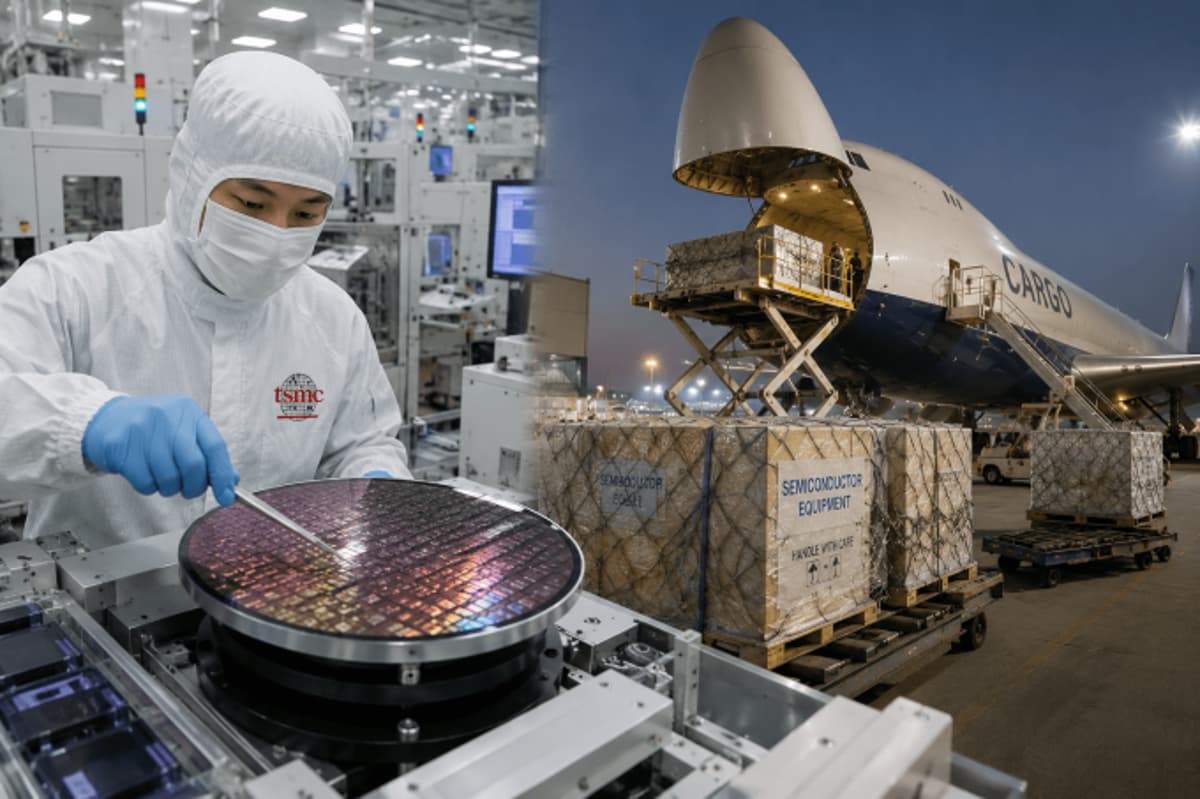
Booked Out Until 2028: The AI Boom Is Now Air Cargo’s Growth Engine
Why It Matters
The AI‑driven cargo surge lifts freight rates and reshapes trade flows, creating revenue opportunities for carriers but also capacity constraints that could pressure margins.
Key Takeaways
- •AI‑related air cargo grew 70% YoY, driving overall import surge
- •Data‑centre equipment shipments up 42% last year, led by GPUs
- •Asia‑Pacific contributed ~80% of global air cargo growth in 2026
- •Spot rates hit $3.40/kg, 41% higher YoY
- •Capacity expands <2% beyond 2025, tightening supply‑demand balance
Pulse Analysis
The rapid rollout of artificial‑intelligence workloads is rewriting the economics of air freight. As chipmakers scramble to fill order books that extend to 2028, the need for high‑value, time‑critical components—GPUs, AI accelerators, networking gear—has exploded. Aevean’s data shows hi‑tech imports to the United States jumped 70% in the first quarter, while traditional ecommerce cargo slipped 11%. This divergence is concentrating growth in a narrow segment of the market, with Asia‑Pacific accounting for roughly 80% of the global tonnage increase.
Airlines are feeling the pressure of a supply‑demand mismatch. Overall capacity is projected to rise a mere 1.2% above 2025 levels, yet spot rates have surged to $3.40 per kilogram, a 41% year‑over‑year rise. The surge in oversized semiconductor‑manufacturing equipment is also exposing aircraft size limits, prompting carriers such as Morrison Express to secure dedicated Boeing 747 freighters for nose‑loading. While the aging 747 fleet gains a temporary reprieve, the broader industry must balance rate inflation against the risk of capacity bottlenecks on key trans‑Pacific lanes.
Looking ahead, the AI‑fuelled cargo boom is both an opportunity and a cautionary tale. Continued investment in U.S. fab sites and data‑centre clusters could sustain demand through 2030, but analysts warn of a potential AI bubble and lingering geopolitical uncertainty, especially in the Middle East, which could curtail capacity growth. Logistics providers that diversify into high‑margin, AI‑related lanes and secure flexible aircraft assets will be best positioned to capture premium pricing. At the same time, carriers must monitor rate volatility and consider fleet adaptations to accommodate ever‑larger manufacturing tools.
Booked out until 2028: the AI boom is now air cargo’s growth engine
Comments
Want to join the conversation?
Loading comments...