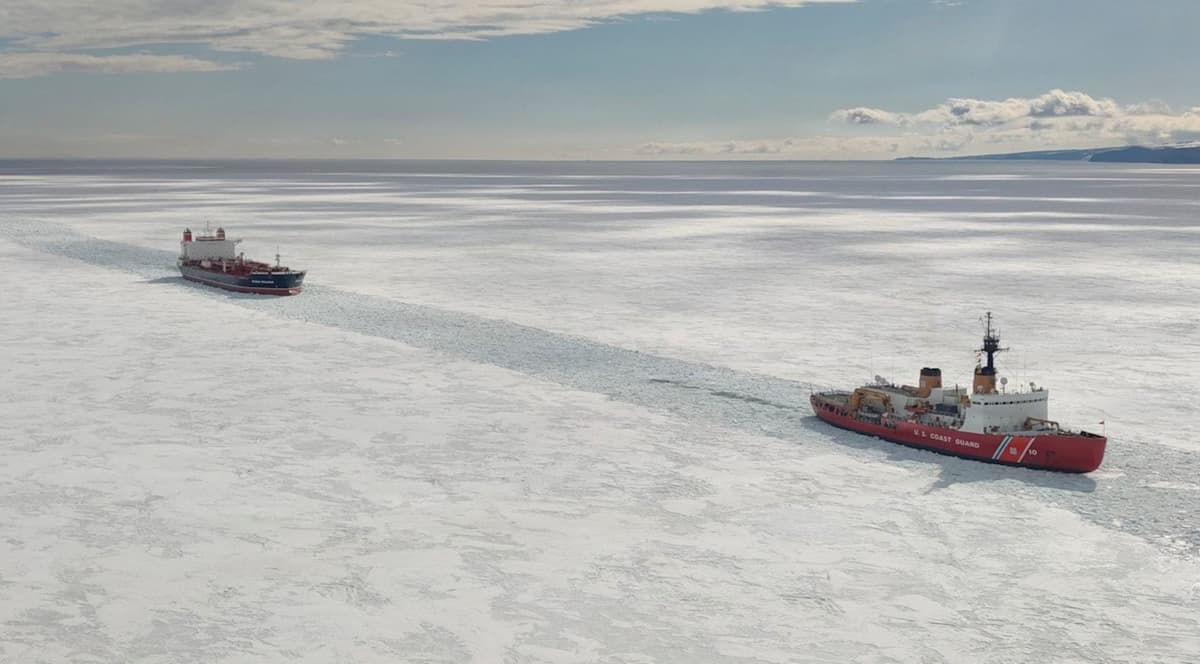
Build the First Donald J. Trump Maritime Prosperity Zone in Alaska
Why It Matters
An Arctic MPZ secures strategic access, creates durable maritime jobs, and counters foreign powers by concentrating U.S. industrial and logistical capabilities in a high‑risk region.
Key Takeaways
- •Alaska chosen for first MPZ to secure Arctic shipping routes
- •Federal agencies earmark billions for maritime infrastructure and shipbuilding
- •MPZ model aligns ports, logistics, defense, and private investment
- •Concentrated maritime zones aim to replicate China’s regional industrial scale
- •Existing authorities enable immediate task‑force creation without new legislation
Pulse Analysis
The United States is shifting from fragmented maritime policy to a focused, region‑based strategy under the Trump‑era Maritime Action Plan. With Russia militarizing its Arctic coast and China eyeing the Northern Sea Route, American policymakers see the High North as a critical frontier for energy, mineral, and security interests. Concentrating effort in a single geographic hub mirrors the industrial clustering that propelled China’s shipbuilding dominance, offering a pathway to rebuild U.S. maritime depth while addressing supply‑chain vulnerabilities.
A Maritime Prosperity Zone (MPZ) is defined as a coordinated ecosystem of ports, shipyards, logistics networks, financing mechanisms, and workforce programs. In Alaska, the plan calls for immediate upgrades to Anchorage, Nome, and Dutch Harbor, enhanced fuel storage, and Arctic‑capable repair facilities. Funding streams from the FY2027 budget, the Department of Transportation’s infrastructure program, and Navy shipbuilding initiatives converge under an inter‑agency task force led by the Department of Commerce and MARAD. By aligning commercial shipping contracts, defense sealift requirements, and private investment, the MPZ seeks to generate predictable throughput that can sustain shipbuilding and ancillary industries.
The success of the Alaska MPZ hinges on sustained coordination across federal, state, and private actors. While U.S. maritime costs remain higher than foreign competitors, the concentration model promises economies of scale and reduced regulatory friction, ultimately lowering long‑term expenses. If the pilot demonstrates reliable cargo volumes and a thriving repair ecosystem, it will provide a template for additional zones along the Gulf Coast, the Great Lakes, and the Pacific Northwest. Such a network could reshape America’s strategic posture, ensuring resilient supply chains and a credible maritime presence in contested waters.
Build the First Donald J. Trump Maritime Prosperity Zone in Alaska
Comments
Want to join the conversation?
Loading comments...