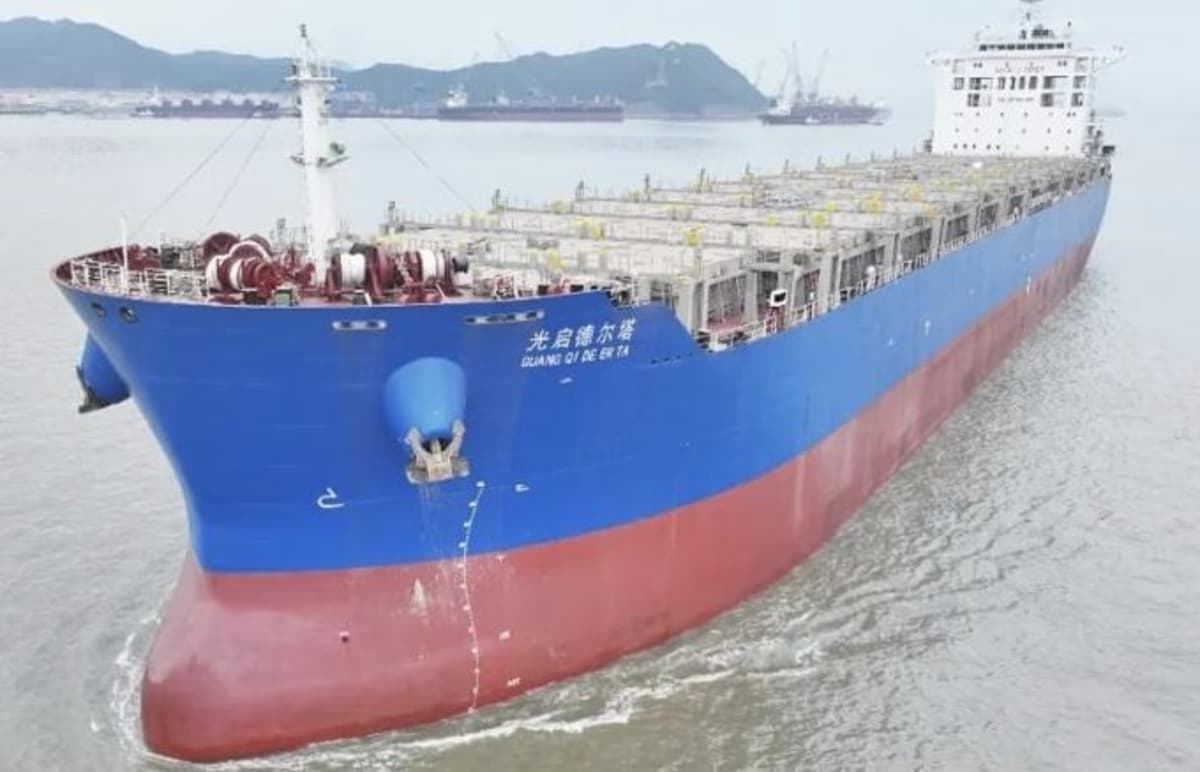
Bulk-to-Boxship Conversion Spree for Chinese Carriers
Why It Matters
The conversion wave reshapes fleet composition, delivering capacity faster than greenfield builds and signaling a strategic pivot toward more flexible, lower‑emission container assets.
Key Takeaways
- •Cosco converting two 2,500‑teu boxships, chartered 18‑24 months at $27k/day.
- •Chan Xin 66 conversion yields 3,600‑teu vessel, CCS calls it largest.
- •Newbuild wait of 3‑4 years drives bulk‑to‑box conversions.
- •Chinese shipyards handle conversions while feeder orders extend to 2028.
- •Industry targets lower‑emission designs, including dual‑fuel and ammonia‑ready ships.
Pulse Analysis
The surge in bulk‑to‑box conversions reflects a structural shift in the container market. With global trade volumes rebounding and port congestion pushing up freight rates, shippers are desperate for additional feeder capacity. Traditional new‑build timelines of two to four years no longer meet the immediacy required, prompting owners to repurpose existing hulls. Conversions offer a cost‑effective shortcut, preserving capital while delivering vessels that can be deployed within months, thereby tightening the supply‑demand gap in a market that has been starved of new capacity.
Cosco’s twin Diamond 53 conversions and the CCS‑supervised overhaul of Chan Xin 66 illustrate the technical feasibility and commercial appeal of such projects. By stripping cranes, raising wheelhouses and installing modern container‑securing systems, owners can achieve up to seven container rows, translating to 2,500‑3,600 TEU capacities on hulls originally designed for bulk cargo. The $27,000‑per‑day charter secured by X‑Press Feeders underscores the premium placed on ready‑to‑run boxships, while the 18‑to‑24‑month charter windows provide predictable cash flow for shipowners navigating volatile freight markets.
Beyond immediate capacity gains, the conversion trend dovetails with the industry’s sustainability agenda. New feeder orders increasingly specify dual‑fuel engines and ammonia‑ready designs, positioning converted vessels as stepping stones toward greener fleets. Chinese shipyards, already busy with orders through 2029, are leveraging conversion projects to diversify revenue streams and retain skilled labor. As the market balances the need for rapid capacity expansion with emissions targets, bulk‑to‑box conversions are likely to become a permanent fixture in global shipping strategy.
Bulk-to-boxship conversion spree for Chinese carriers
Comments
Want to join the conversation?
Loading comments...