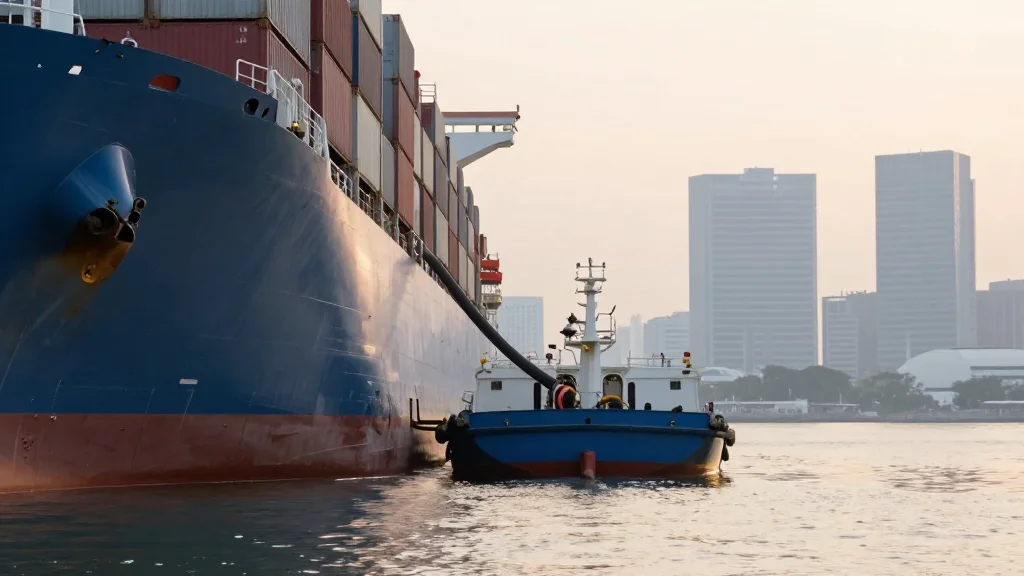
Bunker Fuel Shortages Loom After US Counter Blocks Strait of Hormuz
Why It Matters
A shortage of low‑sulfur bunker fuel threatens operating margins for container carriers and could accelerate fleet retrofits, reshaping cost structures across global shipping.
Key Takeaways
- •US actions choke Strait of Hormuz, cutting bunker fuel flow.
- •Global container fleet may face low‑sulfur fuel shortage in 2‑3 months.
- •Ships with exhaust scrubbers gain price advantage.
- •40% of containers equipped with scrubbers can burn high‑sulfur fuel.
- •Bunkering hubs like Singapore see rising inventories and price pressure.
Pulse Analysis
The Strait of Hormuz has long been the artery for bunker fuel moving from the Middle East to Asian markets, especially Singapore, the world’s largest bunkering hub. Recent U.S. counter‑operations that have effectively blocked commercial traffic have created a bottleneck in the supply chain, prompting analysts to flag a potential shortfall within the next two to three months. This disruption not only threatens the availability of low‑sulfur fuel, mandated by IMO 2020, but also adds volatility to a market already sensitive to geopolitical shocks.
Low‑sulfur bunker fuel scarcity drives a price premium that directly impacts container line operating costs. Vessels equipped with exhaust gas cleaning systems—scrubbers—can switch to higher‑sulfur, cheaper fuel while remaining compliant, giving them a distinct economic advantage. With roughly 40% of the global container fleet already fitted with scrubbers, ship owners without this technology face higher fuel expenditures or may be forced to secure limited low‑sulfur supplies at elevated rates. Bunkering hubs such as Singapore are already reporting tighter inventories and upward pressure on spot prices, signaling that the market is reacting swiftly to the supply shock.
The broader implication for the shipping industry is a possible acceleration of scrubber retrofits and a reassessment of fuel sourcing strategies. While high‑sulfur fuel remains abundant and inexpensive, regulatory compliance and environmental scrutiny keep low‑sulfur demand robust. Carriers may also explore alternative fuels, such as LNG or bio‑derived options, to hedge against future geopolitical disruptions. Ultimately, the current shortage underscores the fragility of global fuel logistics and could reshape cost structures, fleet investment decisions, and competitive dynamics for years to come.
Bunker fuel shortages loom after US counter blocks Strait of Hormuz
Comments
Want to join the conversation?
Loading comments...