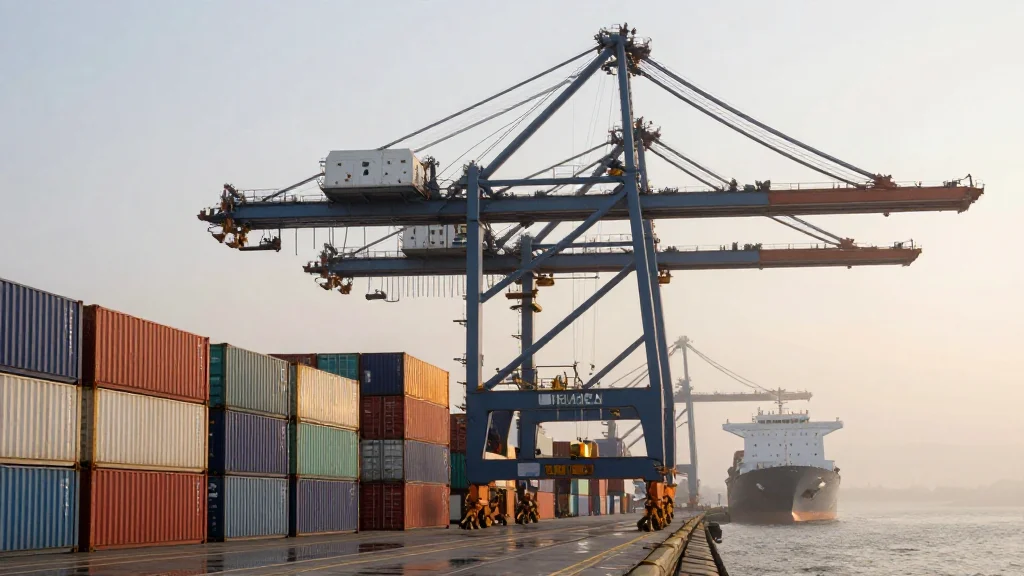
Chile Approves $4.45 Billion Expansion to Triple San Antonio Port Capacity

Why It Matters
The San Antonio expansion directly addresses Chile’s bottlenecked maritime infrastructure, which has limited the country’s ability to scale exports of copper, fruit, and seafood—key commodities in global supply chains. By tripling container capacity and improving multimodal connections, the project promises to lower freight costs, shorten lead times, and increase the reliability of Chilean supply routes, benefitting manufacturers and retailers worldwide. Regionally, the investment signals a shift in South America’s logistics hierarchy. As Peru’s Chancay port seeks to become a Pacific gateway for Asian trade, Chile’s upgraded facility will compete for the same cargo flows, potentially reshaping trade patterns and influencing foreign‑direct investment decisions across the continent.
Key Takeaways
- •Chile approves $4.45 billion expansion of San Antonio port, the largest port project in its history.
- •Capacity will triple to about six million TEU containers per year, adding a 2.5‑mile breakwater and two new terminals.
- •Bidding includes Van Oord (Netherlands), Dragados Sacyr (Spain), and CRCC Group (China).
- •Construction slated for 2027 after contract award expected by end of 2024.
- •Expansion aims to counter Peru’s Chancay megaport and secure Chile’s role in Pacific trade.
Pulse Analysis
Chile’s decision to pour $4.45 billion into the San Antonio port reflects a broader trend of strategic infrastructure spending to safeguard supply‑chain resilience. Historically, South American ports have lagged behind Asian and European hubs in terms of capacity and automation. By aligning the port upgrade with rail and road improvements, Chile is adopting a holistic logistics model that mirrors the integrated terminals of Singapore and Rotterdam, where hinterland connectivity is as critical as berth depth.
The competitive pressure from Peru’s Chancay megaport adds urgency. Cosco’s involvement brings Chinese capital and expertise, potentially accelerating Chancay’s ability to handle ultra‑large container vessels. Chile’s response—securing a consortium that blends European engineering with Chinese construction capabilities—suggests a pragmatic approach: leveraging the best of global talent while retaining domestic oversight. If the project stays on schedule, Chile could reclaim its status as the Pacific’s most efficient gateway, preserving export market share for its mineral and agricultural sectors.
Looking ahead, the success of San Antonio will hinge on execution and the ability to integrate sustainability standards. Environmental groups have long scrutinized dredging projects, and any delays could erode the projected economic benefits. Nonetheless, the approval signals confidence from both government and private stakeholders that modern, high‑capacity ports are indispensable assets in a world where supply‑chain disruptions are increasingly costly. Chile’s gamble may well set a benchmark for other Latin American nations grappling with similar geographic and infrastructural constraints.
Chile Approves $4.45 Billion Expansion to Triple San Antonio Port Capacity
Comments
Want to join the conversation?
Loading comments...