China Expands Global Supply‑Chain Hub Role with New Marine Engine and Logistics Push

Why It Matters
China’s push to become a supply‑chain coordinator reshapes global manufacturing dynamics. By moving up the value chain—offering advanced propulsion technology and orchestrating logistics networks—it reduces reliance on single‑point production and creates a more distributed, resilient system. For multinational firms, the shift means deeper engagement with Chinese partners for intermediate components, potentially altering sourcing strategies and cost structures. The emphasis on intermediate‑goods trade and overseas assembly also signals a strategic diffusion of Chinese industrial standards. Countries that host Chinese knock‑down assembly lines may adopt Chinese design specifications, influencing regional manufacturing ecosystems in Southeast Asia, Africa and Eastern Europe. This could accelerate technology transfer but also raise concerns about dependency and market access for local firms.
Key Takeaways
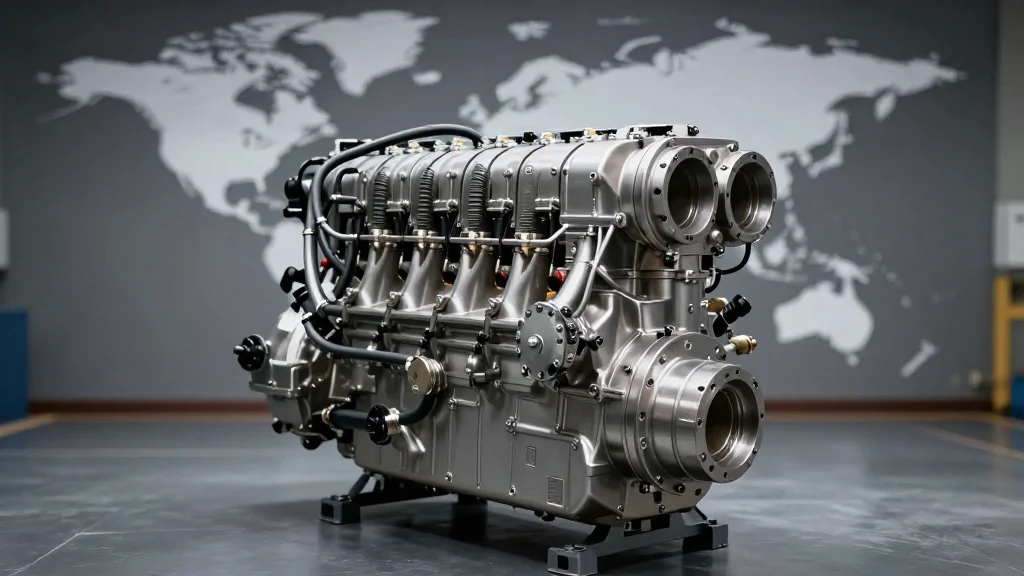
- •CSSC Engine delivered China’s first ammonia‑fueled low‑speed marine engine, partnering with 130+ international firms.
- •YTO Group works with over 700 suppliers and sells tractors in 100+ countries, expanding overseas assembly.
- •Zhengzhou logistics hub links >140 cities in 40+ countries via rail and 73 cities in 32 countries via air cargo.
- •Intermediate goods trade accounted for 16% of global reliance in 2023, driving export growth in 2025.
- •China’s 15th Five‑Year Plan (2026‑2030) targets expanded trade in intermediate goods and coordinated overseas supply chains.
Pulse Analysis
China’s supply‑chain strategy reflects a maturation of its industrial policy. The country is no longer content with being the world’s factory floor; it now seeks to become the nervous system that synchronises production, logistics and technology worldwide. The ammonia‑fueled engine is more than an environmental showcase—it is a platform for exporting high‑tech maritime solutions, a sector traditionally dominated by Europe and the United States. By bundling this with a sprawling partner network, China can lock in future orders and embed its standards in global shipping fleets.
Logistically, the Zhengzhou hub exemplifies a ‘dual‑modal’ approach that reduces transit times and diversifies routes away from congested seaports. Replicating the Zhengzhou‑Luxembourg model across Belt and Road corridors could create a lattice of semi‑autonomous supply nodes, mitigating risks from trade disputes or geopolitical shocks. However, the success of this model depends on the political stability of partner nations and the ability to maintain high service reliability.
For global supply‑chain managers, the implication is clear: Chinese coordination capabilities will increasingly dictate terms of trade for intermediate components. Companies may need to renegotiate contracts, invest in joint‑venture R&D, or diversify away from China to preserve bargaining power. The next decade will likely see a bifurcated landscape—one where firms that integrate with China’s hub enjoy streamlined access to a massive market, and another where firms that stay outside face higher costs and longer lead times.
China Expands Global Supply‑Chain Hub Role with New Marine Engine and Logistics Push
Comments
Want to join the conversation?
Loading comments...