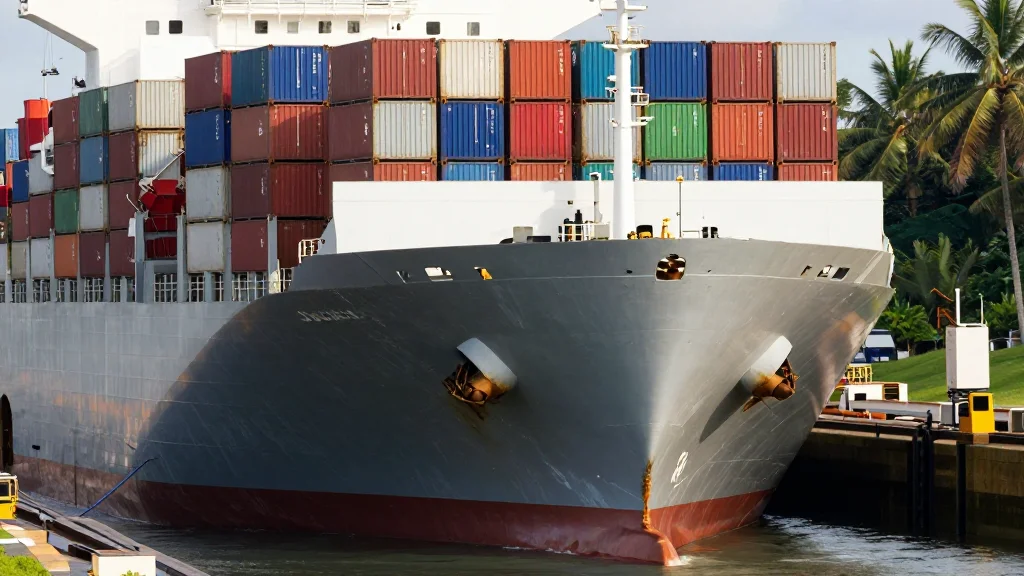
China Told Maersk and MSC to Drop Panama Port Operations
Companies Mentioned
Why It Matters
The order reshapes global shipping routes, potentially increasing freight costs and delivery times for multinational trade. It also underscores China’s growing leverage over critical maritime infrastructure, prompting shippers to reassess risk exposure.
Key Takeaways
- •China ordered Maersk, MSC to halt services at Panama’s Balboa port
- •Directive cites national security and compliance with Chinese maritime regulations
- •Rerouting may increase transit times and costs for Asia‑Europe shipments
- •Move signals Beijing’s growing influence over global shipping routes
- •U.S. and European shippers may reassess reliance on Chinese‑controlled corridors
Pulse Analysis
The abrupt suspension of Maersk and MSC services at Panama’s Balboa port highlights a new chapter in China’s maritime policy. By invoking national security, Beijing is asserting regulatory authority over foreign carriers that rely on its logistics network. This maneuver arrives amid broader geopolitical friction, where control of key chokepoints like the Panama Canal becomes a bargaining chip in trade negotiations. For global shippers, the immediate concern is the need to reconfigure routes, potentially shifting cargo to alternative trans‑Pacific corridors or longer inland pathways, which can add days to delivery schedules and inflate freight rates.
From a supply‑chain perspective, the directive forces a re‑evaluation of risk management strategies. Companies that depend on just‑in‑time inventory models must now factor in the volatility of port access in regions where political considerations can override commercial agreements. The added complexity may accelerate investment in diversified logistics solutions, such as increased use of rail‑to‑port hubs in China’s coastal provinces or greater reliance on larger vessels that can bypass certain ports altogether. Moreover, the move could spur regulatory responses from the United States and the European Union, seeking to protect their shipping interests and ensure open access to critical maritime routes.
In the longer term, China’s action may signal a shift toward greater self‑sufficiency in global trade flows. By tightening control over foreign operators, Beijing could be laying groundwork for a more domestically‑centric shipping ecosystem, potentially favoring Chinese carriers and ports. This could reshape competitive dynamics in the container market, prompting alliances and mergers among non‑Chinese firms to preserve market share. Stakeholders across the shipping industry should monitor policy developments closely, as further restrictions could reverberate through freight pricing, route planning, and the broader balance of power in international maritime trade.
China told Maersk and MSC to drop Panama port operations
Comments
Want to join the conversation?
Loading comments...