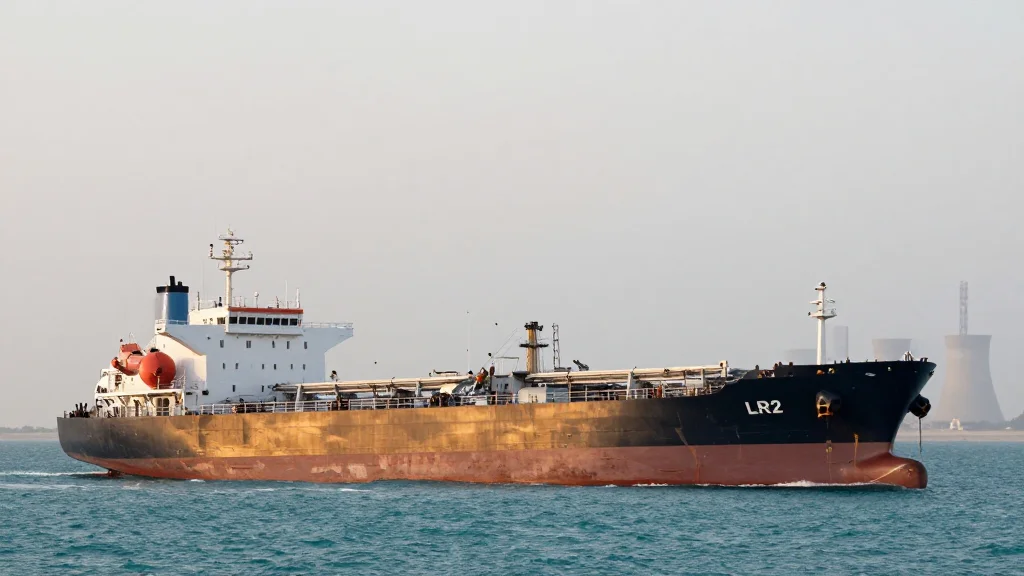
Clarksons Shuffles Product Tanker Assessments as Middle East War Rages On
Why It Matters
The revision signals lower freight earnings for product tankers as geopolitical tension disrupts traditional routes, affecting charterers, owners and investors. It also illustrates how quickly market benchmarks can be reshaped by conflict‑driven supply constraints.
Key Takeaways
- •Clarksons now assumes loading at Fujairah, not inside the Gulf.
- •Daily LR2 earnings drop to $109k from $140k under new model.
- •Hundreds of vessels remain trapped in the Gulf due to war.
- •Rate revision may depress product tanker market sentiment.
- •Analysts will monitor further adjustments as conflict evolves.
Pulse Analysis
The Red Sea and Persian Gulf have long been arteries for global energy logistics, but the recent US‑Israel war with Iran has turned the Strait of Hormuz into a chokepoint. Vessels that would normally load crude or refined products within the Gulf are now forced to reroute to Fujairah, a deep‑water hub on the UAE’s east coast. This detour adds transit time, fuel consumption, and exposure to heightened security risks, prompting shipowners and charterers to reassess voyage economics across the region.
Clarksons, the market’s leading shipping consultancy, responded by recalibrating its product tanker earnings indices. By assuming loading at Fujairah rather than Gulf ports, the firm reflects the reality that many ships cannot safely enter the Gulf. The revised model cuts the estimated daily earnings for a modern LR2 on a Fujairah‑Japan round trip to roughly $109,000, down $31,000 from the prior $140,000 figure. This adjustment not only aligns pricing with current operational constraints but also signals to the market that freight rates may stay suppressed until the geopolitical environment stabilizes.
For investors and industry stakeholders, the change underscores the volatility inherent in maritime trade during conflict. Lower earnings forecasts can pressure tanker valuations, affect debt covenants, and influence chartering strategies. Companies may explore alternative routes, such as the Cape of Good Hope, despite longer transit times, or invest in insurance products that mitigate war‑related risks. As the conflict evolves, further revisions to earnings models are likely, making real‑time data and flexible logistics planning essential for maintaining profitability in the product tanker sector.
Clarksons shuffles product tanker assessments as Middle East war rages on
Comments
Want to join the conversation?
Loading comments...