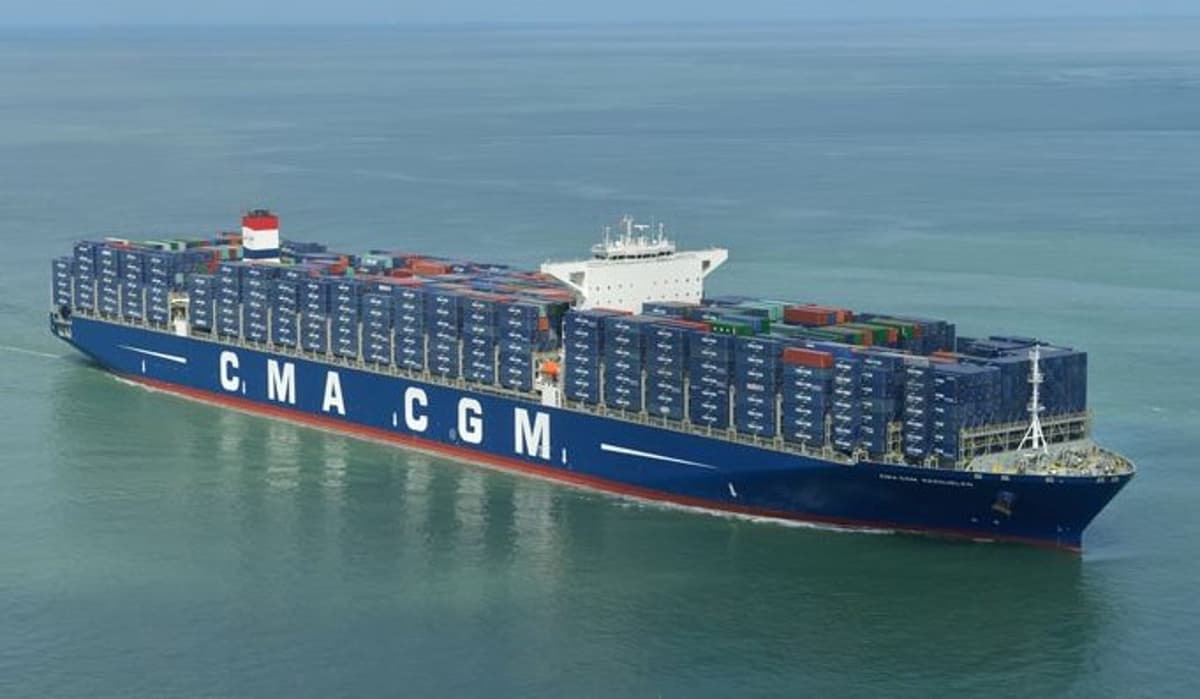
CMA CGM Fills Gap Between Japan and Europe
•February 27, 2026
0
Why It Matters
The service strengthens Asia‑Europe connectivity, giving shippers faster, more reliable access to European markets and enhancing CMA CGM’s competitive position in a key trade lane.
Key Takeaways
- •CMA CGM launches Ocean Rise Express weekly service.
- •14 vessels of 7,000‑10,000 TEU capacity.
- •Direct routes cut transit to 32‑45 days.
- •Service operates without Ocean Alliance partners.
- •Fills gap left by O.N.E. Japan‑Europe discontinuation.
Pulse Analysis
The East‑West corridor linking Japan, southern China and northern Europe has long been a bottleneck for manufacturers seeking timely market entry. While major carriers rely on alliances and transshipment hubs, CMA CGM has chosen to bypass those constraints with its Ocean Rise Express (OCR). By deploying a dedicated fleet of fourteen 7,000‑to‑10,000 TEU vessels, the French line creates a single‑ship string that runs from Kobe, Nagoya and Yokohama through Xiamen and Yantian before turning around the Cape of Good Hope to Rotterdam, Hamburg and Southampton. This approach reflects a broader industry shift toward greater asset control and schedule certainty.
Operationally, OCR promises transit times as low as 32 days from Yantian to Rotterdam and 38 days from Yokohama, shaving weeks off the conventional route that typically involves multiple transshipments in the Mediterranean or the Suez. Eliminating cargo transfers reduces handling risk, improves on‑time performance, and accelerates cash flow for exporters and importers alike. Moreover, the service runs independently of the Ocean Alliance, giving CMA CGM flexibility to set pricing and capacity without alliance constraints. The move also positions the carrier to capture freight that previously migrated to competitors after O.N.E. withdrew its direct Japan‑Europe sailings.
For shippers, the launch of Ocean Rise Express translates into a more reliable supply chain, lower insurance premiums, and the ability to plan inventory with greater confidence. Japanese and Chinese manufacturers can now reach European consumers faster, supporting just‑in‑time production models and reducing warehousing costs. Analysts view the service as a strategic hedge against congestion risks at the Suez Canal and potential geopolitical disruptions. As global trade volumes rebound, CMA CGM’s asset‑heavy, alliance‑free model may prompt rivals to reconsider their own network designs, intensifying competition on one of the world’s most lucrative trade lanes.
CMA CGM fills gap between Japan and Europe
0
Comments
Want to join the conversation?
Loading comments...