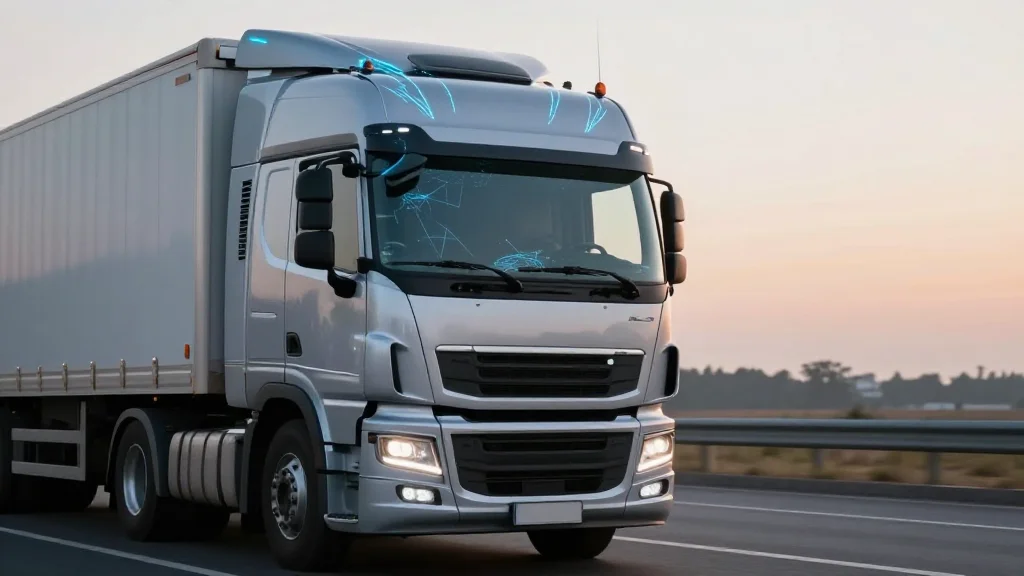
Code and Cargo: How AI Could Change Freight Logistics
Companies Mentioned

Why It Matters
AI threatens the proprietary tech moats of freight brokers, making speed of adoption a decisive competitive factor. Firms that embed AI deeply can protect margins, improve service, and capture market share.
Key Takeaways
- •AI boosts freight broker productivity up to 40% since 2022.
- •Start‑ups can replicate logistics platforms using LLM‑driven code generation.
- •Incumbents leverage scale, relationships, data to protect competitive moat.
- •Successful firms embed AI across talent, tech, data, and operating models.
Pulse Analysis
The logistics sector is at a crossroads as generative AI lowers the barrier to building sophisticated freight‑matching platforms. Large‑language models can generate code, integrate open data feeds, and create conversational interfaces that mimic the functionality of legacy broker software. This democratization enables nimble start‑ups to launch SaaS‑style solutions without the years of engineering and data collection traditionally required, intensifying competitive pressure on established forwarders.
Incumbent brokers, however, retain advantages that are hard to duplicate. Their massive shipment volumes secure carrier discounts, while long‑standing relationships foster trust that algorithms cannot replicate overnight. Moreover, proprietary datasets—capturing rates, carrier performance, and customer preferences—feed AI models with real‑world nuance, driving higher accuracy in pricing and routing. Early adopters illustrate the upside: one carrier’s AI‑enabled platform lifted productivity by over 40% since 2022, and another deployed 50 AI agents to automate 60% of check calls, 73% of order acceptances, and 80% of invoice processing, saving tens of thousands of labor hours.
Realizing these gains requires more than a technology add‑on. McKinsey’s framework stresses a clear AI strategy aligned with business goals, coupled with four capability pillars: talent that can build proprietary solutions, an adaptable operating model, a modular technology stack, and a robust data architecture. Companies that weave AI into core processes—such as dynamic pricing, automated bill‑of‑lading creation, and AI‑driven lead generation—can expand margins, enhance customer experience, and defend their market position against AI‑enabled newcomers. The firms that act decisively will turn potential disruption into a sustainable competitive edge.
Code and cargo: How AI could change freight logistics
Comments
Want to join the conversation?
Loading comments...