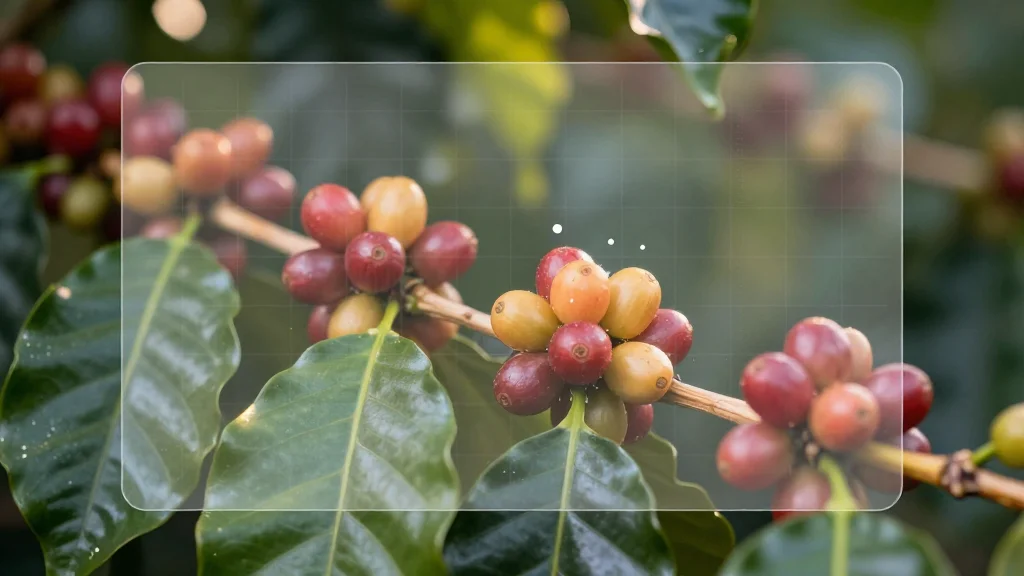
Coffee Giants Deploy Satellite‑AI System to Meet EU Deforestation Rules

Companies Mentioned
Why It Matters
The EU Deforestation Regulation represents the most stringent commodity‑level environmental rule to date, and its enforcement will reshape global coffee trade. By deploying satellite‑AI monitoring, the Coffee Canopy Partnership not only helps traders avoid market bans but also creates a scalable model for other commodities facing similar ESG pressures. Accurate land‑use data can unlock financing for sustainable farms, guide reforestation investments, and provide investors with verifiable metrics for climate‑aligned portfolios. Moreover, the initiative highlights a broader shift: compliance is moving from paperwork to real‑time geospatial intelligence. If successful, the approach could force a re‑evaluation of how supply‑chain risk is managed across agriculture, prompting technology firms to develop comparable solutions for cocoa, palm oil and timber, sectors also under EU scrutiny.
Key Takeaways
- •Coffee Canopy Partnership launched by JDE Peet’s, Tchibo, Louis Dreyfus, Neumann Kaffee, Touton and Sucafina
- •Uses Airbus satellite imagery and AI to map coffee farms and forest overlap
- •Initial rollout covers Ethiopia, Tanzania, Kenya, Uganda, Burundi and Rwanda
- •EU Deforestation Regulation bars coffee grown on post‑2020 forest land from EU markets
- •Goal: global coverage and compliance support by 2027
Pulse Analysis
The Coffee Canopy Partnership marks a decisive pivot from reactive compliance to proactive data stewardship in the coffee sector. Historically, the industry has relied on coarse, often outdated land‑use maps that blurred the line between natural forest and shade‑grown agroforestry. By injecting high‑resolution satellite data and machine‑learning classification, the partnership not only satisfies EU regulators but also creates a defensible ESG narrative that can be monetized through green financing and premium pricing.
From a competitive standpoint, early adopters gain a dual advantage: they mitigate the risk of supply‑chain interruptions and position themselves as sustainability leaders, attracting ESG‑focused investors. Smaller traders that lag may face exclusion from the EU market or be forced into costly retrofits to meet the same standards. The technology also democratizes data; if the partnership can effectively train smallholder cooperatives to interpret the maps, it could level the playing field, turning a compliance burden into a market differentiator.
Looking ahead, the success of satellite‑AI monitoring in coffee could catalyze a cascade of similar initiatives across other high‑risk commodities. The EU’s regulatory model is likely to inspire parallel frameworks in the United States and Asia, amplifying demand for geospatial intelligence. Companies that build modular, cross‑commodity platforms now will capture a growing share of the ESG compliance market, while those that remain dependent on legacy data risk obsolescence. In short, the Coffee Canopy effort is both a compliance tool and a strategic asset that could redefine how agricultural supply chains prove their environmental credentials.
Coffee Giants Deploy Satellite‑AI System to Meet EU Deforestation Rules
Comments
Want to join the conversation?
Loading comments...