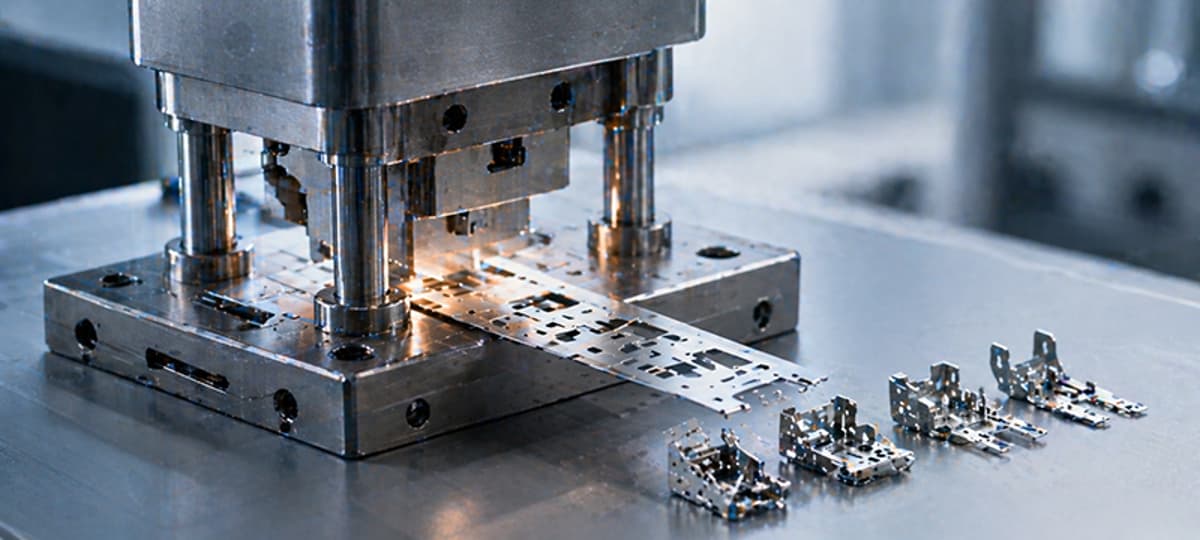
Common Applications for Custom Metal Stamping in Manufacturing
Why It Matters
The ability to mass‑produce precise metal parts fuels the rapid rollout of IoT hardware, lowering costs and shortening time‑to‑market for connected products. This strengthens supply chains and drives innovation in safety‑critical and consumer‑focused applications.
Key Takeaways
- •Stamping delivers high‑tolerance parts for automotive safety and connectivity.
- •Electronics rely on stamped contacts for miniaturized IoT device designs.
- •Aerospace uses lightweight stamped brackets for fuel‑efficient, connected aircraft.
- •Medical devices integrate corrosion‑resistant stamped components for sterile IoT wearables.
- •Telecom infrastructure scales with stamped enclosures that ensure signal shielding.
Pulse Analysis
Custom metal stamping has evolved from a niche fabrication method into a strategic enabler for the Internet of Things. Modern presses and computer‑controlled tooling can produce millions of parts per year while maintaining micron‑level accuracy, allowing designers to embed sensors, antennas and connectors directly into metal housings. This precision reduces assembly steps, cuts material waste, and supports the aggressive cost targets of consumer‑grade IoT devices.
Across sectors, stamped components are reshaping product architectures. In automotive, brackets and ECU housings are stamped to exact specifications, facilitating the rollout of connected vehicle platforms and over‑the‑air updates. Aerospace manufacturers favor lightweight stamped fasteners that meet stringent weight limits while housing telemetry modules for predictive maintenance. Meanwhile, medical device makers depend on corrosion‑resistant stamped parts to meet sterilization standards and integrate wearable health monitors, and telecom firms use stamped enclosures to protect high‑frequency modules in base stations and edge routers.
Looking ahead, the convergence of high‑volume stamping and IoT demand is set to intensify. Analysts project a double‑digit CAGR for stamped metal components in smart‑factory equipment, driven by the need for durable, miniaturized sensor housings. Companies that invest in flexible die sets and rapid‑change tooling will gain a competitive edge, offering faster design cycles and lower per‑unit costs. As connectivity becomes ubiquitous, custom metal stamping will remain a critical supply‑chain pillar, underpinning the next generation of connected products and infrastructure.
Common Applications for Custom Metal Stamping in Manufacturing
Comments
Want to join the conversation?
Loading comments...