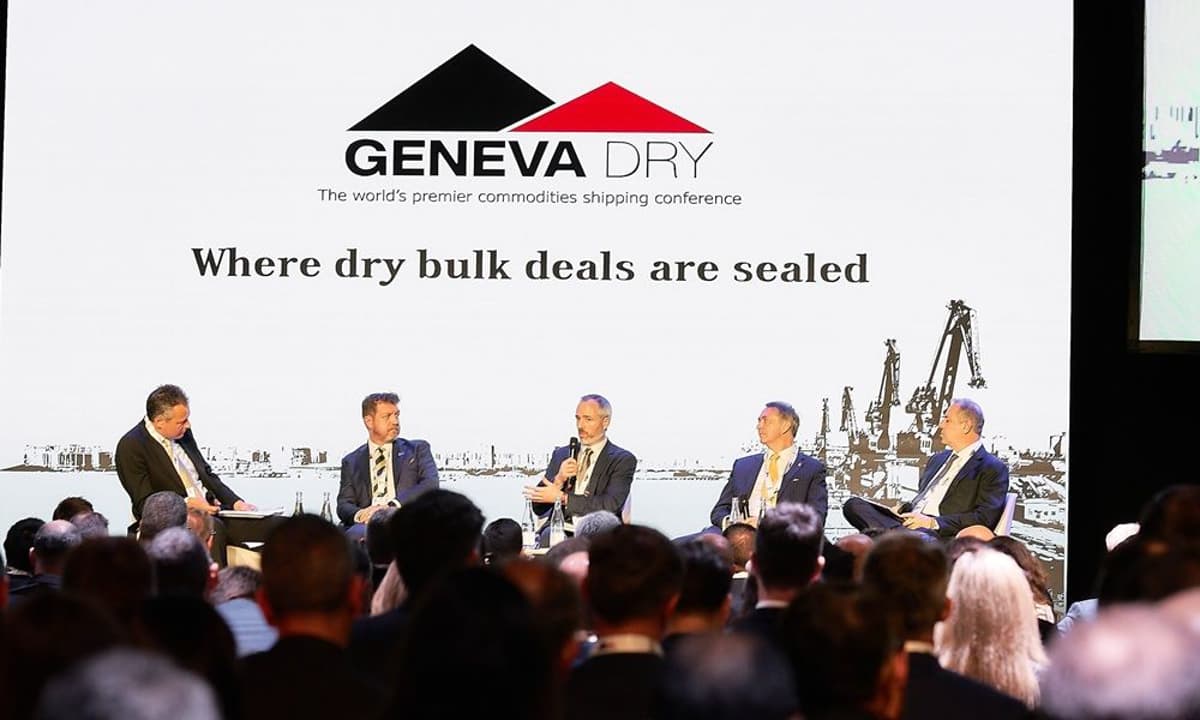
Complexity, Two-Tier Fleets and Bunker Fears Dominate Scene-Setting Opening Panel at Geneva Dry
Companies Mentioned
Why It Matters
The discussion signals shifting supply dynamics, tighter regulatory pressure, and fuel‑supply risks that will shape investment, charter rates, and strategic decisions across the global dry‑bulk sector.
Key Takeaways
- •Dry bulk trade up 2% YoY, reaching 1.7 bn tonnes in early 2026.
- •Panamax, Supramax, Handy rates jumped 56%, 41% and 34% year‑on‑year.
- •Compliance stack splits fleet by management quality, not vessel age.
- •Bunker scarcity, not price, drives market stress amid Hormuz disruption.
- •Decarbonisation push faces skepticism over near‑term viability of hydrogen, ammonia.
Pulse Analysis
The Geneva Dry opening panel underscored how geopolitical shocks, especially the Strait of Hormuz closure, are reverberating through dry‑bulk supply chains. Fertiliser exports from the Gulf, amounting to roughly 36 m tonnes annually, are being rerouted, prompting new demand for Pacific supramax vessels. Simultaneously, coal‑to‑gas switching in East Asia is prompting buyers to look beyond traditional sources, with Colombia and Russia emerging as potential suppliers. These shifts, combined with a 2% growth in global dry‑bulk tonnage, are tightening charter markets and inflating time‑charter (TC) rates across vessel classes.
A second, equally pivotal trend is the bifurcation of the global fleet driven by an expanding compliance regime that includes the EU ETS, FuelEU Maritime, CII, EEXI and stricter port‑state controls. Industry leaders argue that the dividing line is no longer vessel age but the quality of management and ESG adherence. Small‑to‑medium operators, praised for agility, must now meet higher standards to stay competitive, while charterers like Anglo American are actively shaping market expectations by demanding rigorous compliance from partners.
Fuel availability emerged as the most immediate operational concern. While the initial Singapore bunker price spike was sentiment‑driven, panelists warned that tightening distillate output and a shift toward fuel‑oil for power generation are eroding supply fundamentals. Coupled with skepticism about the near‑term feasibility of hydrogen, ammonia and green methanol as large‑scale marine fuels, the industry faces a dual challenge: manage short‑term bunker scarcity while navigating a pragmatic, yet ambitious, decarbonisation roadmap. Stakeholders will need collaborative solutions—such as green corridors and incremental technology adoption—to avoid supply shocks and regulatory bottlenecks.
Complexity, two-tier fleets and bunker fears dominate scene-setting opening panel at Geneva Dry
Comments
Want to join the conversation?
Loading comments...