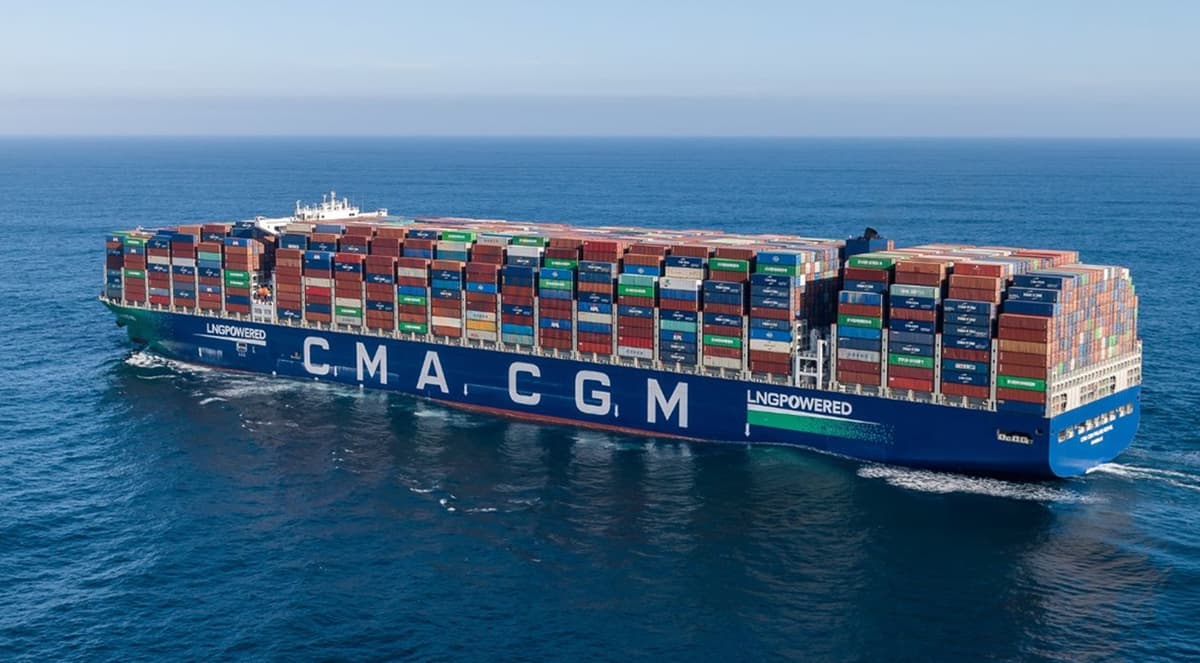
Container Peak Season Arrives Early as Freight Rates Skyrocket
Companies Mentioned

Why It Matters
Higher freight rates boost liner earnings after a weak Q1, but they also raise supply‑chain costs for importers, tightening margins across the logistics ecosystem.
Key Takeaways
- •Drewry WCI rose 23% to $3,433/FEU on 4 June.
- •Shanghai‑Los Angeles rate jumped 31% week‑on‑week to $4,565/FEU.
- •Carriers imposed $300‑$1,000 peak‑season surcharges on Asia‑Europe routes.
- •Global idle fleet fell to 0.6% of capacity, only 59 ships idle.
- •HSBC expects peak‑season momentum to persist through June.
Pulse Analysis
The early onset of the container peak season reflects a confluence of demand‑side pressures and constrained supply. Importers are front‑loading orders to avoid anticipated congestion, while geopolitical disruptions—most notably the Red Sea diversions—have lengthened transit times and reduced available vessel slots. As a result, freight indices such as Drewry's WCI and the Shanghai Containerized Freight Index have accelerated sharply, prompting carriers to layer peak‑season surcharges (PSS) on top of base rates. These surcharges, ranging from $300 to $1,000 per 20‑ft container, serve as a direct revenue lever for liners facing limited spare capacity.
Capacity scarcity is underscored by the idle‑fleet metric, which slipped to a historic 0.6% of the global 31.4 million‑TEU fleet, translating to just 59 idle ships. Shipping lines have even re‑activated vessels, adding roughly 46,500 TEU of capacity in the past fortnight, yet the balance remains firmly in their favor. The aggressive implementation of PSS and recent GRI/FAK hikes illustrate how carriers are managing tight supply to protect margins. For shippers, the immediate challenge is navigating higher landed costs while securing space in a market where slot availability can shift within days.
Looking ahead, analysts at Drewry and HSBC anticipate continued rate appreciation through June and possibly beyond, as seasonal demand peaks and lingering port bottlenecks persist. This environment could lift the earnings of major carriers such as Maersk, Hapag‑Lloyd, and Zim, which posted losses in Q1 2026. However, sustained price pressure may incentivate importers to explore alternative logistics strategies, including near‑shoring or multimodal shifts, to mitigate exposure. Stakeholders should monitor idle‑fleet trends, surcharge announcements, and geopolitical developments to gauge the trajectory of freight pricing and its ripple effects across global trade.
Container peak season arrives early as freight rates skyrocket
Comments
Want to join the conversation?
Loading comments...