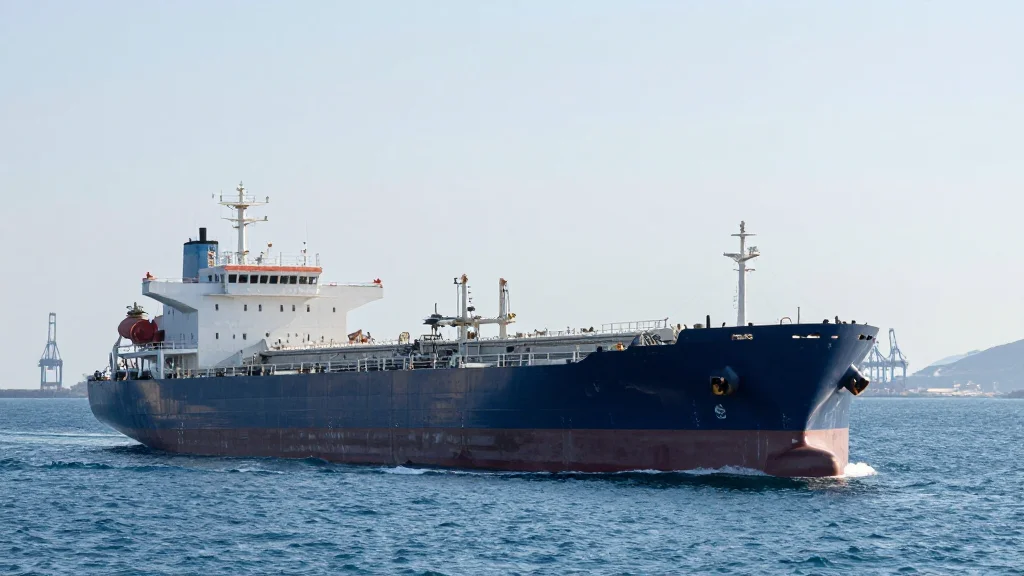
Crude Tankers Decline Despite Yanbu Demand
Companies Mentioned
Why It Matters
The shift to Yanbu underscores how geopolitical risk reshapes oil logistics, while falling VLCC rates signal a tightening market that could affect freight costs and oil price volatility worldwide.
Key Takeaways
- •Yanbu loadings jumped to ~4 mn b/d, offsetting Gulf decline.
- •Gulf loadings fell to ~1.9 mn b/d, down from 16 mn b/d pre‑war.
- •VLCC rate Yanbu‑NE Asia slid to $4.79/bl, 75% lower than March.
- •Gulf‑China VLCC route holds near $17.23/bl, but bookings scarce.
- •New tankers adding 6% fleet could further suppress rates.
Pulse Analysis
The Red Sea’s Yanbu terminal has become a critical bypass for Saudi crude after the Hormuz Strait was effectively closed by the US‑Israel‑Iran confrontation. By routing oil through the East‑West pipeline to Yanbu, exporters can still reach Asian markets, but the surge to roughly 4 million barrels per day only partially offsets the collapse of Gulf loadings, which have slumped from pre‑war levels of about 16 million barrels per day to under 2 million. This realignment highlights how geopolitical flashpoints can rapidly reconfigure global supply chains, forcing shippers to seek alternative corridors that may lack the same economies of scale.
Freight markets have reacted sharply. The Yanbu‑northeast Asia VLCC price, launched by Argus in March, fell to $4.79 per barrel—a 75 percent decline from its peak—while the Gulf‑China VLCC lane hovers near an all‑time high of $17.23 per barrel but sees minimal new bookings. The disparity reflects a market where capacity outpaces cargoes, especially as new vessels—estimated to add up to 6 percent of the world fleet this year—enter service. Oversupply of tankers exerts downward pressure on rates, eroding profitability for operators and potentially prompting charterers to renegotiate contracts.
For the broader oil industry, these dynamics could translate into tighter margins for exporters and higher logistical costs for refiners, especially in Asia where demand remains robust. Persistent rate volatility may also influence crude pricing differentials, as transport costs become a more significant component of landed price. Stakeholders will be watching shipyard deliveries, regional security developments, and Asian demand trends closely, as any shift could either stabilize the market or deepen the current rate slump.
Crude tankers decline despite Yanbu demand
Comments
Want to join the conversation?
Loading comments...