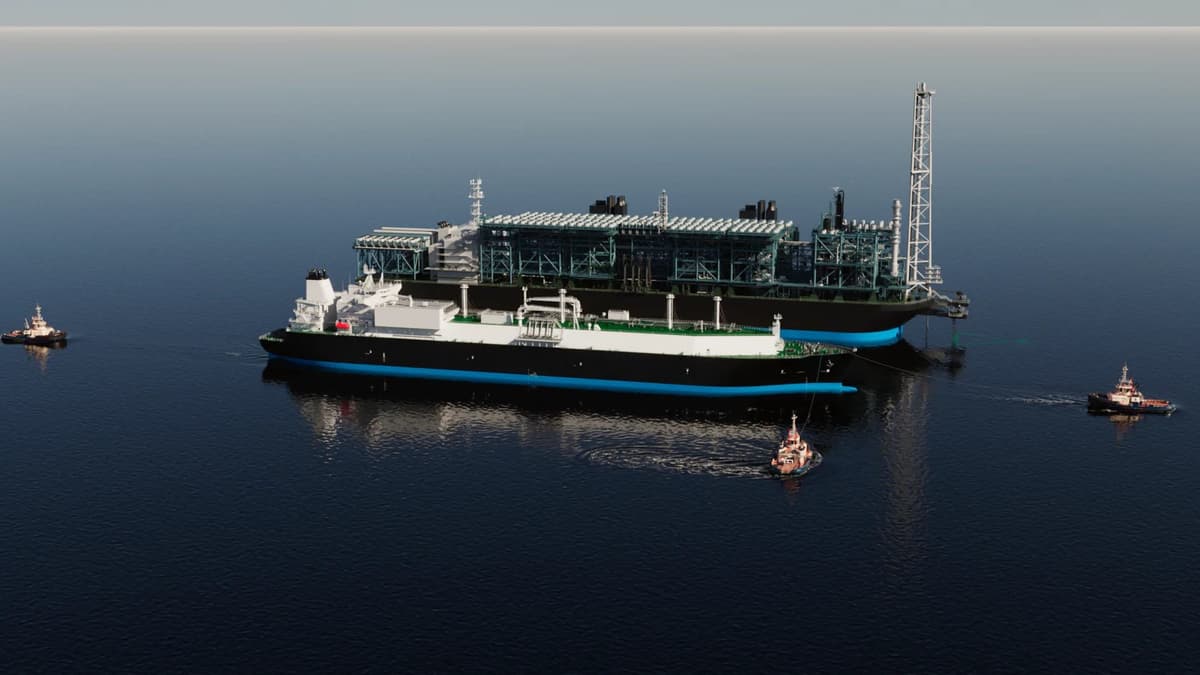
Delfin Approves $5 Billion Floating LNG Export Project Off Louisiana Coast
Companies Mentioned
Why It Matters
The project gives the U.S. a new, cost‑effective pathway to expand LNG exports, strengthening energy security and positioning American gas in global markets. Its floating architecture reduces onshore construction time and regulatory exposure, accelerating revenue generation for investors.
Key Takeaways
- •Delfin FLNG 1 will export 4.4 mtpa, first U.S. offshore LNG facility
- •Project unlocks $5 billion investment, backed by BlackRock’s GIP, MOL, Vitol
- •Floating design avoids extensive onshore construction, cutting permitting timelines
- •Long‑term sales contracts signed with Vitol, Expand Energy, Centrica, Gunvor
- •Production slated for 2030, with two more vessels planned for 13.2 mtpa total
Pulse Analysis
The approval of Delfin Midstream’s floating liquefied natural gas (FLNG) project marks a watershed moment for the United States’ energy export strategy. By deploying a vessel capable of producing 4.4 million tonnes of LNG per year off the Louisiana coast, the country will host its first offshore export terminal and the world’s largest FLNG installation. Floating liquefaction sidesteps the massive land‑based infrastructure traditionally required for LNG, allowing faster deployment and reduced environmental footprints. This innovation aligns with broader trends toward modular, maritime‑centric energy solutions that can adapt to shifting global demand.
The $5 billion first‑phase financing comes from a consortium led by BlackRock’s Global Infrastructure Partners, alongside long‑standing investors Mitsui O.S.K. Lines, Vitol and Diameter Capital Partners. Their participation underscores confidence in U.S. LNG as a reliable, cost‑competitive feedstock for international markets. Securing long‑term sales contracts with major traders such as Vitol, Expand Energy, Centrica and Gunvor provides a revenue foundation that de‑riskes the project for lenders and contractors like Samsung Heavy Industries and Black & Veatch. This capital backing also signals a broader shift toward private‑sector driven offshore energy infrastructure.
Construction of the first FLNG vessel is slated for completion by 2030, with two additional units planned to bring total capacity to 13.2 million tonnes annually. The deep‑water port license granted by the U.S. Maritime Administration in 2025 cleared a major regulatory hurdle, paving the way for rapid deployment. As global demand for cleaner‑burning fuels intensifies, Delfin’s offshore model could accelerate U.S. market share in the LNG trade, reinforcing energy security while offering a template for future maritime‑based export projects worldwide.
Delfin Approves $5 Billion Floating LNG Export Project Off Louisiana Coast
Comments
Want to join the conversation?
Loading comments...