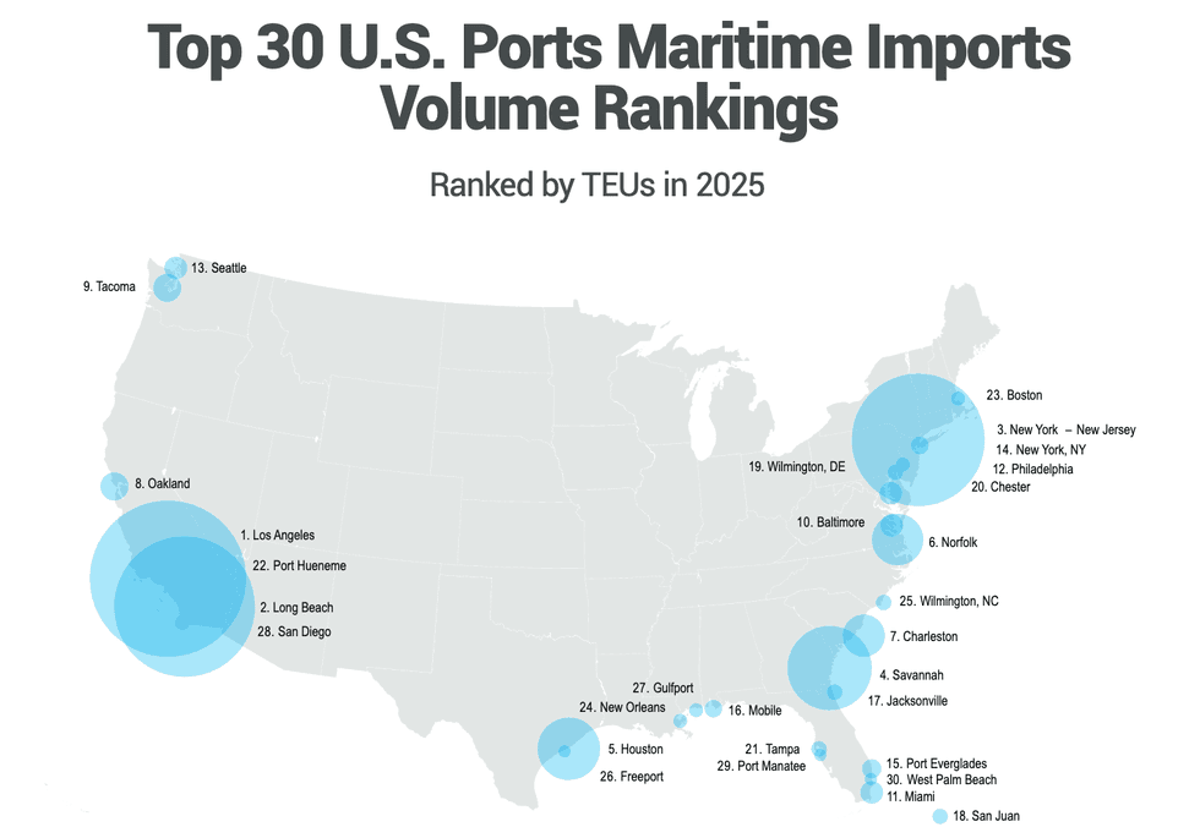
Descartes Report Describes Tumultuous Year at U.S. Ports
Companies Mentioned
Why It Matters
The findings reveal how tariff volatility reshapes U.S. port utilization and forces shippers to re‑engineer routing and inventory strategies, directly affecting logistics costs and capacity planning across the nation’s trade corridors.
Key Takeaways
- •U.S. import TEUs 2025: 28.09 million, down 0.03%.
- •China shipments 47.7% of West Coast TEUs, highest share.
- •Tariff spikes to 145% in April triggered order rush, then dip.
- •New anti‑circumvention rules and fees target China‑built vessels.
- •Shippers favored West Coast routes for faster Asia transit.
Pulse Analysis
Descartes’ annual port analysis underscores a rare equilibrium in overall import volumes despite a turbulent trade backdrop. While total TEU counts barely shifted, the underlying flow patterns were anything but static. Tariff escalations in early 2025 forced importers to defer orders, only to unleash a flood of shipments once rates softened, creating a pronounced “peak‑and‑valley” rhythm that strained carrier scheduling and dock capacity. This volatility highlights the fragility of supply‑chain forecasts when policy swings dominate market sentiment.
The report also spotlights a pronounced geographic divergence. West Coast terminals, traditionally the gateway for Pacific trade, absorbed nearly half of all China‑originated containers, cementing their role as the primary conduit for high‑value goods. In contrast, Gulf ports captured just over a quarter, and the East Coast lagged behind. Shippers responded by reallocating cargo to shorter West Coast routes, seeking faster transit times and reduced inventory holding costs. Meanwhile, carriers trimmed calls at secondary ports, intensifying competition for space at primary hubs and prompting a re‑evaluation of network designs.
Looking ahead, the introduction of anti‑circumvention regulations and vessel fees targeting China‑built ships adds a regulatory layer that could reshape cost structures and routing decisions. Logistics providers must integrate these policy shifts into their risk models, balancing tariff exposure with compliance obligations. As the U.S. negotiates new trade agreements and navigates geopolitical chokepoints, the ability to adapt quickly to port‑level dynamics will become a decisive advantage for firms aiming to maintain resilient, cost‑effective supply chains.
Descartes report describes tumultuous year at U.S. ports
Comments
Want to join the conversation?
Loading comments...