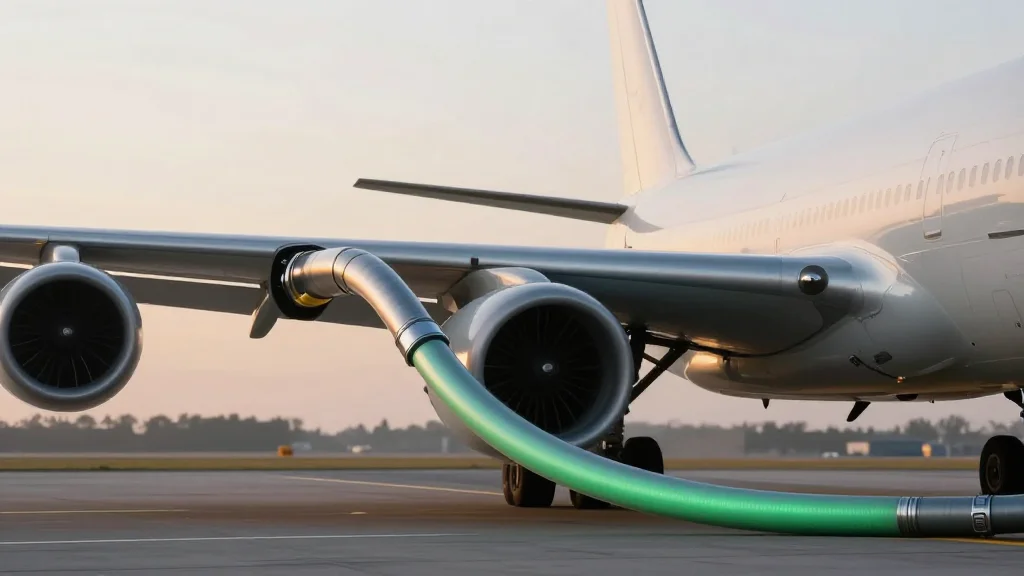
DHL and IAG Cargo Seal Five-Year SAF Deal to Cut 640,000 Tonnes CO2e

Companies Mentioned
Why It Matters
The DHL‑IAG Cargo SAF contract illustrates how logistics and aviation firms are moving beyond ad‑hoc purchases toward strategic, multi‑year procurement that underpins the entire SAF value chain. By guaranteeing demand, the deal helps unlock capital for new SAF refineries, which are essential to meeting global aviation decarbonisation goals. Moreover, the agreement provides a template for other cargo carriers and freight forwarders seeking to meet Scope 3 reduction targets demanded by regulators and investors. If similar long‑term contracts proliferate, they could compress the current cost premium on SAF, making low‑carbon air freight more competitive with conventional fuel. This would accelerate the shift toward greener supply chains, reduce overall aviation emissions, and support corporate customers in achieving their own net‑zero commitments.
Key Takeaways
- •DHL Group expands SAF agreement with IAG Cargo to a five‑year term covering ~240 million liters at London Heathrow.
- •The contract is expected to avoid ~640,000 tonnes of CO2e lifecycle emissions across its duration.
- •DHL Express will use roughly 40 million liters of neat SAF annually, contributing to its 30 % SAF usage target by 2030.
- •Cross‑divisional procurement links DHL Global Forwarding and DHL Express, creating a group‑wide SAF demand aggregation.
- •The deal provides market visibility for SAF producers, potentially lowering price premiums and spurring new refining capacity.
Pulse Analysis
The DHL‑IAG Cargo agreement marks a decisive step toward institutionalising SAF demand in the logistics sector. Historically, SAF purchases have been sporadic, driven by pilot projects or regulatory mandates. By locking in 240 million liters over five years, DHL is effectively underwriting a portion of the supply chain—from feedstock collection to fuel certification—thereby reducing the risk premium that has kept SAF prices high. This risk mitigation is likely to encourage new entrants to invest in waste‑oil processing facilities in Europe, a region that has lagged behind North America in SAF capacity.
From a competitive standpoint, DHL’s cross‑divisional strategy could force rivals such as UPS and FedEx to adopt similar aggregation models or risk losing carbon‑conscious customers. The logistics market is increasingly judged on Scope 3 emissions, and firms that can credibly certify their freight as SAF‑powered will gain a pricing advantage in B2B contracts where sustainability clauses are becoming standard. IAG Cargo, meanwhile, secures a reliable off‑taker for its SAF, strengthening its own ESG narrative and potentially allowing it to negotiate better terms with fuel producers.
Looking ahead, the success of this pact will hinge on three variables: feedstock availability, regulatory incentives, and the evolution of carbon pricing mechanisms. If governments introduce stronger carbon taxes on fossil jet fuel, the economic calculus will tilt further in favour of SAF, validating the upfront premium paid by DHL and IAG. Conversely, any supply bottlenecks in waste‑oil streams could strain the contract’s delivery schedule, prompting renegotiations. Overall, the agreement signals that large‑scale, long‑term SAF contracts are no longer experimental but are becoming a cornerstone of aviation decarbonisation strategies.
DHL and IAG Cargo Seal Five-Year SAF Deal to Cut 640,000 Tonnes CO2e
Comments
Want to join the conversation?
Loading comments...