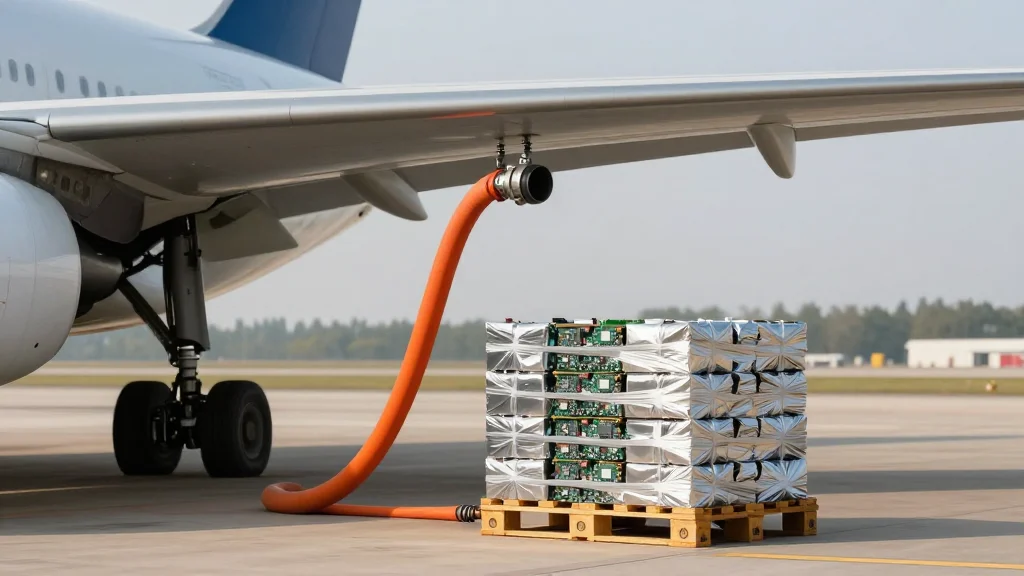
Dimerco Warns Jet‑fuel Crisis and AI Cargo Surge Squeeze Asia‑Europe Air Freight Capacity

Why It Matters
The convergence of rising jet‑fuel costs and exploding demand for AI‑related components creates a perfect storm for global supply chains that rely on speed. Higher air‑freight rates increase landed‑costs for high‑value electronics, potentially eroding margins for manufacturers and raising prices for end‑users. Moreover, the reduced belly capacity forces shippers to shift time‑critical loads to dedicated freighters, which are scarcer and more expensive, amplifying lead‑time volatility. Companies that fail to adapt their planning cycles risk stock‑outs and delayed product launches, especially in sectors such as semiconductors where time‑to‑market is a competitive differentiator. For the broader logistics ecosystem, the situation underscores the fragility of air‑cargo supply when it is tethered to passenger‑flight schedules. Persistent fuel shortages could accelerate investment in dedicated cargo fleets or alternative fuels, reshaping the competitive dynamics among airlines, forwarders, and technology‑driven shippers. Stakeholders will be watching fuel‑price trends and geopolitical developments closely, as they will dictate the pace of capacity recovery and the sustainability of current rate premiums.
Key Takeaways
- •Jet‑fuel shortage from Middle East conflict forces airlines to cut passenger services, reducing belly‑hold capacity.
- •AI‑related shipments and semiconductor demand push air‑cargo volumes up 49% YoY in 2025, according to Rotate.
- •Dimerco reports severe space constraints on Taipei‑US, South Korea‑US, and South Korea‑Southeast Asia lanes.
- •Kathy Liu (Dimerco) says shippers must plan earlier as fuel surcharges rise and capacity tightens.
- •Sarah Powell (Baxter Freight) warns airlines will likely trim profitable and high‑frequency routes first.
Pulse Analysis
The current squeeze on air‑freight capacity is less a temporary blip and more a structural inflection point for the high‑value logistics market. Historically, belly‑hold space has acted as a buffer, absorbing spikes in demand without dramatic rate hikes. The present fuel shock, however, has stripped that buffer away, exposing a reliance on passenger‑flight schedules that is increasingly untenable in a world where AI‑driven supply chains demand near‑real‑time delivery. Companies that have historically leaned on air freight for just‑in‑time inventory will now need to embed greater cost buffers and diversify routing, perhaps by leveraging emerging cargo‑only operators in Asia that are less exposed to passenger‑flight volatility.
From a competitive standpoint, airlines with modern, fuel‑efficient fleets—such as those already operating Boeing 777F or Airbus A350‑F platforms—are positioned to capture premium rates, while legacy carriers may see market share erosion if they cannot quickly adjust capacity. Forwarders like Dimerco are capitalizing on the information asymmetry, offering early‑booking incentives and dynamic pricing tools to lock in space before the next wave of cancellations. Meanwhile, the AI‑driven surge in electronics shipments is likely to persist, as chip manufacturers scale up production to meet AI model training needs. This creates a feedback loop: higher demand fuels higher rates, which in turn incentivizes investment in dedicated cargo capacity, potentially reshaping the air‑freight market for the next decade.
In the short term, shippers should treat the current environment as a stress test for their supply‑chain resilience. Scenario planning that incorporates fuel‑price volatility, route‑specific capacity constraints, and the possibility of further geopolitical disruptions will be essential. Those that can adapt quickly—by securing capacity early, exploring multimodal alternatives, or even re‑engineering product designs to tolerate longer lead times—will emerge with a competitive edge as the market stabilizes.
Dimerco warns jet‑fuel crisis and AI cargo surge squeeze Asia‑Europe air freight capacity
Comments
Want to join the conversation?
Loading comments...