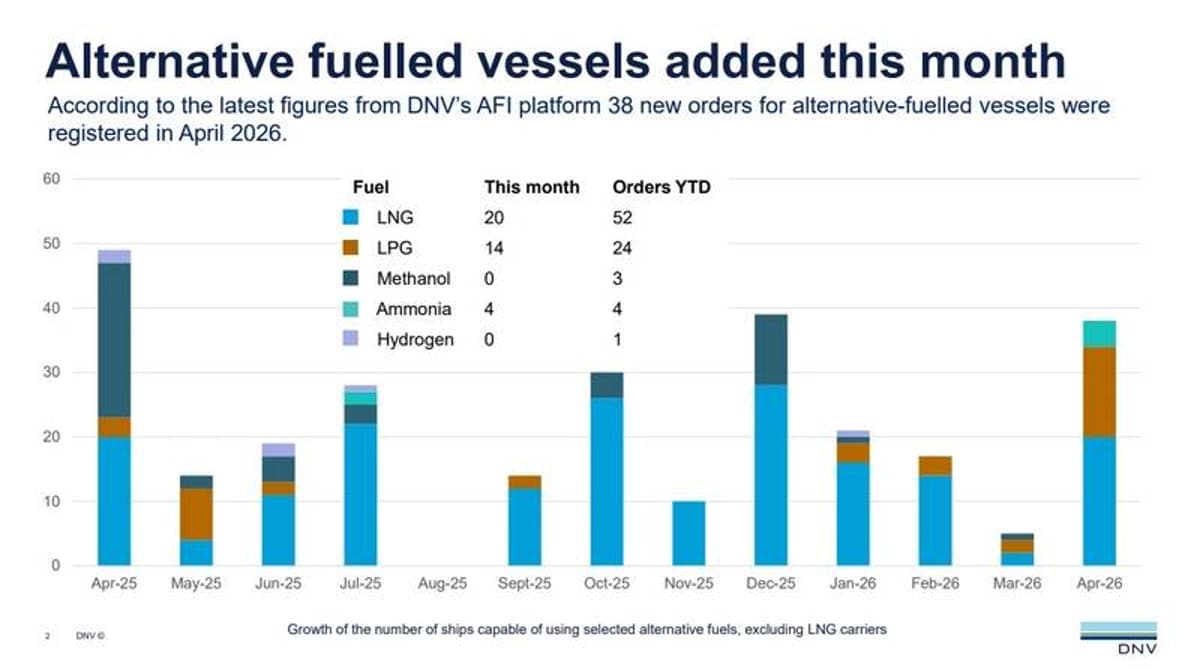
DNV’s Insight: 38 New Orders for Alternative-Fueled Vessels in April
Companies Mentioned
Why It Matters
The surge in alternative‑fuel orders signals accelerating decarbonization momentum in shipping, especially as LNG retains market share and ammonia gains early traction. Investors and shipbuilders can expect heightened demand for low‑carbon vessel designs and related infrastructure.
Key Takeaways
- •38 alternative-fueled vessel orders placed in April 2026
- •LNG leads with 20 orders across car carriers, containers, tankers
- •LPG/ethane carriers account for 14 new orders
- •Four ammonia-fueled bulk carriers highlight early-stage fuel adoption
- •First four months total 83 alternative-fuel vessel orders
Pulse Analysis
Regulatory frameworks such as IMO’s 2030 and 2050 carbon targets are forcing shipowners to rethink propulsion choices, and DNV’s latest data illustrates how the market is responding. The April spike in alternative‑fuel orders reflects a broader industry shift from incremental compliance to proactive investment in greener technologies. LNG continues to dominate because of its established bunkering network and relatively low capital cost, but the diversification into LPG, ethane and especially ammonia signals that operators are hedging against future fuel price volatility and stricter emissions rules.
The fuel mix in the April orders reveals nuanced demand patterns. LNG’s 20 orders cover a wide array of vessel types, indicating its versatility for both bulk and liner services. LPG and ethane carriers, with 14 orders, cater to niche markets where high‑energy density and lower emissions are prized, such as chemical transport. The four ammonia‑fueled bulk carriers, though a small cohort, are noteworthy; they represent the first commercial steps toward a zero‑carbon marine fuel that could become pivotal once certification and supply chains mature. This early adoption provides valuable operational data that will inform future standards and cost models.
For shipyards, financiers and equipment suppliers, the data translates into concrete business opportunities. Increased LNG orders sustain demand for cryogenic tanks and dual‑fuel engines, while ammonia projects drive research into corrosion‑resistant materials and safety systems. Capital markets are beginning to price in the decarbonization premium, rewarding firms that can deliver compliant vessels on schedule. As the alternative‑fuel pipeline widens, stakeholders who align their product portfolios with this emerging demand are likely to capture a growing share of the maritime transition market.
DNV’s Insight: 38 New Orders for Alternative-Fueled Vessels in April
Comments
Want to join the conversation?
Loading comments...