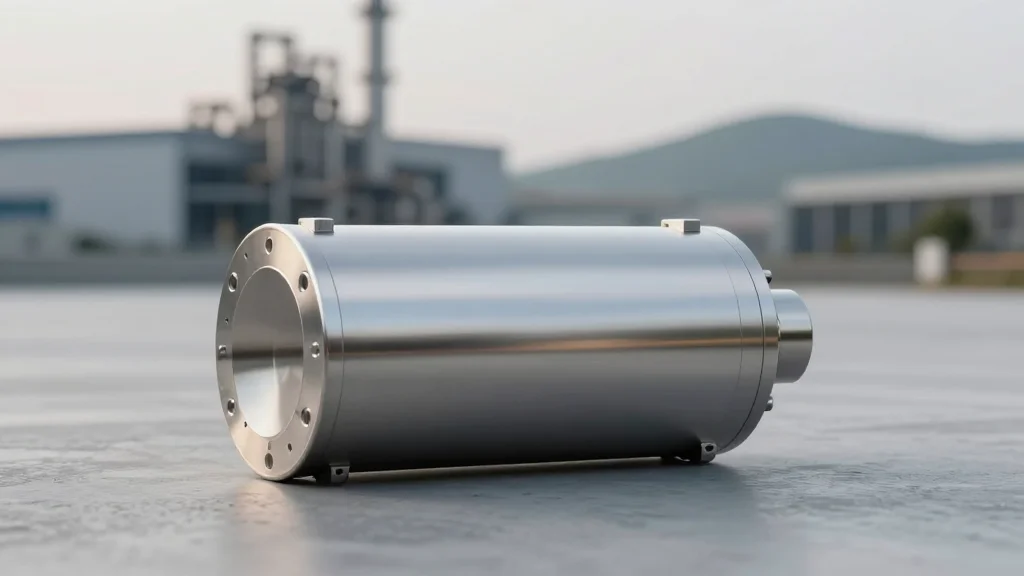
Doosan Enerbility Taps Rolls‑Royce SMR as Strategic Component Partner

Companies Mentioned

Rolls‑Royce
Why It Matters
Doosan Enerbility’s entry into the SMR arena bridges Korean heavy‑industry expertise with the burgeoning small‑modular reactor market, a sector projected to attract billions in investment as governments chase low‑carbon baseload power. By securing a strategic role in Rolls‑Royce’s flagship projects, Doosan not only diversifies its revenue beyond offshore wind and conventional nuclear but also positions South Korea as a key node in the global nuclear supply chain. This could spur further cross‑border collaborations, lower component costs through economies of scale, and accelerate the commercial rollout of SMRs, which are touted as a flexible solution for decarbonising grids and remote locations. The partnership also highlights the growing convergence of renewable and nuclear supply chains. Doosan’s simultaneous engagements in offshore wind (via Korea Southern Power) and nuclear SMRs suggest a strategic pivot toward integrated clean‑energy infrastructure, offering investors a more resilient portfolio amid policy shifts and geopolitical uncertainties.
Key Takeaways
- •Doosan Enerbility named strategic manufacturing partner for Rolls‑Royce SMR components at Wylfa (UK) and Temelin (Czech Republic).
- •Doosan will conduct manufacturability reviews and produce major reactor parts for the 470‑MW SMR design.
- •Rolls‑Royce SMR has contracts with Great British Energy – Nuclear and CEZ Group for site‑specific design work.
- •Kim Jong‑doo, head of Doosan’s nuclear business, emphasised the partnership as a gateway to the global SMR supply chain.
- •Doosan’s broader clean‑energy portfolio includes equipment supply agreements for offshore wind projects with Korea Southern Power.
Pulse Analysis
The Doosan‑Rolls‑Royce alliance marks a decisive step toward a truly global SMR ecosystem. Historically, SMR component sourcing has been fragmented, with most manufacturers clustered in Europe and North America. Doosan’s proven track record in heavy‑industry fabrication and its existing nuclear certification base give it a competitive edge that could compress development cycles for Rolls‑Royce’s 470‑MW reactors. This is especially pertinent as the UK and EU push for domestic nuclear capacity to meet net‑zero targets, while the Czech Republic seeks to diversify its energy mix away from coal.
From a market perspective, the partnership may catalyse a wave of Asian participation in SMR projects beyond the traditional focus on large‑scale reactors. Investors are likely to view Doosan’s involvement as a risk mitigant, reducing reliance on a narrow supplier base and potentially lowering capital expenditures through cost‑effective manufacturing. However, the success of the collaboration hinges on regulatory approvals and the ability to meet stringent safety standards across jurisdictions—a non‑trivial hurdle that could delay timelines if not managed adeptly.
Strategically, Doosan’s simultaneous expansion into offshore wind and nuclear SMRs reflects a broader industry trend of converging clean‑energy supply chains. Companies that can offer end‑to‑end solutions—spanning turbine foundations, subsea cables, and now nuclear components—are poised to capture larger shares of the decarbonisation spend. As governments worldwide allocate funding for low‑carbon baseload solutions, Doosan’s diversified portfolio positions it to benefit from multiple policy streams, reinforcing its role as a pivotal player in the next decade of energy transition.
Doosan Enerbility taps Rolls‑Royce SMR as strategic component partner
Comments
Want to join the conversation?
Loading comments...