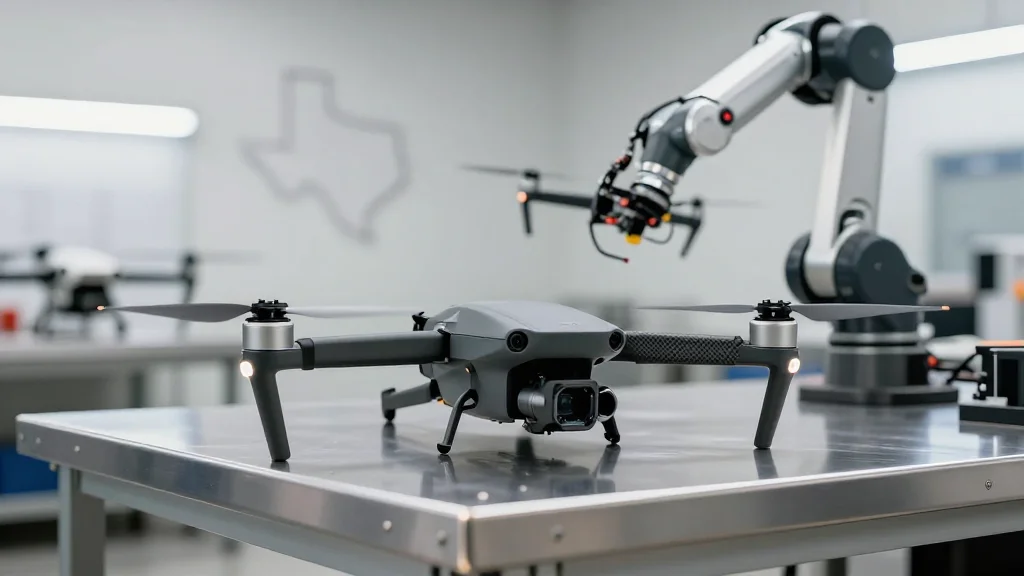
Draganfly (DPRO) Shifts to Defense‑Grade Drone Production, Boosts Capacity

Companies Mentioned
Why It Matters
The shift toward defense‑grade manufacturing reshapes the broader supply‑chain ecosystem by emphasizing domestic, certified production capabilities. As governments prioritize secure, on‑shore sources for critical technologies, companies like Draganfly that can demonstrate aerospace‑level quality standards are positioned to capture a larger share of defense spend, reducing exposure to geopolitical disruptions. Moreover, the capacity expansion illustrates how mid‑size innovators can compete with traditional aerospace giants by leveraging niche expertise and agile manufacturing. If Draganfly successfully scales while maintaining certification compliance, it could set a precedent for other drone firms to transition from boutique developers to industrial suppliers, further diversifying the defense supply chain and potentially driving down costs for end users.
Key Takeaways
- •Draganfly adds AS9100‑ and ISO9001‑certified production lines in Texas and Canada.
- •CEO Cameron Chell highlighted the pivot on Fox Business, stressing scalable, cost‑effective drones.
- •Shares have risen 132.6% in the past year, outpacing the industry’s 30.2% gain.
- •Zacks projects a 57% YoY earnings increase for 2026, with a forward P/S of 1.41× versus industry 2.54×.
- •New capacity enables contracts with U.S. Army (Flex FPV) and NATO partners (Commander 3XL).
Pulse Analysis
Draganfly’s aggressive capacity upgrade marks a strategic inflection point for the unmanned systems market. Historically, drone manufacturers have operated on a low‑volume, high‑margin model, catering to niche commercial customers. By adopting aerospace‑grade certifications, Draganfly is effectively crossing the barrier that separates hobbyist‑grade hardware from mission‑critical defense equipment. This move not only opens doors to multi‑year government contracts but also forces larger defense contractors to reckon with a new class of agile competitors that can deliver comparable quality at lower cost.
The timing aligns with a surge in global defense budgets, driven by heightened geopolitical tensions and the rapid integration of autonomous platforms into traditional force structures. As the U.S. and its allies seek to modernize their arsenals, supply‑chain resilience has become a procurement criterion as important as performance. Draganfly’s North American footprint and certified processes directly address this demand, positioning the firm as a secure, reliable supplier. If the company can sustain its production ramp‑up without quality lapses, it could capture a disproportionate share of the projected $30 billion defense drone market over the next five years.
However, scaling brings risks. Maintaining AS9100 compliance requires rigorous quality control, documentation, and audit cycles that can strain a company accustomed to rapid prototyping. Any lapse could jeopardize existing contracts and erode investor confidence, especially given the stock’s recent volatility. The next 12‑month period will test Draganfly’s ability to balance growth with operational discipline, a balance that will determine whether its pivot becomes a blueprint for the sector or a cautionary tale of overextension.
Draganfly (DPRO) Shifts to Defense‑Grade Drone Production, Boosts Capacity
Comments
Want to join the conversation?
Loading comments...