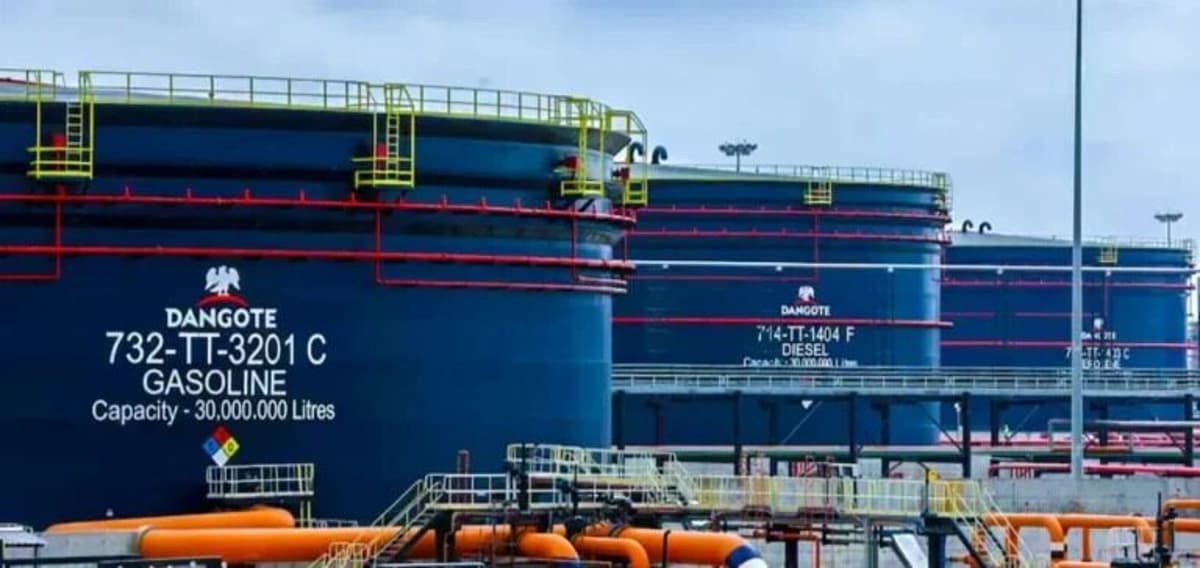
DRC Moves to Secure Fuel Supply From Dangote Refinery Amid Global Market Pressures
Why It Matters
Securing a reliable fuel source reduces the DRC’s exposure to global price swings and supports industrial growth, while also deepening financial and trade ties across West and Central Africa.
Key Takeaways
- •DRC seeks to import refined fuel from Nigeria's 650k bpd Dangote refinery
- •Deputy PM Daniel Mukoko met Aliko Dangote to discuss supply agreements
- •UBA talks focus on financing DRC's petroleum imports
- •DRC's 2023 consumption averaged 48,000 barrels per day
- •Export limits at Dangote may restrict immediate supply to DRC
Pulse Analysis
The Democratic Republic of Congo’s fuel strategy is being reshaped by persistent volatility in global refined‑product markets and domestic supply bottlenecks. With consumption climbing to roughly 48,000 barrels per day in 2023, the DRC government has prioritized diversifying its import sources to avoid over‑reliance on a narrow set of suppliers. Deputy Prime Minister Daniel Mukoko’s recent delegation to Nigeria signals a proactive approach to securing stable, cost‑effective petroleum deliveries, a move that could blunt the impact of geopolitical shocks on the country’s energy budget.
The 650,000‑barrel‑per‑day Dangote refinery, Africa’s largest, has become a focal point for regional fuel procurement. While its massive capacity could theoretically meet the needs of multiple neighboring markets, a substantial share of output is earmarked for Nigeria’s own consumption, leaving limited export volumes. Countries such as South Africa, Kenya, Ghana and Tanzania have already secured shipments, creating a competitive environment for any new buyer. Consequently, the DRC may face tight allocation windows and must negotiate favorable terms to secure a reliable supply stream.
Financing the imports is a critical piece of the puzzle, and talks with United Bank for Africa indicate that structured credit facilities could bridge the gap between DRC’s fiscal constraints and the high‑volume purchases required. If successful, the arrangement would not only enhance the DRC’s energy security but also signal a deeper financial integration across West and Central Africa. Moreover, a steady flow of refined products from Dangote could lower transport costs, stabilize local fuel prices, and support industrial growth, positioning the DRC as a more attractive destination for foreign investment.
DRC Moves to Secure Fuel Supply from Dangote Refinery Amid Global Market Pressures
Comments
Want to join the conversation?
Loading comments...