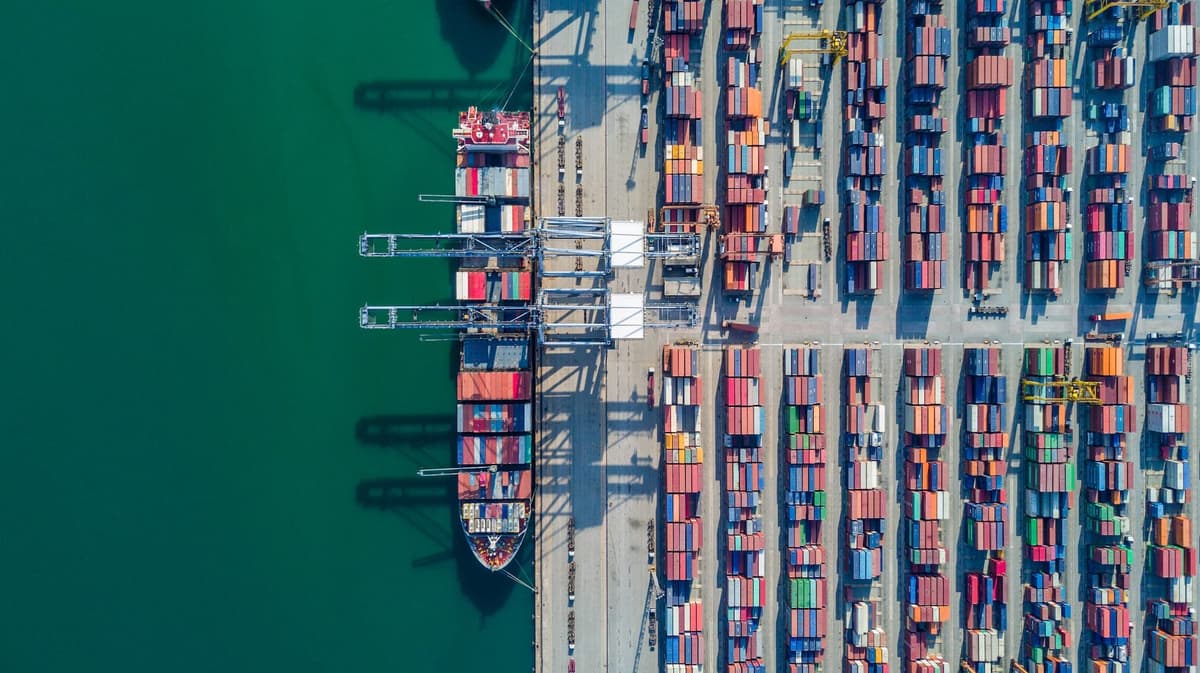
Drewry: Container Spot Rates Continue Climb as Early Peak Season Gains Momentum
Why It Matters
Higher spot rates increase shipping costs for importers and squeeze margins for carriers, reshaping trade‑flow economics ahead of the summer rush. The trend signals a tighter market that could accelerate freight‑rate volatility through the peak season.
Key Takeaways
- •Drewry WCI up 6% to $2,712 per 40‑foot container
- •Shanghai‑Rotterdam spot rate jumps 15% to $2,773 per FEU
- •CMA CGM to raise Asia‑Europe rates to ~$4,700 per FEU June 1
- •Seven blank sailings scheduled on Transpacific lane tighten capacity
- •Peak Season Surcharge of $2,000 per FEU added eastbound June 1
Pulse Analysis
The latest surge in container freight rates reflects an early onset of the traditional peak shipping season, driven by a confluence of robust demand and deliberate capacity constraints. Carriers are deploying a limited number of blank sailings—three on the Asia‑Europe route and seven on the Transpacific corridor—to preserve vessel utilization and extract higher yields. This strategic throttling, combined with a surge in cargo bookings from manufacturers restocking inventories ahead of summer, has pushed the Drewry World Container Index to $2,712, a level not seen in several months.
Pricing dynamics vary across lanes, with Asia‑Europe experiencing the most pronounced hikes. Shanghai‑Rotterdam spot rates leapt 15% to $2,773 per FEU, while Shanghai‑Genoa climbed 10% to $4,082. CMA CGM’s upcoming FAK adjustments, slated for June 1, could lift Asia‑Europe rates to roughly $4,700 per FEU, underscoring carriers’ confidence in sustained demand. In the Transpacific market, Ocean Network Express introduced a $2,000 per FEU Peak Season Surcharge eastbound, signaling that even modest lane‑specific surcharges are becoming a tool to capture incremental revenue as capacity tightens.
Beyond seasonal factors, broader macro‑economic pressures are amplifying rate volatility. Ongoing geopolitical instability in the Strait of Hormuz, coupled with elevated bunker surcharges and higher fuel prices, adds cost layers that carriers are passing onto shippers. For import‑dependent businesses, these developments translate into higher landed‑cost forecasts and may prompt a reevaluation of supply‑chain strategies, such as diversifying origin ports or renegotiating freight contracts. Analysts expect the upward trajectory to persist through the summer, making proactive freight‑budget planning essential for firms seeking to mitigate cost exposure.
Drewry: Container Spot Rates Continue Climb as Early Peak Season Gains Momentum
Comments
Want to join the conversation?
Loading comments...