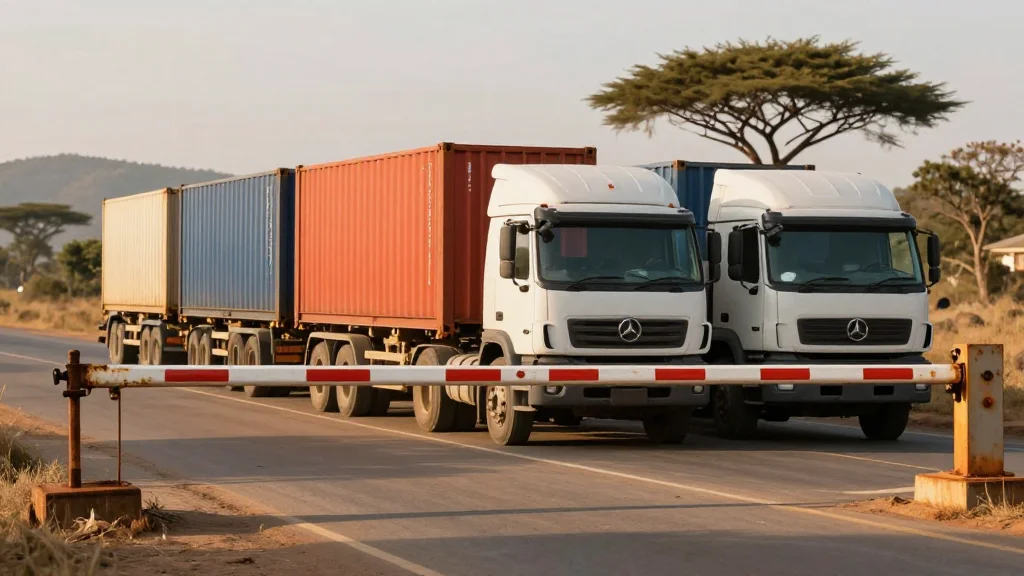
Driver Arrests and Illegal Fees Stall South Sudan Cargo Route
Why It Matters
The stoppage threatens regional trade, raises costs, and exposes gaps in cross‑border security cooperation between Kenya and South Sudan.
Key Takeaways
- •300 containers daily, 1.5 M tonnes, now stranded at Mombasa.
- •Drivers arrested; illegal $70 transit and $100 weighbridge fees cited.
- •Kenya Transporters Association demands safety guarantees from both governments.
- •Border arrests risk broader East African supply‑chain disruptions.
- •South Sudan freight forwarders call for immediate resumption of cargo flow.
Pulse Analysis
The Mombasa‑Nimule‑Juba corridor is a lifeline for East Africa, moving roughly 300 containers a day and more than 1.5 million tonnes of goods destined for South Sudan. Its strategic role links the Indian Ocean to landlocked markets, supporting everything from construction materials to humanitarian supplies. Any disruption reverberates through regional supply chains, inflating freight rates and delaying critical deliveries that affect both private enterprises and aid operations.
The current impasse began after Kenyan drivers were detained at checkpoints in Yirol West and Lake State, where officials allegedly demanded a $70 transit fee and a $100 weighbridge charge per truck. Transport lobby groups argue these levies violate the Common Market Protocol of the East African Community, which seeks to harmonise cross‑border trade costs. Safety concerns have intensified, with reports of drivers being forced at gunpoint to siphon fuel and facing inadequate access to food, water, and sanitation. The Kenya Transporters Association and the Long Distance Drivers and Conductors Association have therefore suspended services until guarantees are provided.
Beyond immediate cargo delays, the standoff underscores fragile security coordination between Kenya and South Sudan. Prolonged blockage could push shippers to seek alternative, costlier routes, eroding the competitiveness of the Northern Corridor. Stakeholders—including the South Sudan Freight Forwarders Association—are pressing both governments for a high‑level delegation to negotiate driver safety, remove unlawful fees, and restore confidence. A swift, collaborative resolution is essential to safeguard regional trade flows and maintain the corridor’s role as a cornerstone of East African logistics.
Driver arrests and illegal fees stall South Sudan cargo route
Comments
Want to join the conversation?
Loading comments...