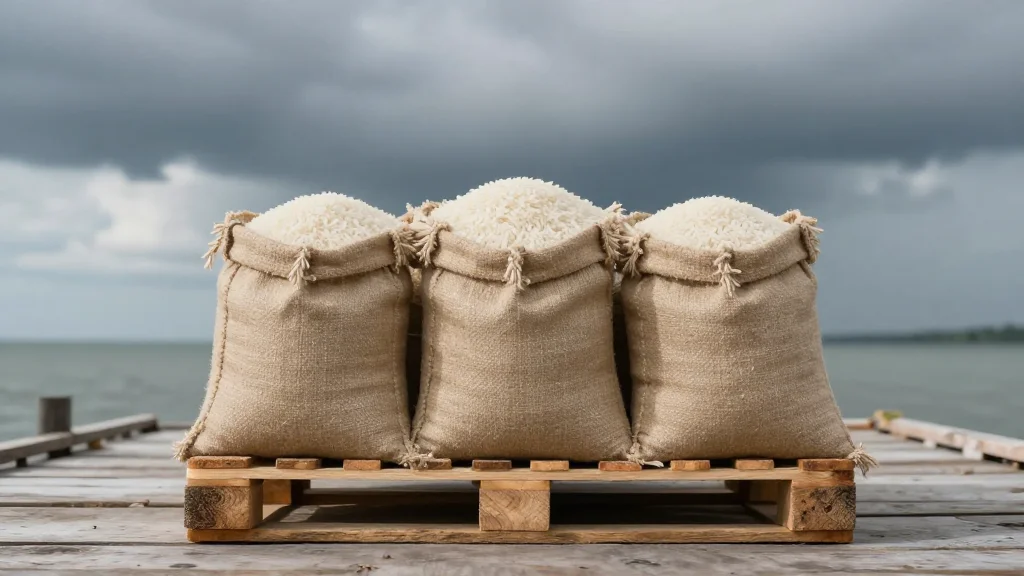
El Niño Poised to Drive Asian Food Inflation, Raising Supply‑chain Risks

Companies Mentioned
Why It Matters
The projected surge in food prices threatens to erode real incomes for billions of consumers across Asia, where staple grains account for a significant portion of household expenditure. A sustained inflationary pressure could force governments to intervene with subsidies or price caps, straining fiscal balances already stretched by pandemic‑related debt. Supply‑chain operators face a dual challenge: securing raw agricultural inputs amid tighter fertilizer markets while navigating higher freight costs driven by diesel price volatility. Failure to adapt could lead to bottlenecks, stock‑outs, and amplified price spikes, feeding a feedback loop that destabilizes both markets and social stability. ## Broader implications for global trade If Asian grain imports rise sharply to offset domestic shortfalls, exporting nations such as the United States, Brazil and Australia may see a surge in demand, reshaping global trade flows. This could tighten global grain inventories, push world food prices higher, and reverberate through downstream industries—from livestock feed to processed food manufacturers—magnifying the systemic risk across the entire supply‑chain ecosystem.
Key Takeaways
- •UBS flags 82% chance of El Niño in May‑July 2026, warning of food‑price spikes.
- •Thailand white‑rice price up 20% in May, the biggest monthly rise since 2008.
- •WMO issues red alert: 80% chance of strong El Niño June‑August, 90% through November.
- •FAO Food Price Index at 130.7 points in April, up 1.6% month‑over‑month.
- •Urea prices remain 23% above April peak despite recent correction.
Pulse Analysis
El Niño’s return this summer arrives at a precarious moment for Asian food markets. The region is still recovering from the 2023‑24 fertilizer shock triggered by geopolitical tensions in the Middle East, which left nitrogen supplies constrained and prices elevated. The convergence of a climate anomaly with lingering input‑cost pressures creates a supply‑side squeeze that is unlikely to be offset by demand‑side moderation, given the region’s growing middle class and urbanization trends.
Historically, strong El Niño events have coincided with sharp spikes in rice and wheat prices, as seen in the 1997‑98 episode that spurred political unrest in Indonesia and the Philippines. Modern supply‑chain networks are more integrated, but also more exposed to rapid price transmission through digital commodity platforms and just‑in‑time logistics. As freight rates climb on top of higher diesel costs, the cost‑to‑serve for grain exporters will rise, compressing margins and potentially prompting a shift toward longer‑term contracts or strategic stockpiling.
Policymakers must therefore adopt a two‑pronged approach: short‑term measures such as targeted subsidies and emergency grain reserves, and long‑term investments in climate‑resilient agriculture, including drought‑tolerant crop varieties and improved irrigation efficiency. For multinational food processors, the prudent path is to diversify sourcing, lock in forward contracts for both grain and fertilizer, and embed climate‑risk analytics into procurement decisions. The coming months will test the resilience of Asia’s food supply chain, and the actions taken now will shape price stability and food security well beyond the 2026‑27 El Niño cycle.
El Niño poised to drive Asian food inflation, raising supply‑chain risks
Comments
Want to join the conversation?
Loading comments...