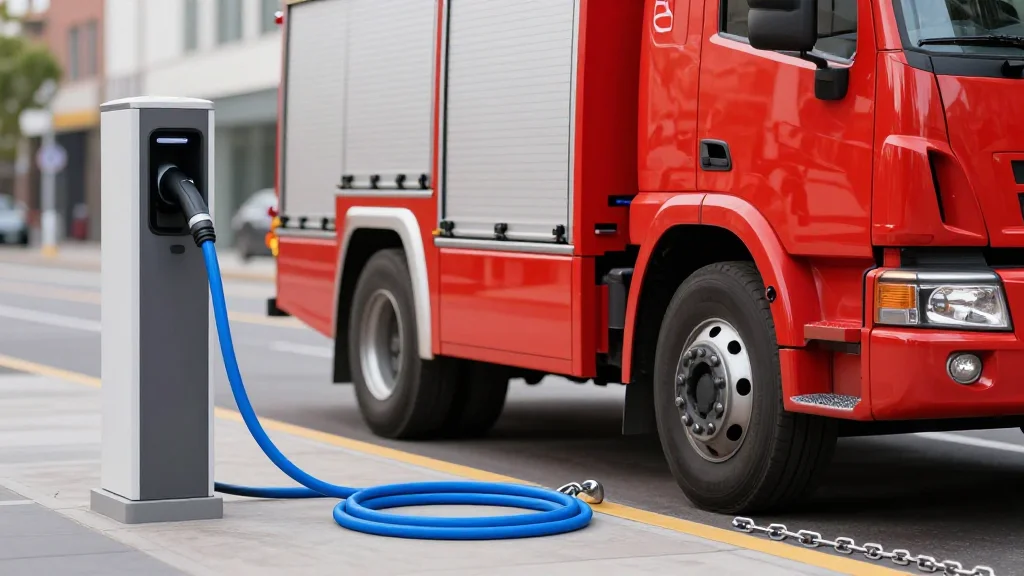
Electric Fire Trucks Grow, Yet Adoption Trails Buses and Garbage Trucks

Why It Matters
Electric fire trucks represent a critical frontier for decarbonizing public‑safety assets. Their adoption influences not only municipal emissions targets but also the broader supply chain for high‑power batteries, electric drivetrains, and charging infrastructure. A successful rollout could demonstrate the viability of electric propulsion for other low‑volume, mission‑critical vehicles, prompting manufacturers to develop modular platforms that serve multiple fleet segments. Conversely, slow adoption risks entrenching diesel‑powered fleets, perpetuating air‑quality concerns in fire stations and surrounding neighborhoods. The health benefits of eliminating diesel exhaust in confined apparatus bays are significant for firefighters, and delayed electrification could defer these gains. Understanding the supply‑chain constraints and addressing them through coordinated policy and industry action will be essential to accelerate the transition.
Key Takeaways
- •Vancouver’s fire department already operates an electric pumper, confirming the technology is in service.
- •Electric fire trucks are custom‑built, leading to higher per‑unit costs and longer procurement cycles.
- •Charging infrastructure must be installed at each fire hall, adding capital expense and grid planning needs.
- •Low turnover rates keep demand fragmented, limiting economies of scale for battery and component suppliers.
- •Adoption lags behind electric buses and garbage trucks, which benefit from higher volumes and predictable routes.
Pulse Analysis
The electric fire‑truck market is at a crossroads where technology readiness outpaces procurement realities. Manufacturers have proven that battery‑electric drivetrains can meet the performance demands of fire‑service operations, yet the fragmented demand profile hampers the development of a dedicated supply chain. In the bus and refuse‑truck segments, large municipal contracts have driven down battery costs through volume, spurred standardization of charging protocols, and attracted a suite of Tier‑1 suppliers. Fire trucks lack that leverage, forcing OEMs to treat each order as a bespoke project, which inflates engineering and tooling expenses.
Policy can tip the balance. Targeted subsidies for low‑volume electric fleets, streamlined procurement guidelines, and joint‑venture charging projects between municipalities could aggregate demand enough to justify dedicated production lines. Moreover, the emergence of modular battery packs and scalable e‑PTO kits could allow manufacturers to reuse core components across different vehicle classes, reducing per‑unit costs. If cities coordinate to create regional charging hubs that serve fire, police, and utility fleets, the shared infrastructure could lower the barrier to entry for electric fire trucks.
Looking ahead, the next wave of electric fire‑truck deployments will likely be driven by climate‑action mandates and occupational‑health imperatives rather than pure cost considerations. As battery energy density improves and total‑cost‑of‑ownership analyses begin to show parity with diesel units over a vehicle’s lifespan, municipalities may find the long‑term savings compelling enough to overcome the upfront premium. The supply chain will respond accordingly, with battery manufacturers expanding low‑volume production capacity and component suppliers developing standardized e‑PTO solutions. The pace of this transition will be a bellwether for how effectively the public‑sector can mobilize emerging clean‑technology markets.
Electric Fire Trucks Grow, Yet Adoption Trails Buses and Garbage Trucks
Comments
Want to join the conversation?
Loading comments...